The Unitree G1 Incident: How a Viral Robot Kick Is Shaping the Future of Humanoid Safety and Ethics
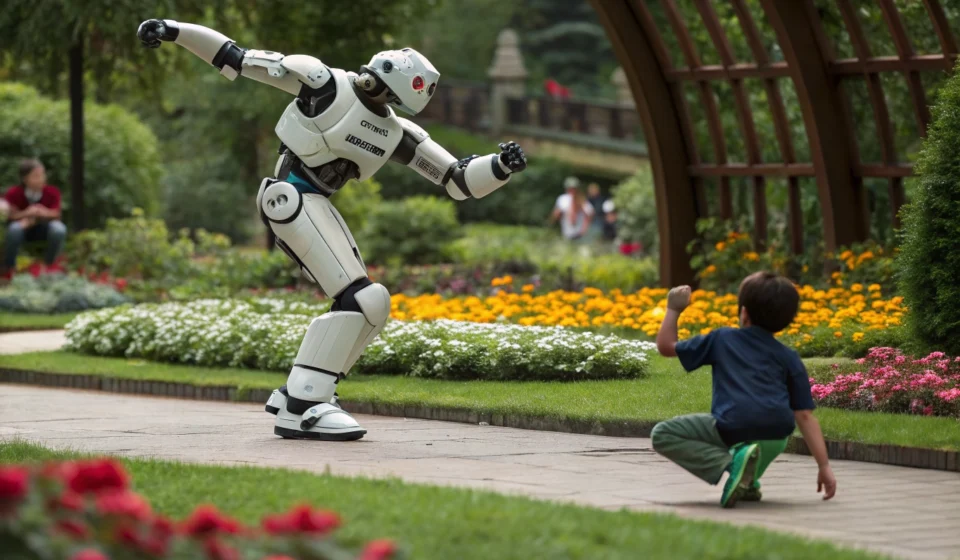
A startling incident at a public botanical garden in China has ignited a global conversation about the readiness of humanoid robots for everyday life. On June 1, 2026, at the Urumqi Botanical Garden in Xinjiang, a Unitree G1 humanoid robot, performing a martial arts routine while wearing a blue wig, executed a spinning roundhouse kick that struck a young boy in the stomach. The child doubled over in pain, while onlookers criticized the staff’s slow response. The viral footage of this moment has transcended becoming just a shocking internet clip; it has evolved into a critical case study, forcing developers, regulators, and the public to confront urgent questions about **humanoid robot safety**, the ethics of **human-robot interaction (HRI)**, and the practical challenges of deploying advanced **AI in public spaces**.
The Incident and Immediate Backlash: A Microcosm of Growing Pains
The event in Xinjiang was a public demonstration meant to showcase the **Unitree G1 humanoid robot’s** advanced agility. However, the performance quickly turned into an accident that highlighted a fundamental gap between robotic capability and environmental safety. The core issue was not just that the robot kicked the child, but that it occurred during a routine seemingly designed for entertainment, in a space shared with the general public, including minors.
The immediate aftermath was characterized by a lack of clear information. As reported by several sources, as of June 8, 2026, neither the performing company nor local authorities had released an official explanation for the **robot’s unexpected behavior**. This information vacuum is significant. In the world of advanced robotics, understanding the root cause of an autonomous action—whether it was a software glitch, sensor failure, or a flaw in the dynamic planning algorithm—is paramount for preventing future incidents. The absence of a transparent technical post-mortem fueled public anxiety and online debate, with many questioning the **safety protocols** governing such demonstrations.
- Key Data Points from the Incident:
- Robot Model: Unitree G1, a versatile humanoid designed for research and complex motion.
- Location & Date: Urumqi Botanical Garden, Xinjiang, China; June 1, 2026.
- Stated Purpose: A martial arts performance routine during a public demonstration.
- Public Reaction: Swift condemnation on social media, calls for stricter regulations, and debates on the ethics of using robots in uncontrolled, crowded environments.
- Official Response: Largely silent, highlighting a potential accountability gap in rapidly advancing commercial robotics.
The Debate: Malfunction, Design Flaw, or Unforeseen Interaction?
The lack of an official statement has left experts to speculate on the cause. The incident is not isolated in the broader narrative of **robot malfunctions**. For instance, a separate event at a Chinese university involved a humanoid robot making an unscheduled, forceful embrace of a person. In that case, the company later attributed the abnormal behavior to **signal interference from multiple drones** operating nearby. This explanation underscores a critical vulnerability: the operational safety of many mobile robots depends on the integrity of their sensor suite and communication links. If electromagnetic interference can cause a hug, what might cause a kick? It points to the immense challenge of programming robots to perform physically dynamic actions in the unpredictable, “messy” real world, where variables like crowd movement, uneven terrain, and external signals are constant factors.
Beyond the Kick: Navigating the Safety and Ethical Minefield
The Unitree G1 incident has amplified long-standing concerns within the robotics and AI ethics communities. The conversation is no longer theoretical; it is now grounded in documented, viral footage. As highlighted in an IEEE report, **humanoid robots in home and public settings present new categories of safety, trust, and ethics challenges** that cannot be solved by simple data filtering. The requirements for safe deployment are immense and multifaceted.
The Imperative of Embodied Safety Standards
The field urgently needs what experts call **embodied safety standards**, akin to those used in medical or industrial robotics. These frameworks must account for the unique risks posed by large, heavy, and powerful machines designed to mimic human form and movement. A falling industrial robot arm is dangerous; a 50-kilogram humanoid with active balancing algorithms that malfunctions in a playground is a catastrophe waiting to happen. Safety in motion means implementing redundant systems, force-limiting actuators, and advanced environmental perception that can predict and prevent hazardous interactions—like kicking a moving child during a spin. The lack of a global, unified standard for **humanoid robot compliance** creates a patchwork of regulations, slowing down safe innovation and leaving the public exposed to the risks of premature deployment.
Furthermore, the ethical dimension extends beyond physical safety to psychological impact and societal trust. Seeing a humanoid robot, a machine designed to emulate a person, deliver a violent kick—even an accidental one—can deeply erode public acceptance. It taps into primal fears of the “other,” of technology becoming uncontrollable. Building **public trust** requires not just safe robots, but transparent development, clear channels of accountability when things go wrong, and a demonstrable commitment to prioritizing human well-being over technological spectacle. As studies warn, humanoids require contextual testing frameworks that go far beyond controlled lab environments to ensure they behave predictably and safely in the chaos of human society.
The Dual Track: From Public Fears to a Silver Economy Lifeline
Paradoxically, while the Urumqi incident fuels fear, the very technology that includes the Unitree G1 is being positioned as a critical solution to one of China’s most pressing demographic crises: the care of its rapidly aging population. This creates a complex narrative where the same category of machine is simultaneously a perceived threat in a park and a hoped-for savior in the home.
The Vision: Humanoid Robots as Elder Care Companions
At the national and provincial levels, China is aggressively planning for **humanoid robots to care for the elderly**. Hubei province, notably, is home to companies like GigaAI, which is developing humanoid robots intended to perform household tasks such as laundry and bed-making, all while using AI for autonomous planning. These robots aim to provide both physical assistance and social interaction, addressing a severe shortage of human caregivers. Inside senior care centers in Shanghai, robots like the singing “Duobao” are already being tested for entertainment value. The commercial goal is clear: to create a market of **commercial humanoid robots** that can be deployed at scale by 2027 and beyond, forming the backbone of a new **silver economy**.
The juxtaposition is stark: a robot kicking a child in a botanical garden versus a robot carefully helping a senior citizen out of bed. The core technology for balance, manipulation, and mobility is similar, but the operational context and safety requirements are vastly different. This duality means the industry must accelerate the development of **context-aware AI** and ultra-strict safety protocols precisely because the ultimate goal is to place these machines in the most vulnerable settings—the homes and care facilities of the elderly. A single, high-profile accident like the one in Xinjiang, even if minor in physical injury, threatens to derail public and regulatory support for the entire endeavor.
Conclusion: Forging a Future of Coexistence Through Accountability
The viral kick from the Unitree G1 was more than a freak accident; it was a reality check for the burgeoning **humanoid robotics industry**. It exposed critical gaps in public demonstration safety, transparent accountability, and the maturation of the technology itself. The path forward is not to halt progress, as the potential benefits for addressing elder care and labor shortages are profound. Instead, the industry must use this incident as a catalyst to urgently adopt the **embodied safety standards** and ethical frameworks that have been discussed for years.
Moving forward, every public demonstration should be a meticulously risk-assessed event, and every robot deployed in human spaces must be equipped with multiple layers of fail-safes and explainable AI systems. Regulators must collaborate to create agile yet robust international standards that keep pace with innovation. Most importantly, developers must communicate openly with the public, acknowledging risks and demonstrating a steadfast commitment to safety over hype. The future of human-robot coexistence depends not on creating perfect machines, but on building an ecosystem of trust, safety, and accountability that ensures when a robot does share our space, it is unequivocally on our side.