
Skip to content
China Industry Intel China Industry Intel China Industry Intel

Intelligence on China’s Industries, Markets, Technology, and Manufacturing

China Industry Intel China Industry Intel China Industry Intel

Intelligence on China’s Industries, Markets, Technology, and Manufacturing

  • Home
  • INDUSTRIES
    • AI
    • Healthcare & Biotech
    • Robotics
    • Energy & Renewable
    • Semiconductor
    • EV & Battery
    • Manufacturing
  • BUSINESS
    • Logistics
    • Suppliers
    • Supply Chain
    • Stock Market
    • Economic Trends
    • Trade & Tariffs
  • TECH & CONSUMER
    • Global Industry Insights
    • Tech & Internet
    • Consumer Trends & New Product Releases
  • About
  • Contact
  • Home
  • INDUSTRIES
    • AI
    • Healthcare & Biotech
    • Robotics
    • Energy & Renewable
    • Semiconductor
    • EV & Battery
    • Manufacturing
  • BUSINESS
    • Logistics
    • Suppliers
    • Supply Chain
    • Stock Market
    • Economic Trends
    • Trade & Tariffs
  • TECH & CONSUMER
    • Global Industry Insights
    • Tech & Internet
    • Consumer Trends & New Product Releases
  • About
  • Contact
  • https://www.facebook.com/
  • https://twitter.com/
  • https://t.me/
  • https://www.instagram.com/
  • https://youtube.com/
Subscribe
China Industry Intel China Industry Intel China Industry Intel

Intelligence on China’s Industries, Markets, Technology, and Manufacturing

China Industry Intel China Industry Intel China Industry Intel

Intelligence on China’s Industries, Markets, Technology, and Manufacturing

  • Home
  • INDUSTRIES
    • AI
    • Healthcare & Biotech
    • Robotics
    • Energy & Renewable
    • Semiconductor
    • EV & Battery
    • Manufacturing
  • BUSINESS
    • Logistics
    • Suppliers
    • Supply Chain
    • Stock Market
    • Economic Trends
    • Trade & Tariffs
  • TECH & CONSUMER
    • Global Industry Insights
    • Tech & Internet
    • Consumer Trends & New Product Releases
  • About
  • Contact
  • Home
  • INDUSTRIES
    • AI
    • Healthcare & Biotech
    • Robotics
    • Energy & Renewable
    • Semiconductor
    • EV & Battery
    • Manufacturing
  • BUSINESS
    • Logistics
    • Suppliers
    • Supply Chain
    • Stock Market
    • Economic Trends
    • Trade & Tariffs
  • TECH & CONSUMER
    • Global Industry Insights
    • Tech & Internet
    • Consumer Trends & New Product Releases
  • About
  • Contact
  • https://www.facebook.com/
  • https://twitter.com/
  • https://t.me/
  • https://www.instagram.com/
  • https://youtube.com/
Subscribe
Home/BUSINESS/Supply Chain/Logistics/Navigating China’s Logistics Evolution in 2026: Supply Chain Resilience, Hybrid Models, and the Global Ecosystem Shift
Logistics

Navigating China’s Logistics Evolution in 2026: Supply Chain Resilience, Hybrid Models, and the Global Ecosystem Shift

By ChinaIndustryIntel.com
08.06.2026 5 Min Read

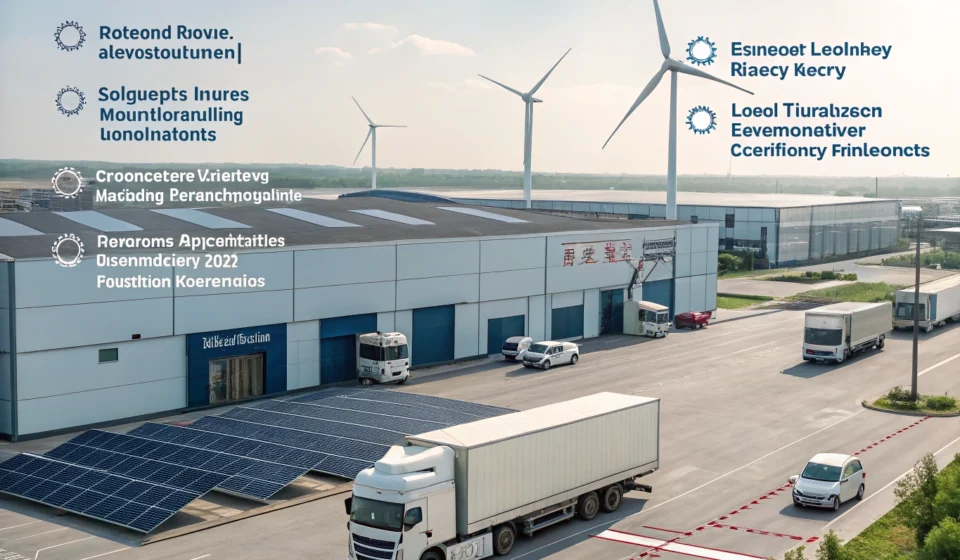
As we enter 2026, the heartbeat of global commerce finds a powerful and evolving rhythm in China. The nation’s logistics and supply chain sector, a colossal engine of the world economy, is demonstrating remarkable resilience and a sophisticated, innovation-driven growth trajectory. The market’s sheer scale is breathtaking, with its total value poised to exceed an astonishing 350 trillion yuan (approximately $48 trillion USD), marking a year-on-year increase of around 6.5%. This robust expansion is not merely a continuation of past trends but is being fundamentally reshaped by four transformative forces. These dynamics are pushing the industry beyond simple freight movement into a new era of strategic, integrated, and globalized supply chain management, where the winners will be defined by their ability to blend technological prowess with profound local adaptation.

The “Follow-the-Capital” Model and the Rise of Hybrid Logistics in Europe

A primary catalyst for this transformation is the strategic overseas expansion of China’s industrial giants, particularly in the electric vehicle (EV) and renewable energy sectors. As companies like CATL, BYD, and SVolt establish manufacturing plants across Europe, they are dragging a sophisticated supply chain ecosystem in their wake. This “follow-the-capital” model signifies a seismic shift from transactional freight shipping to the provision of complex, end-to-end solutions. The logistics demand now encompasses not just the import of components but also precise production-line feeding, integrated inventory management, and the establishment of extensive after-sales service networks. According to industry analyses, this move is crucial for reducing reliance on extended supply chains and meeting local market responsiveness demands.

In response, the winning formula for serving these operations and the broader cross-border e-commerce boom has crystallized into what experts call the hybrid model. This approach masterfully blends the strengths of **overseas warehouses**, **dedicated freight lines**, and **local delivery networks**. By 2026, this triad has proven essential for optimizing the supply chain within the European Union. Overseas warehouses, particularly in strategic hubs like Germany, provide the forward positioning for faster delivery, while dedicated lines ensure consistent and reliable inbound freight movement. Crucially, the integration of robust local delivery partnerships allows for efficient last-mile fulfillment and, increasingly vital, the handling of **reverse logistics**. European consumers now expect seamless return processes, and the hybrid model’s local infrastructure is what makes this possible at scale.

Systemic Integration and Digital Enablement

The success of this hybrid model is underpinned by advanced digital integration. Leading cross-border logistics providers now deploy sophisticated Warehouse Management Systems (WMS) capable of fine-grained SKU management, intelligent order allocation across a global network of warehouses, and seamless cross-warehouse inventory replenishment. These platforms are integrated with major e-commerce and freight booking systems, offering end-to-end visibility that was previously unattainable. As noted in a Cushman & Wakefield market report, the ability to manage complex inventory flows in real-time is a key differentiator, allowing companies to dynamically position stock based on predictive analytics and regional demand patterns.

The Localization Gap: Navigating Europe’s Business and Regulatory Landscape

While the physical and digital infrastructure for global reach is being built, Chinese firms are confronting their most significant hurdle: the “localization gap.” Successfully crossing the ocean is now only the first step; the greater challenge lies in “landing” and integrating within the European market. The friction arises from deep-seated differences in business pace, labor laws, and digital infrastructure. Reports from the China Chamber of Commerce to the EU (CCCEU) consistently highlight that cultural and operational mismatches create substantial friction. European labor markets, with their strong unions and stringent working-time regulations, are a world away from the high-intensity management models that have sometimes driven Chinese domestic operations.

Beyond Rules to Cultural Fluency

This gap extends beyond mere regulatory compliance into the realm of workplace culture and communication. Studies on Chinese enterprises in Europe indicate that differences in management style, decision-making hierarchies, and even communication norms can lead to operational inefficiencies. The adaptation required is profound, involving not just legal and HR restructuring but a genuine embrace of local business practices. As noted in a 2019 report on Chinese firms in Europe, “The communication behind considerations and hidden meanings is often difficult for local employees to penetrate, leading to some inefficient or even ineffective communication.” Overcoming this requires moving beyond a transactional view of logistics to building locally-embedded teams and leadership.

Value Over Volume: The Strategic Pivot to Specialized Services

The industry’s evolution is also marked by a decisive shift away from pure price competition in bulk freight toward higher-value, specialized services. The growth rates in these segments are outpacing traditional logistics, signaling a maturation of the market. Key growth areas include cold chain logistics for pharmaceuticals and perishables, reverse logistics for returns and refurbishment, and integrated cross-border fulfillment solutions. This pivot reflects a broader industry understanding that sustainable competitive advantage in 2026 is built on service differentiation and value-added capabilities, not solely on moving the most tonnage at the lowest cost.

  • Market Scale: China’s total logistics value is projected to surpass 350 trillion yuan in 2026, growing at a ~6.5% year-on-year rate, driven by digital transformation and innovation.
  • Key Growth Drivers: The expansion of Chinese EV and battery manufacturers in Europe is catalyzing demand for complex, end-to-end supply chain solutions beyond simple freight.
  • Dominant Model: The hybrid logistics model—combining overseas warehouses, dedicated freight lines, and local delivery—is the successful framework for EU penetration in 2026.
  • Primary Challenge: The “localization gap,” including differences in business pace, labor regulations, and digital systems, represents the main barrier to European market integration.
  • Service Evolution: Higher-value services like cold chain, reverse logistics, and after-sales fulfillment are growing faster than bulk freight, with service differentiation replacing price competition.

The narrative of China’s logistics sector in 2026 is one of a dual transformation: outward expansion to build a resilient, globalized ecosystem, and inward optimization toward higher-value, technology-driven services. The industry is actively exporting its logistical prowess, building an ecosystem that mirrors its manufacturing might. However, its ultimate success on the world stage will be measured not just by the volume of goods it moves, but by its ability to navigate complex local environments with cultural and operational agility. The future belongs to those who can seamlessly connect a factory floor in Guangdong with a consumer in Berlin, managing not just the freight, but the entire lifecycle of the product with intelligence, flexibility, and a deep understanding of local needs. The journey from volume to value, from shipping to serving, is well underway.
Tags:

Belt and RoadE-commerceEVLLMManufacturingPolicyStock MarketSupply Chain
Author

ChinaIndustryIntel.com

Follow Me
Other Articles
Previous

How Chinese Smart Ports and Digital Logistics Are Reshaping Global Supply Chain Efficiency

Next

Navigating Global Supply Chains: Why DDPCHAIN’s Simplified Freight Forwarding from China is Gaining Traction Among In…

No Comment! Be the first one.

    Leave a Reply Cancel reply

    You must be logged in to post a comment.

    Recent Posts

    • China’s Humanoid Robot Output to Surge 94% as Unitree and AgiBot Dominate
    • China’s South Asia Trade Push: $257 Million in Energy Deals at 10th South博会
    • Samsung, SK Hynix Race to Solve HBM5 Thermal Crisis for AI Chips
    • SpaceX IPO Ignites China’s Commercial Space Investment Frenzy
    • The Four-Layer Tariff Stack: What US Importers Actually Pay on Chinese Goods in 2026

    Archives

    • June 2026

    Categories

    • BUSINESS
      • Economic Trends
      • Stock Market
      • Suppliers
      • Supply Chain
        • Logistics
      • Trade & Tariffs
    • INDUSTRIES
      • AI
      • Energy & Renewable
      • EV & Battery
      • Healthcare & Biotech
      • Manufacturing
      • Robotics
      • Semiconductor
    • TECH & CONSUMER
      • Consumer Trends & New Product Releases
      • Global Industry Insights
      • Tech & Internet
    Independent coverage of China’s industries, technology, manufacturing, supply chains, and market trends.

    Focused on AI, semiconductors, EVs, robotics, logistics, trade, and global industrial intelligence.

    • X
    • Instagram
    • Facebook
    • YouTube
    Short Version
    We welcome industry news tips, research contributions, press releases, and collaboration inquiries related to China’s industrial and technology sectors.
    Contact: editor@chinaindustryintel.com

    Available for Hire
    Get In Touch

    Recent Posts

    • China’s Humanoid Robot Output to Surge 94% as Unitree and AgiBot Dominate
      by CII-Contributing Analyst
      14.06.2026
    • 10th Huawei ICT Competition Global Final Concludes with Record 220,000 Participants from 49 Countries in Shenzhen10.06.2026
    • 42 Rules for Sourcing and Manufacturing in China: Navigating Quality, Culture, and Operational Realities for Global B…09.06.2026
    • A Comprehensive Guide: The 12-Step Framework for Successfully Opening a Factory in China in 202609.06.2026

    Search...

    Tag

    5G AI Battery Belt and Road Biotech China chips E-commerce Economy Enterprise EV Huawei Humanoid Innovation Intel Investment LLM Manufacturing New Energy OSAT Packaging Pharmaceutical Policy Robot Robotics Section 301 Semiconductor Stock Market Supply Chain Tariffs Trade

    You May Have Missed

    Robotics

    China’s Humanoid Robot Output to Surge 94% as Unitree and AgiBot Dominate

    By CII-Contributing Analyst
    14.06.2026
    Trade & Tariffs

    China’s South Asia Trade Push: $257 Million in Energy Deals at 10th South博会

    By CII-Contributing Analyst
    14.06.2026
    Semiconductor

    Samsung, SK Hynix Race to Solve HBM5 Thermal Crisis for AI Chips

    By CII-Contributing Analyst
    14.06.2026
    Robotics

    SpaceX IPO Ignites China’s Commercial Space Investment Frenzy

    By CII-Contributing Analyst
    14.06.2026
    Trade & Tariffs

    The Four-Layer Tariff Stack: What US Importers Actually Pay on Chinese Goods in 2026

    By CII-Contributing Analyst
    14.06.2026
    Semiconductor

    China’s Delete A Policy Costs Intel Billions in Revenue

    By CII-Contributing Analyst
    14.06.2026
    Robotics

    Embodied AI: How China Is Building the Factory Workers of Tomorrow

    By CII-Contributing Analyst
    14.06.2026
    EV & Battery

    Geely’s ‘One Geely’ Strategy Reshapes China’s Auto Giant

    By CII-Contributing Analyst
    14.06.2026
    EV & Battery

    CATL’s Investment Empire: The Battery Giant Becomes a VC Powerhouse

    By CII-Contributing Analyst
    14.06.2026

    China Industry Intel is an independent media and intelligence platform covering China’s industrial economy, emerging technologies, manufacturing ecosystems, and global supply chains.

    We provide curated analysis on AI, semiconductors, robotics, EVs, healthcare, logistics, trade policy, and consumer technology — helping readers understand how China’s industries are shaping global markets.

    • Facebook
    • X
    • Instagram
    • LinkedIn

    Latest Posts

    • Zhejiang Momali Valve Co., Ltd. Expands Global Footprint as a Leading Brass Sanitary Ware Manufacturer from China’s Valve Capital
      In the fiercely competitive world of plumbing and sanitary ware manufacturing, few regions on earth carry the industrial weight and concentrated expertise of Yuhuan, Taizhou — widely known as **China
    • Xunce Technology Stock Price Doubles on Hong Kong IPO: Why China’s “Palantir” Large Model Data Leader Is Attracting G…
      The Hong Kong Stock Exchange has long served as a barometer for China's most innovative technology companies, and late 2025 delivered one of its most striking debuts in recent memory. On December 30,
    • Xunce Technology Hong Kong IPO: Why ‘China’s Palantir’ is a Data Analytics Stock to Watch in 2026
      The global tech investment community is perpetually scanning the horizon for the next paradigm-shifting company, a "next Palantir" that can harness the exponential value of data. While Silicon Valley

    Link

    alibaba.com

    Contact

    Phone

    +77 822411

    Email

    editor@chinaindustryintel.com

    Location

    New York, USA

    Copyright 2026 — China Industry Intel. All rights reserved.