
Skip to content
China Industry Intel China Industry Intel China Industry Intel

Intelligence on China’s Industries, Markets, Technology, and Manufacturing

China Industry Intel China Industry Intel China Industry Intel

Intelligence on China’s Industries, Markets, Technology, and Manufacturing

  • Home
  • INDUSTRIES
    • AI
    • Healthcare & Biotech
    • Robotics
    • Energy & Renewable
    • Semiconductor
    • EV & Battery
    • Manufacturing
  • BUSINESS
    • Logistics
    • Suppliers
    • Supply Chain
    • Stock Market
    • Economic Trends
    • Trade & Tariffs
  • TECH & CONSUMER
    • Global Industry Insights
    • Tech & Internet
    • Consumer Trends & New Product Releases
  • About
  • Contact
  • Home
  • INDUSTRIES
    • AI
    • Healthcare & Biotech
    • Robotics
    • Energy & Renewable
    • Semiconductor
    • EV & Battery
    • Manufacturing
  • BUSINESS
    • Logistics
    • Suppliers
    • Supply Chain
    • Stock Market
    • Economic Trends
    • Trade & Tariffs
  • TECH & CONSUMER
    • Global Industry Insights
    • Tech & Internet
    • Consumer Trends & New Product Releases
  • About
  • Contact
  • https://www.facebook.com/
  • https://twitter.com/
  • https://t.me/
  • https://www.instagram.com/
  • https://youtube.com/
Subscribe
China Industry Intel China Industry Intel China Industry Intel

Intelligence on China’s Industries, Markets, Technology, and Manufacturing

China Industry Intel China Industry Intel China Industry Intel

Intelligence on China’s Industries, Markets, Technology, and Manufacturing

  • Home
  • INDUSTRIES
    • AI
    • Healthcare & Biotech
    • Robotics
    • Energy & Renewable
    • Semiconductor
    • EV & Battery
    • Manufacturing
  • BUSINESS
    • Logistics
    • Suppliers
    • Supply Chain
    • Stock Market
    • Economic Trends
    • Trade & Tariffs
  • TECH & CONSUMER
    • Global Industry Insights
    • Tech & Internet
    • Consumer Trends & New Product Releases
  • About
  • Contact
  • Home
  • INDUSTRIES
    • AI
    • Healthcare & Biotech
    • Robotics
    • Energy & Renewable
    • Semiconductor
    • EV & Battery
    • Manufacturing
  • BUSINESS
    • Logistics
    • Suppliers
    • Supply Chain
    • Stock Market
    • Economic Trends
    • Trade & Tariffs
  • TECH & CONSUMER
    • Global Industry Insights
    • Tech & Internet
    • Consumer Trends & New Product Releases
  • About
  • Contact
  • https://www.facebook.com/
  • https://twitter.com/
  • https://t.me/
  • https://www.instagram.com/
  • https://youtube.com/
Subscribe
Home/BUSINESS/Economic Trends/Mastering Chinese Business Etiquette and Cultural Nuances for Global Success
Economic Trends

Mastering Chinese Business Etiquette and Cultural Nuances for Global Success

By ChinaIndustryIntel.com
08.06.2026 4 Min Read

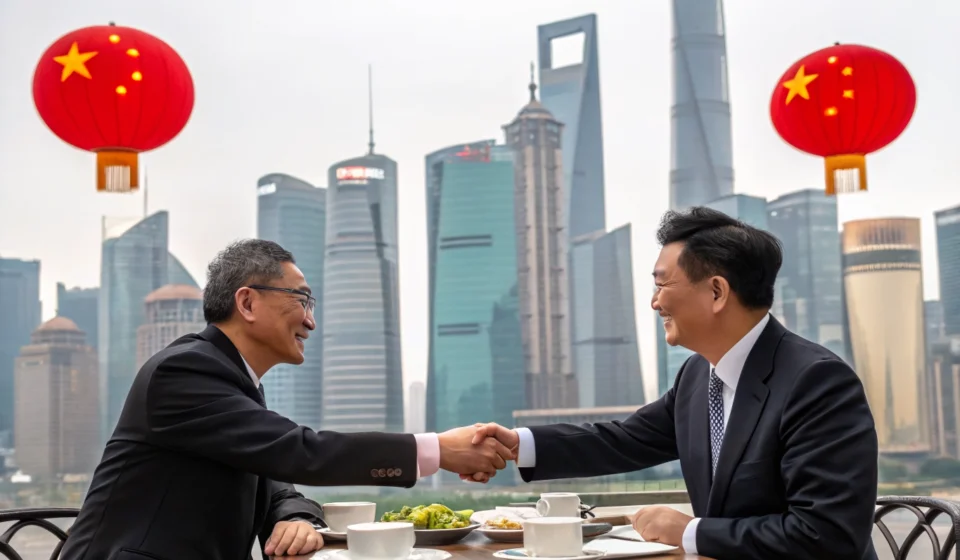
For the intrepid global business traveler, China represents a land of unparalleled opportunity and profound complexity. Its history spanning five millennia and its meteoric economic ascent over recent decades have forged a business landscape that defies simple characterization. Beyond the gleaming skyscrapers and bustling ports lies a fabric of regional sub-cultures, intricate social protocols, and communication styles deeply rooted in tradition. Success in this dynamic environment is not merely a matter of a strong proposal or competitive pricing; it demands a foundational **cultural intelligence**, flexibility, and a genuine humility to learn. Ignoring the intricate web of social and professional etiquette is not just a faux pas—it can be the silent deal-breaker that stalls negotiations and severs potential partnerships long before they begin.

The Cornerstone of Chinese Business: Understanding Guanxi and “Face”

At the very heart of professional interactions in China lies the ancient and vital concept of guanxi (关系). Far more than mere networking, guanxi represents the deep, long-term cultivation of personal relationships and networks built on mutual trust, obligation, and benefit. In the Chinese business context, these relationships are often considered a form of social and professional currency, sometimes valued even above the immediate terms of a contract. This relational foundation is rooted in Confucian principles that prioritize social harmony and reciprocal duties. Consequently, business dealings are frequently built on an unspoken system of reciprocity; once a connection is established, favors are extended with the understanding that they will be returned in due course, creating a cycle of mutual indebtedness and strengthening the bond over time.

The Delicate Dance of Mianzi: Protecting and Giving “Face”

Intertwined with guanxi is the equally critical concept of mianzi, or “face.” Face represents a person’s reputation, dignity, and social standing in the eyes of their community. In a high-context culture that values indirect communication, preserving face—for both oneself and others—is paramount. This means public criticism, open confrontation, or directly saying “no” can cause a significant loss of face, potentially damaging the relationship irreparably. A seasoned executive understands that negotiations are often a delicate, indirect process where disagreements are hinted at rather than declared outright. Giving face involves showing deference to seniority, acknowledging others’ contributions publicly, and allowing counterparts an honorable way to save face if they need to concede a point. This cultural dance requires careful observation and patience, as pushing for a direct answer or highlighting a mistake in front of a group can be a catastrophic misstep.

  • Guanxi Investment: Significant time (often months or years) is dedicated to relationship-building through dinners, socializing, and gift-giving before business is seriously discussed.
  • Hierarchy Matters: Respect for seniority and age is non-negotiable. Decisions are typically made by the most senior person in the room, and communication should flow upwards appropriately.
  • Reciprocity is Expected: Once a favor is done, it creates an implicit social debt that is expected to be reciprocated in the future, cementing the relationship.
  • Indirect Communication: “Yes” might mean “I hear you,” not “I agree.” Disagreement is often expressed through silence, changing the subject, or vague assurances.

Digital Infrastructure and Regional Realities: WeChat and Cultural Diversity

To effectively build guanxi in the 21st century, one must first master its primary digital arena: WeChat. This “super-app” is not merely an alternative to WhatsApp or email; it is the essential ecosystem of modern Chinese life. With over 1.33 billion monthly active users, WeChat handles an astonishing volume of over 45 billion messages daily. For the foreign business traveler, it is the indispensable tool for communication, networking, and daily logistics. Exchanging WeChat contact information via QR code scan is the standard first step, superseding the exchange of business cards or email addresses. It is where introductions are made, meetings are scheduled, and the casual, relationship-building conversation continues long after formal meetings end.

Beyond the App: Navigating China’s Mosaic of Cultures

However, even technological savvy must be paired with an appreciation for China’s vast regional diversity. The source material correctly warns that “any attempt to define China in simple terms is foolish.” The country is a mosaic of distinct sub-cultures, economies, and even languages. Mandarin (Putonghua) is the common national language, but regional dialects like Cantonese—influential in the business hubs of Guangdong province, Hong Kong, and Macau—are not mutually intelligible with it. Business etiquette, negotiation styles, and even local customs can vary significantly between the northern capital of Beijing, the commercial heart of Shanghai, and the southern manufacturing center of Shenzhen. A flexible approach that acknowledges these regional identities demonstrates a deeper level of respect and cultural awareness than a one-size-fits-all strategy. Understanding that China’s private family-owned businesses, a major driver of its economic innovation, often operate with these regional and familial nuances is key to forming robust, localized partnerships.

Charting a Path Forward: Cultural Fluency as Your Competitive Advantage

The path to successful business in China is paved with intentional cultural learning. The country’s ascent as a global economic powerhouse is inseparable from its unique social fabric. Viewed not as a series of obstacles to overcome but as the fundamental rules of engagement, concepts like guanxi, face, and the regional tapestry become your greatest assets. Investing the time to understand these elements—and to integrate tools like WeChat into your relational strategy—signals a long-term commitment that Chinese partners deeply appreciate. In an era of increasing globalization, the executives and enterprises that thrive will be those who move beyond mere transactional efficiency. They will be the ones who embrace the complexity, respect the traditions, and build the deep, trusted networks that form the bedrock of sustainable success in the Middle Kingdom. Your willingness to engage with the cultural heart of China is, ultimately, your most valuable business proposition.

Tags:

Belt and RoadInnovationInvestmentManufacturingStock MarketSupply Chain
Author

ChinaIndustryIntel.com

Follow Me
Other Articles
Previous

Mastering Business Negotiations in China: How Guanxi and Reciprocity Shape Success Beyond the Boardroom**

Next

Mabwell’s 9MW5211 Secures NMPA IND Clearance: A World’s-First Bispecific Antibody Poised to Disrupt the Inflammatory …

No Comment! Be the first one.

    Leave a Reply Cancel reply

    You must be logged in to post a comment.

    Recent Posts

    • China’s Humanoid Robot Output to Surge 94% as Unitree and AgiBot Dominate
    • China’s South Asia Trade Push: $257 Million in Energy Deals at 10th South博会
    • Samsung, SK Hynix Race to Solve HBM5 Thermal Crisis for AI Chips
    • SpaceX IPO Ignites China’s Commercial Space Investment Frenzy
    • The Four-Layer Tariff Stack: What US Importers Actually Pay on Chinese Goods in 2026

    Archives

    • June 2026

    Categories

    • BUSINESS
      • Economic Trends
      • Stock Market
      • Suppliers
      • Supply Chain
        • Logistics
      • Trade & Tariffs
    • INDUSTRIES
      • AI
      • Energy & Renewable
      • EV & Battery
      • Healthcare & Biotech
      • Manufacturing
      • Robotics
      • Semiconductor
    • TECH & CONSUMER
      • Consumer Trends & New Product Releases
      • Global Industry Insights
      • Tech & Internet
    Independent coverage of China’s industries, technology, manufacturing, supply chains, and market trends.

    Focused on AI, semiconductors, EVs, robotics, logistics, trade, and global industrial intelligence.

    • X
    • Instagram
    • Facebook
    • YouTube
    Short Version
    We welcome industry news tips, research contributions, press releases, and collaboration inquiries related to China’s industrial and technology sectors.
    Contact: editor@chinaindustryintel.com

    Available for Hire
    Get In Touch

    Recent Posts

    • China’s Humanoid Robot Output to Surge 94% as Unitree and AgiBot Dominate
      by CII-Contributing Analyst
      14.06.2026
    • 10th Huawei ICT Competition Global Final Concludes with Record 220,000 Participants from 49 Countries in Shenzhen10.06.2026
    • 42 Rules for Sourcing and Manufacturing in China: Navigating Quality, Culture, and Operational Realities for Global B…09.06.2026
    • A Comprehensive Guide: The 12-Step Framework for Successfully Opening a Factory in China in 202609.06.2026

    Search...

    Tag

    5G AI Battery Belt and Road Biotech China chips E-commerce Economy Enterprise EV Huawei Humanoid Innovation Intel Investment LLM Manufacturing New Energy OSAT Packaging Pharmaceutical Policy Robot Robotics Section 301 Semiconductor Stock Market Supply Chain Tariffs Trade

    You May Have Missed

    Robotics

    China’s Humanoid Robot Output to Surge 94% as Unitree and AgiBot Dominate

    By CII-Contributing Analyst
    14.06.2026
    Trade & Tariffs

    China’s South Asia Trade Push: $257 Million in Energy Deals at 10th South博会

    By CII-Contributing Analyst
    14.06.2026
    Semiconductor

    Samsung, SK Hynix Race to Solve HBM5 Thermal Crisis for AI Chips

    By CII-Contributing Analyst
    14.06.2026
    Robotics

    SpaceX IPO Ignites China’s Commercial Space Investment Frenzy

    By CII-Contributing Analyst
    14.06.2026
    Trade & Tariffs

    The Four-Layer Tariff Stack: What US Importers Actually Pay on Chinese Goods in 2026

    By CII-Contributing Analyst
    14.06.2026
    Semiconductor

    China’s Delete A Policy Costs Intel Billions in Revenue

    By CII-Contributing Analyst
    14.06.2026
    Robotics

    Embodied AI: How China Is Building the Factory Workers of Tomorrow

    By CII-Contributing Analyst
    14.06.2026
    EV & Battery

    Geely’s ‘One Geely’ Strategy Reshapes China’s Auto Giant

    By CII-Contributing Analyst
    14.06.2026
    EV & Battery

    CATL’s Investment Empire: The Battery Giant Becomes a VC Powerhouse

    By CII-Contributing Analyst
    14.06.2026

    China Industry Intel is an independent media and intelligence platform covering China’s industrial economy, emerging technologies, manufacturing ecosystems, and global supply chains.

    We provide curated analysis on AI, semiconductors, robotics, EVs, healthcare, logistics, trade policy, and consumer technology — helping readers understand how China’s industries are shaping global markets.

    • Facebook
    • X
    • Instagram
    • LinkedIn

    Latest Posts

    • Zhejiang Momali Valve Co., Ltd. Expands Global Footprint as a Leading Brass Sanitary Ware Manufacturer from China’s Valve Capital
      In the fiercely competitive world of plumbing and sanitary ware manufacturing, few regions on earth carry the industrial weight and concentrated expertise of Yuhuan, Taizhou — widely known as **China
    • Xunce Technology Stock Price Doubles on Hong Kong IPO: Why China’s “Palantir” Large Model Data Leader Is Attracting G…
      The Hong Kong Stock Exchange has long served as a barometer for China's most innovative technology companies, and late 2025 delivered one of its most striking debuts in recent memory. On December 30,
    • Xunce Technology Hong Kong IPO: Why ‘China’s Palantir’ is a Data Analytics Stock to Watch in 2026
      The global tech investment community is perpetually scanning the horizon for the next paradigm-shifting company, a "next Palantir" that can harness the exponential value of data. While Silicon Valley

    Link

    alibaba.com

    Contact

    Phone

    +77 822411

    Email

    editor@chinaindustryintel.com

    Location

    New York, USA

    Copyright 2026 — China Industry Intel. All rights reserved.