
Skip to content
China Industry Intel China Industry Intel China Industry Intel

Intelligence on China’s Industries, Markets, Technology, and Manufacturing

China Industry Intel China Industry Intel China Industry Intel

Intelligence on China’s Industries, Markets, Technology, and Manufacturing

  • Home
  • INDUSTRIES
    • AI
    • Healthcare & Biotech
    • Robotics
    • Energy & Renewable
    • Semiconductor
    • EV & Battery
    • Manufacturing
  • BUSINESS
    • Logistics
    • Suppliers
    • Supply Chain
    • Stock Market
    • Economic Trends
    • Trade & Tariffs
  • TECH & CONSUMER
    • Global Industry Insights
    • Tech & Internet
    • Consumer Trends & New Product Releases
  • About
  • Contact
  • Home
  • INDUSTRIES
    • AI
    • Healthcare & Biotech
    • Robotics
    • Energy & Renewable
    • Semiconductor
    • EV & Battery
    • Manufacturing
  • BUSINESS
    • Logistics
    • Suppliers
    • Supply Chain
    • Stock Market
    • Economic Trends
    • Trade & Tariffs
  • TECH & CONSUMER
    • Global Industry Insights
    • Tech & Internet
    • Consumer Trends & New Product Releases
  • About
  • Contact
  • https://www.facebook.com/
  • https://twitter.com/
  • https://t.me/
  • https://www.instagram.com/
  • https://youtube.com/
Subscribe
China Industry Intel China Industry Intel China Industry Intel

Intelligence on China’s Industries, Markets, Technology, and Manufacturing

China Industry Intel China Industry Intel China Industry Intel

Intelligence on China’s Industries, Markets, Technology, and Manufacturing

  • Home
  • INDUSTRIES
    • AI
    • Healthcare & Biotech
    • Robotics
    • Energy & Renewable
    • Semiconductor
    • EV & Battery
    • Manufacturing
  • BUSINESS
    • Logistics
    • Suppliers
    • Supply Chain
    • Stock Market
    • Economic Trends
    • Trade & Tariffs
  • TECH & CONSUMER
    • Global Industry Insights
    • Tech & Internet
    • Consumer Trends & New Product Releases
  • About
  • Contact
  • Home
  • INDUSTRIES
    • AI
    • Healthcare & Biotech
    • Robotics
    • Energy & Renewable
    • Semiconductor
    • EV & Battery
    • Manufacturing
  • BUSINESS
    • Logistics
    • Suppliers
    • Supply Chain
    • Stock Market
    • Economic Trends
    • Trade & Tariffs
  • TECH & CONSUMER
    • Global Industry Insights
    • Tech & Internet
    • Consumer Trends & New Product Releases
  • About
  • Contact
  • https://www.facebook.com/
  • https://twitter.com/
  • https://t.me/
  • https://www.instagram.com/
  • https://youtube.com/
Subscribe
Home/INDUSTRIES/Manufacturing/How Made in China 2025 Is Reshaping OEM Manufacturing and Trademark Law for Global Brands
Manufacturing

How Made in China 2025 Is Reshaping OEM Manufacturing and Trademark Law for Global Brands

By ChinaIndustryIntel.com
08.06.2026 5 Min Read

For decades, the world’s supply chains were built on a simple, powerful equation: Western brands designed, Chinese factories manufactured. This symbiotic relationship, epitomized by **OEM (Original Equipment Manufacturer)** production, cemented China’s status as the “World’s Factory.” However, this foundational model is undergoing a seismic shift, driven not just by rising costs but by a deliberate national strategy and a landmark change in legal interpretation. China is actively climbing the global value chain, a move that is simultaneously challenging traditional **low-cost manufacturing** paradigms and rewriting the rules for **trademark protection** within its borders. This convergence of industrial policy and legal evolution, highlighted by the ambitious “Made in China 2025” plan and the pivotal HONDA trademark case, signals a new era for international businesses sourcing from or selling into the world’s second-largest economy.

The Strategic Pivot: From the World’s Factory to a Global Innovator

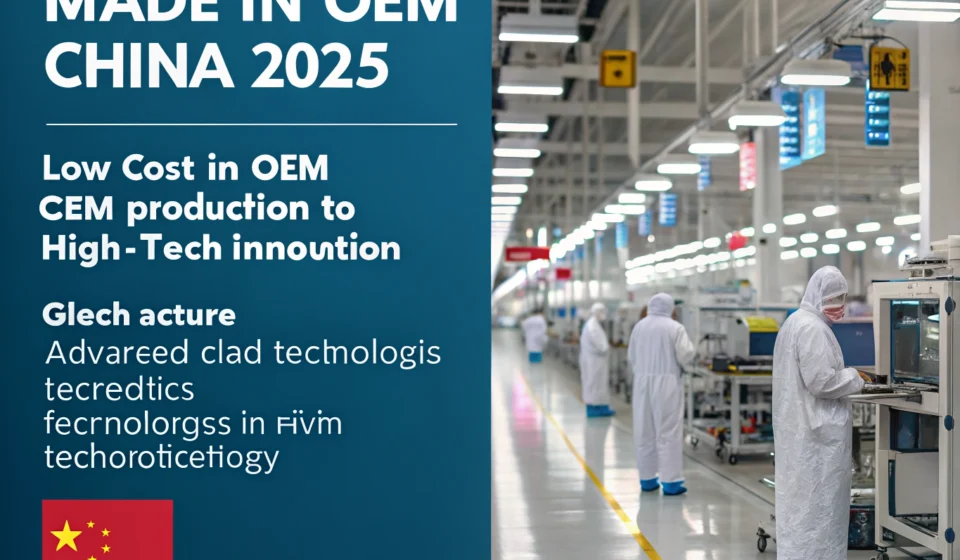
The cornerstone of China’s economic transformation is the “Made in China 2025” initiative, launched in 2015. This grand industrial plan marks a decisive **policy shift away from prioritizing traditional OEM manufacturing**. Where Beijing once encouraged low-value-added assembly for export, it now actively cultivates sectors where Chinese companies can lead. The plan targets ten key high-tech industries, including advanced robotics, aerospace, new energy vehicles, and biotechnology. The goal is explicit: to achieve technological self-sufficiency and create world-renowned Chinese brands.

This strategic rebalancing is evident in resource allocation and state focus. Significant investments are flowing into **Manufacturing Innovation Centers** designed to bridge the gap between research and industrial application. As verified data indicates, China’s manufacturing infrastructure and R&D capabilities have seen “significant growth in the last decade,” providing the physical and intellectual capital necessary for this upgrade. The ambition is to move beyond being a contract manufacturer and to become the innovator and brand owner. As one policy document states, the initiative aims to “guide enterprises in formulating brand management systems” and “support a number of competitive brands with international influence.” This represents a fundamental change in China’s role in the global economy, from a cost center to a potential source of innovation and competition.

Declining Policy Support for the Old Model

Concurrently, the traditional **OEM model has lost its prior standing in government policies**. The low-margin, high-volume business that defined China’s growth for years is no longer the national priority. This is not merely an organic market evolution but a top-down strategic redirection. The supplementary data underscores this, noting that the government now “prioritizes domestic brand development over traditional manufacturing.” For global brands that have built their supply chains on the assumption of limitless, low-cost Chinese OEM capacity, this policy environment change introduces a new layer of long-term strategic risk. The message from Beijing is clear: the future belongs to high-tech, high-value, and “Made in China” by Chinese brands, not merely “Made in China for others.”

The Legal Earthquake: HONDA and the Redefinition of the “Relevant Public”

Parallel to this industrial shift, a profound change is occurring in China’s legal landscape, particularly concerning intellectual property. A Supreme People’s Court ruling in a case involving **HONDA motorcycle parts** has dramatically expanded the legal interpretation of what constitutes trademark infringement in the context of **OEM manufacturing**. Traditionally, a grey area existed: could a Chinese OEM, manufacturing genuine parts solely for export under a foreign brand’s authorization, be held liable for trademark infringement if those products never entered the Chinese market?

The HONDA ruling answers with a decisive “yes,” based on a crucial redefinition. The Court significantly **expanded the scope of the “relevant public”** in trademark law. Historically, this public was considered only the end-user in the destination market. The Court now argues that in our interconnected world, Chinese consumers are part of the relevant public even for exported OEM goods. The reasoning, as cited in the source material, is that “Chinese users… can theoretically see and buy them online or when they travel abroad.” Therefore, the mere possibility that these OEM products could “find their way back to China” creates a likelihood of confusion and potential damage to the well-known trademark’s reputation.

The Court has stressed the fact that nowadays Chinese people have access to the Internet and are online shoppers as well as travel abroad more often than before.

This judicial reasoning is a direct reflection of China’s socioeconomic transformation—a nation of hundreds of millions of connected, mobile consumers. The decision underscores that OEM arrangements are **no longer a safe harbour from trademark scrutiny**. For brand owners, it emphasizes the need for ironclad contracts and oversight. For manufacturers, it elevates compliance and legal risk, adding a significant new cost and complexity to the OEM business model. As legal analysis notes, the ruling clarifies that infringement includes scenarios where the unauthorized use of a mark harms the registrant’s interests by “misleading the public.”

Implications for Global Supply Chain Strategy

This legal shift has immediate practical consequences. Global brands can no longer assume that manufacturing parts for their exclusive overseas use protects them from liability in China. It necessitates a review of OEM agreements, manufacturing oversight, and even logistical controls to prevent the theoretical “reverse flow” of goods. The ruling aligns perfectly with the “Made in China 2025” ethos: it strengthens the hand of Chinese trademark holders (both domestic and foreign, but particularly well-known ones) and imposes greater structure and legal risk on the traditional, hands-off OEM model. It sends a signal that China’s courts are interpreting laws in ways that protect its evolving market and increasingly sophisticated consumers.

Conclusion: Navigating the New Landscape of Chinese Manufacturing

The dual forces of the “Made in China 2025” policy and the HONDA legal precedent are fundamentally reshaping the landscape for international businesses. The era of relying on China as a low-cost, low-risk OEM manufacturing hub is unequivocally over. We are moving into a new chapter characterized by strategic competition and elevated legal vigilance. Global firms must now adapt to a China that is both a demanding consumer market and an aspiring competitor in high-tech industries.

Looking forward, successful engagement with China will require a more sophisticated strategy. Companies must evaluate their supply chains not just for cost and efficiency, but for alignment with China’s industrial upgrading goals and compliance with its strengthening IP protections. This may involve deeper partnerships, technology transfer, or even competing with nascent Chinese brands in third markets. The “World’s Factory” is not shutting down, but it is undergoing a radical renovation. It is becoming a workshop for global innovation and a fortress for intellectual property rights, all under the guiding blueprint of “Made in China 2025.” For the global business community, understanding this transformation is no longer optional—it is essential for survival and growth in the world’s most dynamic economic arena.
Tags:

BiotechInnovationInvestmentManufacturingPolicyRobotStock MarketSupply Chain
Author

ChinaIndustryIntel.com

Follow Me
Other Articles
Previous

How China OEM Manufacturing Transforms Global Order Fulfillment Efficiency and Quality

Next

How Shenzhen Trangjan Became a Global Electronics Manufacturing Powerhouse for Apple and Fortune 500 Giants

No Comment! Be the first one.

    Leave a Reply Cancel reply

    You must be logged in to post a comment.

    Recent Posts

    • China’s Humanoid Robot Output to Surge 94% as Unitree and AgiBot Dominate
    • China’s South Asia Trade Push: $257 Million in Energy Deals at 10th South博会
    • Samsung, SK Hynix Race to Solve HBM5 Thermal Crisis for AI Chips
    • SpaceX IPO Ignites China’s Commercial Space Investment Frenzy
    • The Four-Layer Tariff Stack: What US Importers Actually Pay on Chinese Goods in 2026

    Archives

    • June 2026

    Categories

    • BUSINESS
      • Economic Trends
      • Stock Market
      • Suppliers
      • Supply Chain
        • Logistics
      • Trade & Tariffs
    • INDUSTRIES
      • AI
      • Energy & Renewable
      • EV & Battery
      • Healthcare & Biotech
      • Manufacturing
      • Robotics
      • Semiconductor
    • TECH & CONSUMER
      • Consumer Trends & New Product Releases
      • Global Industry Insights
      • Tech & Internet
    Independent coverage of China’s industries, technology, manufacturing, supply chains, and market trends.

    Focused on AI, semiconductors, EVs, robotics, logistics, trade, and global industrial intelligence.

    • X
    • Instagram
    • Facebook
    • YouTube
    Short Version
    We welcome industry news tips, research contributions, press releases, and collaboration inquiries related to China’s industrial and technology sectors.
    Contact: editor@chinaindustryintel.com

    Available for Hire
    Get In Touch

    Recent Posts

    • China’s Humanoid Robot Output to Surge 94% as Unitree and AgiBot Dominate
      by CII-Contributing Analyst
      14.06.2026
    • 10th Huawei ICT Competition Global Final Concludes with Record 220,000 Participants from 49 Countries in Shenzhen10.06.2026
    • 42 Rules for Sourcing and Manufacturing in China: Navigating Quality, Culture, and Operational Realities for Global B…09.06.2026
    • A Comprehensive Guide: The 12-Step Framework for Successfully Opening a Factory in China in 202609.06.2026

    Search...

    Tag

    5G AI Battery Belt and Road Biotech China chips E-commerce Economy Enterprise EV Huawei Humanoid Innovation Intel Investment LLM Manufacturing New Energy OSAT Packaging Pharmaceutical Policy Robot Robotics Section 301 Semiconductor Stock Market Supply Chain Tariffs Trade

    You May Have Missed

    Robotics

    China’s Humanoid Robot Output to Surge 94% as Unitree and AgiBot Dominate

    By CII-Contributing Analyst
    14.06.2026
    Trade & Tariffs

    China’s South Asia Trade Push: $257 Million in Energy Deals at 10th South博会

    By CII-Contributing Analyst
    14.06.2026
    Semiconductor

    Samsung, SK Hynix Race to Solve HBM5 Thermal Crisis for AI Chips

    By CII-Contributing Analyst
    14.06.2026
    Robotics

    SpaceX IPO Ignites China’s Commercial Space Investment Frenzy

    By CII-Contributing Analyst
    14.06.2026
    Trade & Tariffs

    The Four-Layer Tariff Stack: What US Importers Actually Pay on Chinese Goods in 2026

    By CII-Contributing Analyst
    14.06.2026
    Semiconductor

    China’s Delete A Policy Costs Intel Billions in Revenue

    By CII-Contributing Analyst
    14.06.2026
    Robotics

    Embodied AI: How China Is Building the Factory Workers of Tomorrow

    By CII-Contributing Analyst
    14.06.2026
    EV & Battery

    Geely’s ‘One Geely’ Strategy Reshapes China’s Auto Giant

    By CII-Contributing Analyst
    14.06.2026
    EV & Battery

    CATL’s Investment Empire: The Battery Giant Becomes a VC Powerhouse

    By CII-Contributing Analyst
    14.06.2026

    China Industry Intel is an independent media and intelligence platform covering China’s industrial economy, emerging technologies, manufacturing ecosystems, and global supply chains.

    We provide curated analysis on AI, semiconductors, robotics, EVs, healthcare, logistics, trade policy, and consumer technology — helping readers understand how China’s industries are shaping global markets.

    • Facebook
    • X
    • Instagram
    • LinkedIn

    Latest Posts

    • Zhejiang Momali Valve Co., Ltd. Expands Global Footprint as a Leading Brass Sanitary Ware Manufacturer from China’s Valve Capital
      In the fiercely competitive world of plumbing and sanitary ware manufacturing, few regions on earth carry the industrial weight and concentrated expertise of Yuhuan, Taizhou — widely known as **China
    • Xunce Technology Stock Price Doubles on Hong Kong IPO: Why China’s “Palantir” Large Model Data Leader Is Attracting G…
      The Hong Kong Stock Exchange has long served as a barometer for China's most innovative technology companies, and late 2025 delivered one of its most striking debuts in recent memory. On December 30,
    • Xunce Technology Hong Kong IPO: Why ‘China’s Palantir’ is a Data Analytics Stock to Watch in 2026
      The global tech investment community is perpetually scanning the horizon for the next paradigm-shifting company, a "next Palantir" that can harness the exponential value of data. While Silicon Valley

    Link

    alibaba.com

    Contact

    Phone

    +77 822411

    Email

    editor@chinaindustryintel.com

    Location

    New York, USA

    Copyright 2026 — China Industry Intel. All rights reserved.