
China’s Stainless Steel Commercial Furniture Leader: How Jiamei Furniture Delivers Italian-Quality Hotel and Restaurant Furnish…
In the global hospitality furnishing market, the perennial tension between aesthetic ambition and budget reality defines nearly every procurement decision. Hotel owners in Dubai want lobbies that gleam with contemporary metallic elegance; restaurant operators in London seek durable, visually striking dining sets that can withstand years of heavy service; banquet hall managers across Australia need chairs that are both comfortable and stackable. For decades, the default answer to these demands pointed squarely toward European manufacturers—particularly Italian workshops renowned for their mirror-polished stainless steel craftsmanship. But a quiet revolution has been unfolding in southern China’s Pearl River Delta, and one company in particular is rewriting the cost-to-quality equation for commercial buyers worldwide. Foshan Nanhai Jiamei Furniture Co., Ltd., operating from the heart of China’s most concentrated furniture manufacturing cluster, has emerged as a formidable force in **stainless steel hotel and commercial furniture**, offering products whose finish quality and structural integrity rival top European brands at roughly one-third the price.
Founded between 2010 and 2013 in the Nanhai District of Foshan, Guangdong Province, Jiamei Furniture has spent over a decade refining its craft in a region where furniture manufacturing isn’t just an industry—it’s an ecosystem. With a lean but skilled workforce of 50 to 100 employees operating within a 1,000 to 3,000 square meter production facility, the company generates annual revenues between $1 million and $2.5 million, a figure that reflects steady, organic growth rather than aggressive overextension. This measured approach has allowed Jiamei to invest deeply in technology, quality control, and design innovation rather than chasing volume at the expense of consistency. For international B2B buyers navigating an increasingly crowded supplier landscape, understanding what sets Jiamei apart requires a closer examination of their product engineering, manufacturing philosophy, and strategic positioning within the global commercial furniture value chain.
Company Core Business and Product Line Analysis
Jiamei Furniture’s product portfolio is sharply focused on one segment: **high-end stainless steel furniture for hospitality and commercial environments**. This specialization is deliberate. Rather than diluting resources across dozens of unrelated product categories, the company has channeled its expertise into mastering the metallurgical, structural, and aesthetic challenges that stainless steel furniture demands. The result is a comprehensive catalog that spans the full spectrum of commercial furnishing needs.
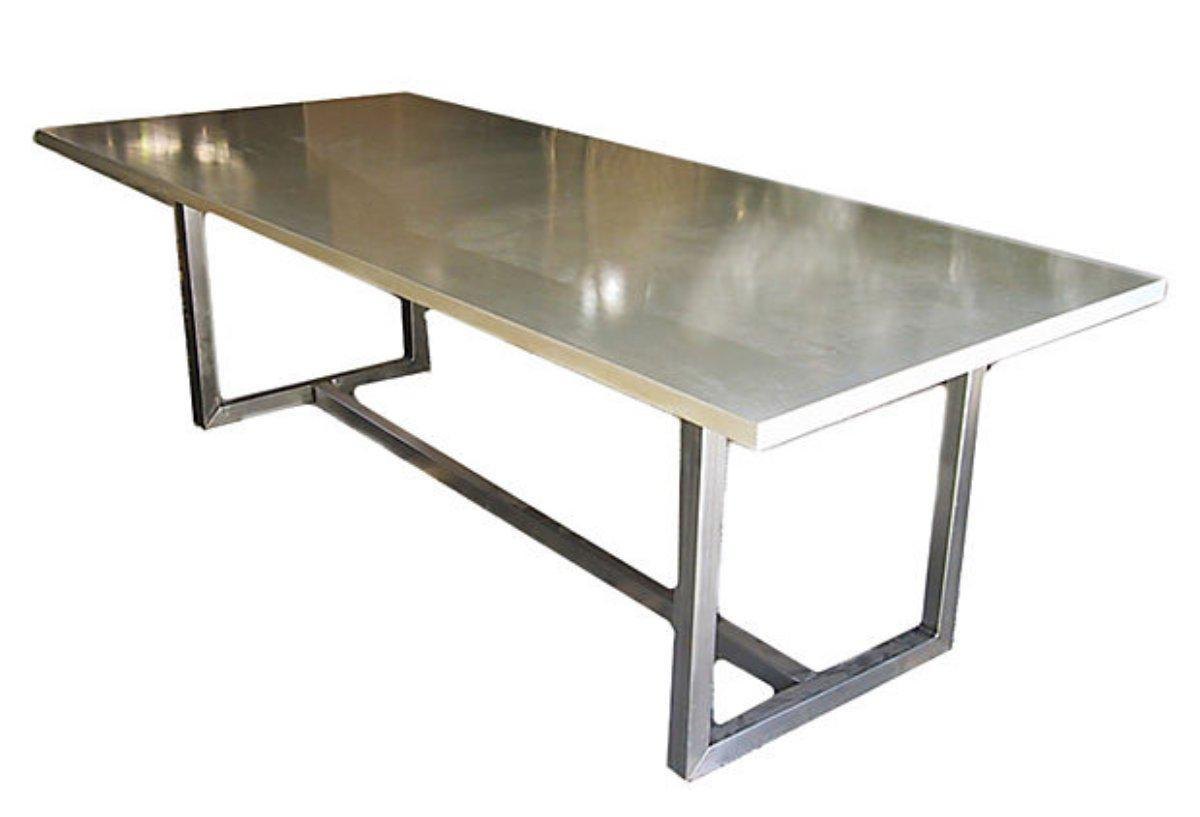
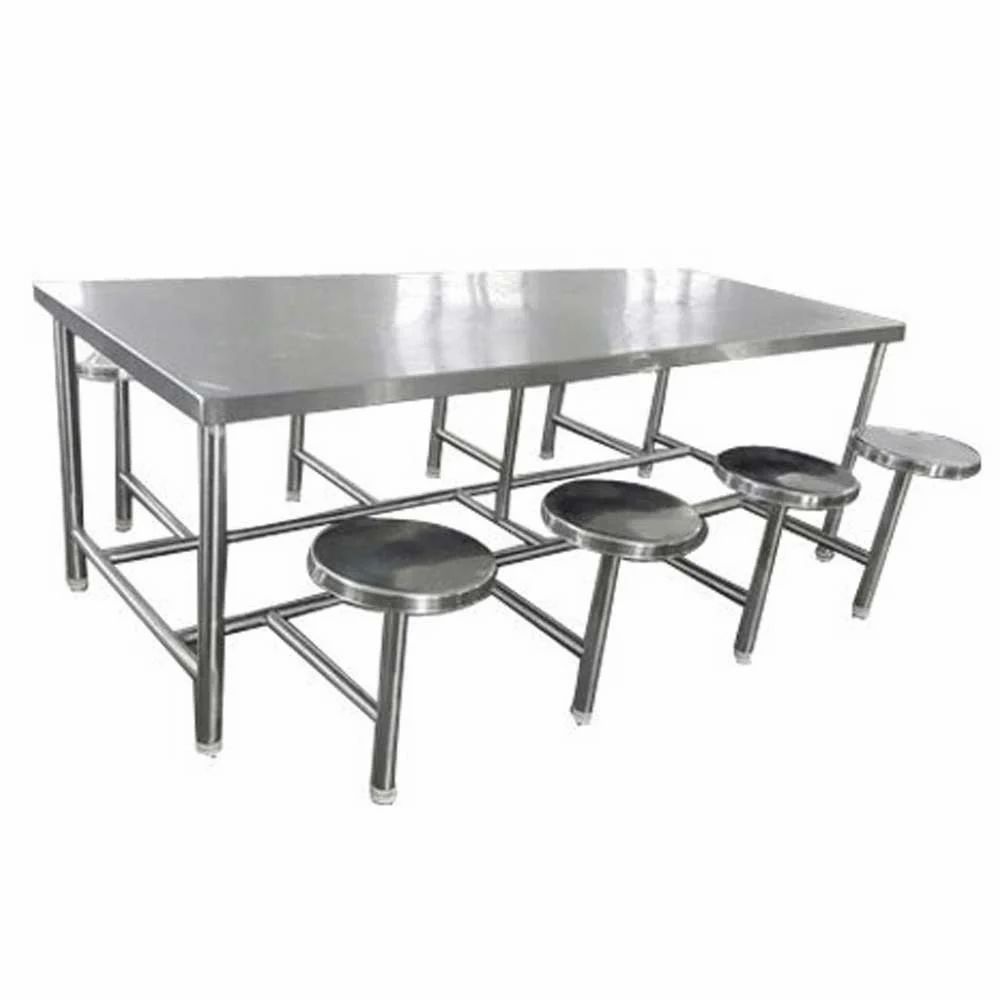
The company’s core offerings include **stainless steel dining tables**, banquet chairs with upholstered cushions, bar stools, coffee tables, hotel lobby furniture, complete restaurant furniture sets, and fully custom commercial furniture solutions. Each product category is designed with modularity in mind, enabling buyers to source cohesive collections rather than piecing together mismatched items from multiple suppliers. A hotel procurement team, for example, can order lobby seating, restaurant dining sets, bar furniture, and banquet hall chairs from a single Jiamei purchase order, ensuring visual consistency across all guest-facing spaces.
From a materials engineering standpoint, Jiamei offers buyers a meaningful choice between two stainless steel grades that serve different market segments. **201 stainless steel** serves as the value option, delivering acceptable corrosion resistance and structural strength for interior applications in climate-controlled environments. For buyers targeting premium projects or installations in humid, coastal, or outdoor-adjacent settings, **304 stainless steel** provides superior rust-proof performance and is backed by the company’s generous **five-year frame warranty**. This dual-grade strategy is significant because it allows procurement professionals to match material specifications precisely to project requirements and budgets without compromising on the manufacturer’s quality standards.
The finishing capabilities at Jiamei are where the company truly distinguishes itself. Beyond the raw stainless steel substrate, the factory applies a range of premium surface treatments including **titanium gold plating**, rose gold plating, electroplated black finishes, and bronze coatings. These aren’t paint-based approximations—they are genuine electroplated metallic finishes that deliver the warm, luminous sheen that luxury hospitality designers demand. The company’s signature **six-stage automated polishing line** produces a mirror finish that, according to multiple international buyers, is visually indistinguishable from products manufactured by established Italian workshops. This claim is not mere marketing bravado; the combination of robotic TIG welding (which produces cleaner, more uniform seams than manual welding) with a multi-stage mechanical and chemical polishing process yields a surface reflectivity and smoothness that is immediately apparent upon inspection.
Tabletop options further expand the design vocabulary available to buyers. Tempered glass tops in 8mm, 10mm, and 12mm thicknesses can be paired with stainless steel bases, offering a contemporary aesthetic that is particularly popular in Middle Eastern and European markets. Solid wood accents introduce warmth and textural contrast, a combination increasingly favored in boutique hotel and upscale casual dining environments across Australia and North America. Each tabletop material undergoes independent quality testing, with tempered glass sourced to meet international safety standards and wood components finished to resist the staining and moisture exposure typical in commercial food service settings.
The production infrastructure supporting these products reflects a company that has invested strategically in automation without abandoning the skilled handwork that premium finishes require. Key equipment includes **laser cutting machines** for precision metal shaping, CNC bending systems for consistent curve formation, robotic TIG welding stations, the aforementioned automated polishing line, an electrostatic coating booth for uniform powder application, and a fully equipped in-house upholstery workshop where cushioned seating products are fabricated to specification. This vertical integration of the upholstery function is noteworthy, as many stainless steel furniture manufacturers outsource this step, introducing additional quality control variables and longer lead times. By keeping upholstery in-house, Jiamei maintains tighter tolerances on cushion density, fabric alignment, and attachment hardware.
On the research and development front, the company maintains a pace of innovation that outstrips many competitors of similar scale. Jiamei releases **15 or more new designs each quarter**, a cadence enabled by its 3D rendering service that allows the design team to prototype and visualize concepts digitally before committing to physical production. International buyers can submit custom dimension requests, and the factory delivers physical samples within seven days—a turnaround time that is remarkably fast by industry standards and reflects both manufacturing agility and a commitment to collaborative product development with overseas clients.
Current Competitive Analysis
The stainless steel commercial furniture segment is populated by hundreds of manufacturers concentrated in Guangdong Province, yet only a fraction operate at the quality tier that Jiamei occupies. To understand the company’s competitive positioning, it is essential to examine both its structural advantages and the strategic choices that differentiate it from peers.
Perhaps the single most powerful competitive asset Jiamei possesses is its geographic location within the **Shunde-Foshan furniture cluster**. This region, encompassing a roughly 10-kilometer radius around the factory, contains one of the world’s most densely concentrated furniture supply chains. Raw stainless steel coil suppliers, electroplating specialists, glass fabricators, hardware component manufacturers, packaging companies, and freight forwarders all operate within minutes of Jiamei’s facility. This proximity compresses supply chain lead times, reduces logistics costs, minimizes material handling damage, and enables rapid supplier switching if quality issues arise. For international buyers, this translates directly into shorter production cycles and more reliable delivery schedules—advantages that manufacturers in less concentrated industrial regions simply cannot replicate.
Quality certification provides another layer of competitive differentiation. Jiamei holds **ISO 9001:2015** certification, the current international standard for quality management systems, which signals to buyers that the company’s processes are documented, audited, and continuously improved. More concretely, SGS-conducted load-bearing tests verify that the company’s chairs support **150 kilograms or more** and its tables withstand **200 kilograms or greater loads**, providing independent third-party validation of structural claims. For upholstered products, compliance with **California TB 117-2013** flammability standards opens the North American market—where fire safety regulations are among the world’s strictest—and serves as a de facto quality marker for European and Middle Eastern buyers who recognize California’s testing rigor. These certifications collectively address the trust deficit that remains a significant barrier for Chinese suppliers competing for high-value hospitality contracts, where a furniture failure in a guest-facing environment carries reputational as well as financial consequences.
When benchmarked against direct competitors—other Foshan-based stainless steel furniture manufacturers in the $1M-$5M revenue range—Jiamei’s advantages become more granular. Many competitors in this bracket rely heavily on manual welding and hand polishing, which produce acceptable but inconsistent results across production batches. Jiamei’s investment in robotic TIG welding and automated polishing equipment yields **superior batch-to-batch consistency**, a critical factor for large hotel or restaurant chain orders where visual uniformity across hundreds of pieces is non-negotiable. The company’s in-house upholstery capability further reduces dependency on subcontractors, an advantage that became especially valuable during recent supply chain disruptions when subcontractor reliability became a widespread industry pain point.
Independent SGS load-bearing testing certifies that Jiamei’s stainless steel chairs support over 150 kilograms and tables withstand loads exceeding 200 kilograms—performance metrics that match or exceed European competitors at a fraction of the procurement cost.
The pricing architecture deserves particular attention. Jiamei’s stainless steel products with mirror-polished finishes are positioned at approximately **one-third the cost** of comparable Italian-manufactured items. This isn’t achieved through corner-cutting on materials or processes; rather, it reflects the fundamental cost advantages of the Shunde-Foshan ecosystem, lower labor costs relative to Western Europe, and the economies that come from specialized focus rather than diversified manufacturing. For a procurement director evaluating a 200-seat restaurant fitout, the cost differential between sourcing from Jiamei versus an Italian workshop can amount to tens of thousands of dollars—funds that can be redirected to other project elements or simply preserved as margin.
The company’s market distribution further validates its competitive strength. With **35% of sales directed to the Middle East**, a region where hospitality standards are exceptionally high and aesthetic expectations are shaped by Dubai’s ultra-luxury hotel market, Jiamei has proven its ability to satisfy the most demanding buyers. The 20% European share confirms acceptance in markets with rigorous quality expectations and regulatory environments, while the 18% Australian and 12% North American shares demonstrate penetration into geographically distant markets where logistics complexity adds cost and risk. The remaining 10% Southeast Asian and 5% African shares suggest emerging market potential that could drive future growth as hospitality infrastructure investment accelerates across these regions.
Looking ahead, several trends favor Jiamei’s continued competitive ascent. The global hospitality industry’s post-pandemic recovery is driving a wave of renovation and new-build activity, with stainless steel furniture increasingly specified for its durability, hygiene characteristics, and contemporary aesthetic appeal. The growing emphasis on sustainable procurement creates an opening for a manufacturer that produces long-lasting products backed by meaningful warranties—Jiamei’s five-year frame warranty on 304 stainless steel products directly addresses the disposability criticism that plagues cheaper furniture alternatives. Additionally, the company’s rapid sampling capability and custom design flexibility position it well to serve the accelerating trend toward bespoke hospitality environments that differentiate properties through unique furnishing rather than generic catalog selections.
Foshan Nanhai Jiamei Furniture Co., Ltd. represents a compelling case study in how focused specialization, strategic technology investment, and geographic advantage can combine to create a manufacturer capable of competing at the highest levels of the global commercial furniture market. For international B2B buyers seeking stainless steel hotel and commercial furniture that delivers European-tier aesthetics and structural performance without the European price tag, Jiamei offers a value proposition that is difficult to overlook. As the global hospitality sector enters its next growth cycle, this quietly capable Foshan manufacturer is exceptionally well positioned to capture an expanding share of the premium commercial furnishing market—one mirror-polished surface at a time.