
Skip to content
China Industry Intel China Industry Intel China Industry Intel

Intelligence on China’s Industries, Markets, Technology, and Manufacturing

China Industry Intel China Industry Intel China Industry Intel

Intelligence on China’s Industries, Markets, Technology, and Manufacturing

  • Home
  • INDUSTRIES
    • AI
    • Healthcare & Biotech
    • Robotics
    • Energy & Renewable
    • Semiconductor
    • EV & Battery
    • Manufacturing
  • BUSINESS
    • Logistics
    • Suppliers
    • Supply Chain
    • Stock Market
    • Economic Trends
    • Trade & Tariffs
  • TECH & CONSUMER
    • Global Industry Insights
    • Tech & Internet
    • Consumer Trends & New Product Releases
  • About
  • Contact
  • Home
  • INDUSTRIES
    • AI
    • Healthcare & Biotech
    • Robotics
    • Energy & Renewable
    • Semiconductor
    • EV & Battery
    • Manufacturing
  • BUSINESS
    • Logistics
    • Suppliers
    • Supply Chain
    • Stock Market
    • Economic Trends
    • Trade & Tariffs
  • TECH & CONSUMER
    • Global Industry Insights
    • Tech & Internet
    • Consumer Trends & New Product Releases
  • About
  • Contact
  • https://www.facebook.com/
  • https://twitter.com/
  • https://t.me/
  • https://www.instagram.com/
  • https://youtube.com/
Subscribe
China Industry Intel China Industry Intel China Industry Intel

Intelligence on China’s Industries, Markets, Technology, and Manufacturing

China Industry Intel China Industry Intel China Industry Intel

Intelligence on China’s Industries, Markets, Technology, and Manufacturing

  • Home
  • INDUSTRIES
    • AI
    • Healthcare & Biotech
    • Robotics
    • Energy & Renewable
    • Semiconductor
    • EV & Battery
    • Manufacturing
  • BUSINESS
    • Logistics
    • Suppliers
    • Supply Chain
    • Stock Market
    • Economic Trends
    • Trade & Tariffs
  • TECH & CONSUMER
    • Global Industry Insights
    • Tech & Internet
    • Consumer Trends & New Product Releases
  • About
  • Contact
  • Home
  • INDUSTRIES
    • AI
    • Healthcare & Biotech
    • Robotics
    • Energy & Renewable
    • Semiconductor
    • EV & Battery
    • Manufacturing
  • BUSINESS
    • Logistics
    • Suppliers
    • Supply Chain
    • Stock Market
    • Economic Trends
    • Trade & Tariffs
  • TECH & CONSUMER
    • Global Industry Insights
    • Tech & Internet
    • Consumer Trends & New Product Releases
  • About
  • Contact
  • https://www.facebook.com/
  • https://twitter.com/
  • https://t.me/
  • https://www.instagram.com/
  • https://youtube.com/
Subscribe
Home/BUSINESS/Trade & Tariffs/The Double Squeeze: How De Minimis Policy Changes and Jet Fuel Costs Challenge Shein and Temu’s Global Dominance
Trade & Tariffs

The Double Squeeze: How De Minimis Policy Changes and Jet Fuel Costs Challenge Shein and Temu’s Global Dominance

By ChinaIndustryIntel.com
10.06.2026 5 Min Read

The halcyon days of hyper-growth for ultra-low-cost Chinese e-commerce platforms appear to be colliding with a new, harsher reality. Shein and Temu, the titans that reshaped global fast-fashion and discount retail through a model of direct, duty-free shipping, are now facing a severe operational headwinds. A pivotal change in U.S. trade policy, the end of the duty-free de minimis exemption, is converging with a volatile surge in global jet fuel costs, creating a double squeeze on their fundamental business model. This combination threatens to erode their razor-thin margins, disrupt their streamlined supply chains, and force a strategic recalibration as they seek to maintain their explosive momentum in key Western markets.

The De Minimis Dearth: How the End of the $800 Threshold Upends the Low-Cost Model

The cornerstone of Shein and Temu’s ability to offer consumers an endless stream of sub-$10 garments and gadgets has been a customs loophole known as the “de minimis” rule. In the United States, this provision historically allowed shipments valued under $800 to enter the country duty-free and with minimal customs processing. This enabled the platforms to ship individual packages directly to consumers from China, bypassing the complex and expensive process of bulk importing, warehousing, and formal customs entry. The model was a logistical marvel, but its regulatory foundation has now crumbled.

A Direct Hit to Margins and Logistics

The legislative push to reform or end de minimis for shipments from China, driven by concerns over unfair competition and product safety, introduces a new layer of cost and complexity. Every package now potentially faces duties, taxes, and a more rigorous customs clearance process. This doesn’t just add a per-item cost; it fundamentally alters the economics. The platforms must now consider whether to absorb these costs, which destroys profitability, or pass them on to consumers, which undermines their core value proposition of unbeatable low prices. Furthermore, the slowdown in customs clearance disrupts the promised rapid delivery times, damaging the customer experience.

Industry analysis suggests the impact is already being felt in logistics strategy. The direct-from-China, small-parcel model is becoming less viable. Consequently, both companies are accelerating a shift toward establishing local distribution networks within target markets like the U.S. and Europe. This involves bulk shipping inventory to overseas warehouses—a standard retail practice that requires significant capital investment, sophisticated demand forecasting, and introduces new fixed costs like warehousing and local fulfillment labor. It represents a fundamental move from an asset-light platform model to a more traditional, asset-heavy retail operation.

The Fuel Fire: Jet Fuel Volatility Amplifies the Cost Crisis

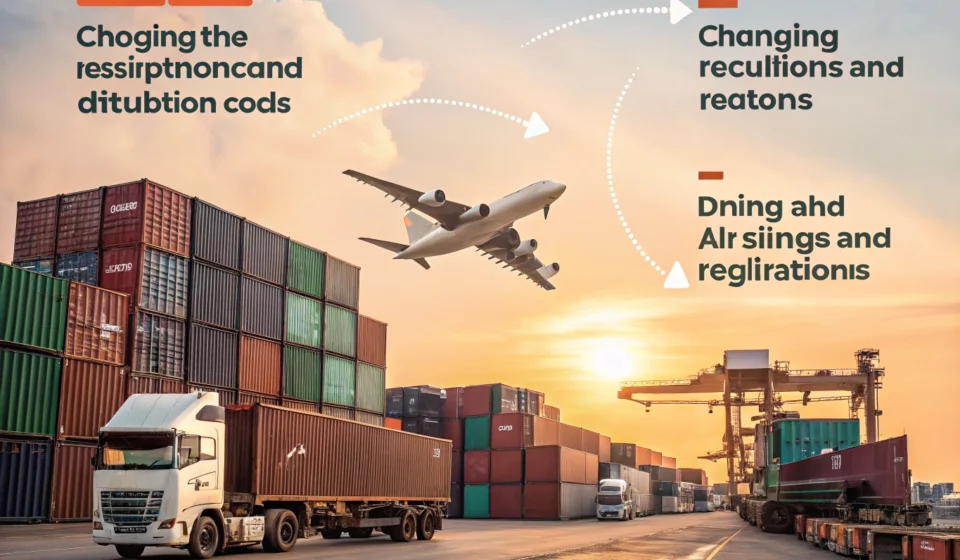
Compounding the pain from new trade rules is the dramatic resurgence of jet fuel costs. As global travel demand has recovered post-pandemic and geopolitical tensions have constrained supply, the price of aviation fuel has soared. For Shein and Temu, which have relied heavily on air freight to ensure the speed their customers expect, this is a critical vulnerability. Air cargo is the most expensive way to move goods, and its cost is directly tied to fuel prices.

A Perfect Storm for Air Cargo Dependence

The companies’ growth models were predicated on cheap, abundant air cargo capacity. The new landscape is starkly different. Reports indicate that shipping a kilogram of goods by air from China to the U.S. has become up to 35% more expensive compared to pre-surge levels. This cost escalation eats directly into margins that were already being squeezed by the de minimis changes. It forces a brutal calculus: continue using fast but expensive air freight and lose money on each sale, or shift to slower, cheaper ocean freight and risk losing customers accustomed to two-week deliveries.

“You’re seeing a perfect storm where the two key pillars of their logistics model—regulatory arbitrage and cheap air transport—are being knocked out simultaneously,” noted one logistics industry analyst. “The transition to a sustainable model will be painful and expensive.”

The data points to a strategic bifurcation in response. While core, high-demand items may still fly, a larger percentage of inventory is likely being redirected to sea freight, especially for goods destined for the new overseas warehouses. This shift, however, requires much longer lead times (weeks instead of days), making inventory management and predicting consumer trends infinitely more challenging. It also ties up capital for longer periods, straining cash flow for companies operating on a model of continuous, rapid turnover.

Strategic Pivots and the Road Ahead: Adapting the Hyper-Fast Fashion Model

Faced with this double squeeze, Shein and Temu are not standing still. Their response is defining the next phase of their evolution and offering a preview of the future of cross-border e-commerce. The overarching theme is a rapid, multi-pronged localization strategy aimed at reducing dependency on the challenged China-centric logistics network.

From Direct Shipping to Global Fulfillment Hubs

A key tactic is the expansion and optimization of overseas warehousing and fulfillment centers. Both companies have been actively leasing warehouse space in strategic locations like the U.S., Europe, and even Mexico. This move allows them to import goods in bulk, clearing customs once for the entire shipment, and then fulfill orders domestically from within the target market. This mitigates the per-package de minimis issue and can utilize cheaper ocean freight for the initial leg of the journey. Temu, for example, has been incentivizing its Chinese sellers to pre-position inventory in these overseas warehouses.

Simultaneously, there is an active exploration of alternative shipping routes and methods. This includes:

  • Increased use of sea-air combinations: Shipping by ocean to a hub like Dubai or Europe, then using air freight for the final leg to reduce total air miles and cost.
  • Near-shoring experiments: Evaluating sourcing and production closer to end markets, such as in Turkey for European goods or Mexico for the Americas, to shorten supply chains entirely.
  • Partnerships with established logistics giants: Collaborating with companies like Maersk or major integrators to leverage their global networks and potentially secure more stable freight rates.

Ultimately, the era of pure, frictionless arbitrage is ending. The double squeeze is forcing a maturation of these disruptive platforms. They must now compete not just on price and novelty, but on the sophistication of their supply chain management, their demand forecasting accuracy, and their ability to build a resilient, multi-modal global logistics network. The companies that successfully navigate this transition will emerge as more robust, traditional retailers. Those that fail may see their explosive growth plateau, unable to sustain a model that has been fundamentally undermined by policy and market forces. The race is no longer just about speed to market, but about operational endurance and strategic agility in a newly complex global trade environment.


Tags:

AIE-commerceInvestmentLLMPolicyStock MarketSupply Chain
Author

ChinaIndustryIntel.com

Follow Me
Other Articles
Previous

Advanced Automotive Supply Chain Analysis: How BAIC Foton and Qingling Motors Showcase China’s Hardcore Manufacturing…

Next

China’s Palantir Xunce Technology Stock Price Doubles After Hong Kong IPO as AI Data Solutions Market Surges

No Comment! Be the first one.

Leave a Reply Cancel reply

You must be logged in to post a comment.

Recent Posts

  • China’s Humanoid Robot Output to Surge 94% as Unitree and AgiBot Dominate
  • China’s South Asia Trade Push: $257 Million in Energy Deals at 10th South博会
  • Samsung, SK Hynix Race to Solve HBM5 Thermal Crisis for AI Chips
  • SpaceX IPO Ignites China’s Commercial Space Investment Frenzy
  • The Four-Layer Tariff Stack: What US Importers Actually Pay on Chinese Goods in 2026

Archives

  • June 2026

Categories

  • BUSINESS
    • Economic Trends
    • Stock Market
    • Suppliers
    • Supply Chain
      • Logistics
    • Trade & Tariffs
  • INDUSTRIES
    • AI
    • Energy & Renewable
    • EV & Battery
    • Healthcare & Biotech
    • Manufacturing
    • Robotics
    • Semiconductor
  • TECH & CONSUMER
    • Consumer Trends & New Product Releases
    • Global Industry Insights
    • Tech & Internet
Independent coverage of China’s industries, technology, manufacturing, supply chains, and market trends.

Focused on AI, semiconductors, EVs, robotics, logistics, trade, and global industrial intelligence.

  • X
  • Instagram
  • Facebook
  • YouTube
Short Version
We welcome industry news tips, research contributions, press releases, and collaboration inquiries related to China’s industrial and technology sectors.
Contact: editor@chinaindustryintel.com

Available for Hire
Get In Touch

Recent Posts

  • China’s Humanoid Robot Output to Surge 94% as Unitree and AgiBot Dominate
    by CII-Contributing Analyst
    14.06.2026
  • 10th Huawei ICT Competition Global Final Concludes with Record 220,000 Participants from 49 Countries in Shenzhen10.06.2026
  • 42 Rules for Sourcing and Manufacturing in China: Navigating Quality, Culture, and Operational Realities for Global B…09.06.2026
  • A Comprehensive Guide: The 12-Step Framework for Successfully Opening a Factory in China in 202609.06.2026

Search...

Tag

5G AI Battery Belt and Road Biotech China chips E-commerce Economy Enterprise EV Huawei Humanoid Innovation Intel Investment LLM Manufacturing New Energy OSAT Packaging Pharmaceutical Policy Robot Robotics Section 301 Semiconductor Stock Market Supply Chain Tariffs Trade

You May Have Missed

Robotics

China’s Humanoid Robot Output to Surge 94% as Unitree and AgiBot Dominate

By CII-Contributing Analyst
14.06.2026
Trade & Tariffs

China’s South Asia Trade Push: $257 Million in Energy Deals at 10th South博会

By CII-Contributing Analyst
14.06.2026
Semiconductor

Samsung, SK Hynix Race to Solve HBM5 Thermal Crisis for AI Chips

By CII-Contributing Analyst
14.06.2026
Robotics

SpaceX IPO Ignites China’s Commercial Space Investment Frenzy

By CII-Contributing Analyst
14.06.2026
Trade & Tariffs

The Four-Layer Tariff Stack: What US Importers Actually Pay on Chinese Goods in 2026

By CII-Contributing Analyst
14.06.2026
Semiconductor

China’s Delete A Policy Costs Intel Billions in Revenue

By CII-Contributing Analyst
14.06.2026
Robotics

Embodied AI: How China Is Building the Factory Workers of Tomorrow

By CII-Contributing Analyst
14.06.2026
EV & Battery

Geely’s ‘One Geely’ Strategy Reshapes China’s Auto Giant

By CII-Contributing Analyst
14.06.2026
EV & Battery

CATL’s Investment Empire: The Battery Giant Becomes a VC Powerhouse

By CII-Contributing Analyst
14.06.2026

China Industry Intel is an independent media and intelligence platform covering China’s industrial economy, emerging technologies, manufacturing ecosystems, and global supply chains.

We provide curated analysis on AI, semiconductors, robotics, EVs, healthcare, logistics, trade policy, and consumer technology — helping readers understand how China’s industries are shaping global markets.

  • Facebook
  • X
  • Instagram
  • LinkedIn

Latest Posts

  • Zhejiang Momali Valve Co., Ltd. Expands Global Footprint as a Leading Brass Sanitary Ware Manufacturer from China’s Valve Capital
    In the fiercely competitive world of plumbing and sanitary ware manufacturing, few regions on earth carry the industrial weight and concentrated expertise of Yuhuan, Taizhou — widely known as **China
  • Xunce Technology Stock Price Doubles on Hong Kong IPO: Why China’s “Palantir” Large Model Data Leader Is Attracting G…
    The Hong Kong Stock Exchange has long served as a barometer for China's most innovative technology companies, and late 2025 delivered one of its most striking debuts in recent memory. On December 30,
  • Xunce Technology Hong Kong IPO: Why ‘China’s Palantir’ is a Data Analytics Stock to Watch in 2026
    The global tech investment community is perpetually scanning the horizon for the next paradigm-shifting company, a "next Palantir" that can harness the exponential value of data. While Silicon Valley

Link

alibaba.com

Contact

Phone

+77 822411

Email

editor@chinaindustryintel.com

Location

New York, USA

Copyright 2026 — China Industry Intel. All rights reserved.