SMIC’s 5nm Power Play: Inside China’s Strategic Push for Advanced AI Chip Independence
SMIC’s 5nm Power Play: Inside China’s Strategic Push for Advanced AI Chip Independence
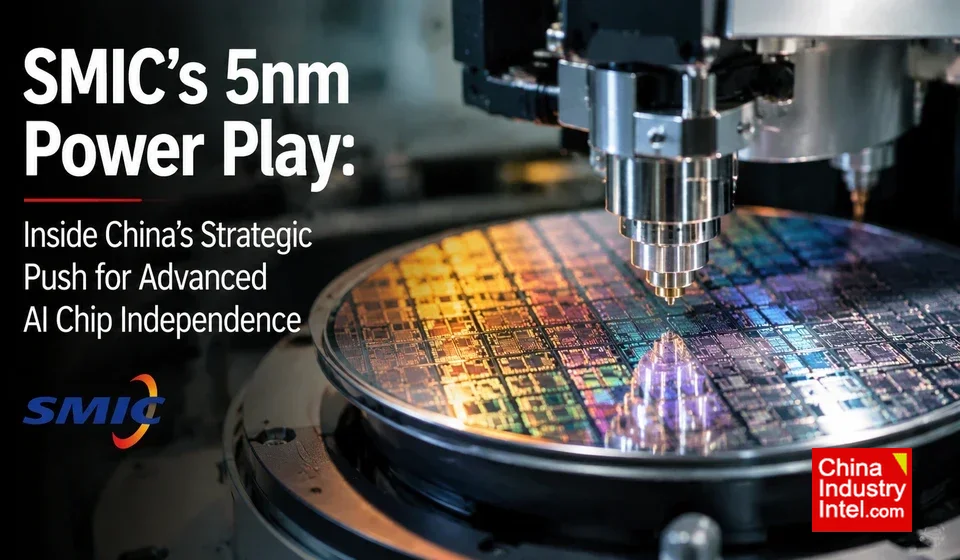
The global semiconductor landscape is witnessing a pivotal shift as Semiconductor Manufacturing International Corporation (SMIC), China’s largest chipmaker, aggressively pushes into the 5nm node. This strategic move is not merely a technical milestone but a critical component of China’s broader ambition to achieve “chip independence” in the face of stringent US export controls.
The 5nm Threshold
For years, the 7nm node was seen as the “frontier” for domestic Chinese production. However, as AI workloads evolve—particularly with the rise of Large Language Models (LLMs)—the demand for higher transistor density and better power efficiency has made 5nm the new battleground. SMIC’s push into 5nm aims to provide the hardware foundation for next-generation AI accelerators that can compete with global leaders.
Navigating Export Controls
The primary hurdle remains the lack of access to Extreme Ultraviolet (EUV) lithography machines from ASML. To bypass this, SMIC has reportedly optimized Deep Ultraviolet (DUV) multi-patterning techniques. While this approach is more costly and has lower yields than EUV, it demonstrates a resilient engineering workaround to maintain momentum in advanced node production.
Domestic Demand and the AI Ecosystem
The drive for 5nm is fueled by massive domestic demand. Chinese AI giants and government-backed entities are desperate for high-performance GPUs and NPUs to train sovereign AI models. By securing a domestic supply of 5nm chips, China reduces its vulnerability to geopolitical shocks and creates a closed-loop ecosystem from design to fabrication.
Conclusion
SMIC’s strategic gamble on 5nm is a signal to the world that China is unwilling to be capped at legacy nodes. While the path is fraught with technical and political challenges, the successful scaling of 5nm production would mark a turning point in the global semiconductor hierarchy, shifting the balance of AI hardware sovereignty.