China Standardizes Solid-State Batteries for 2026: Paving the Way for 1,000km+ Range EVs
China Standardizes Solid-State Batteries for 2026: Paving the Way for 1,000km+ Range EVs
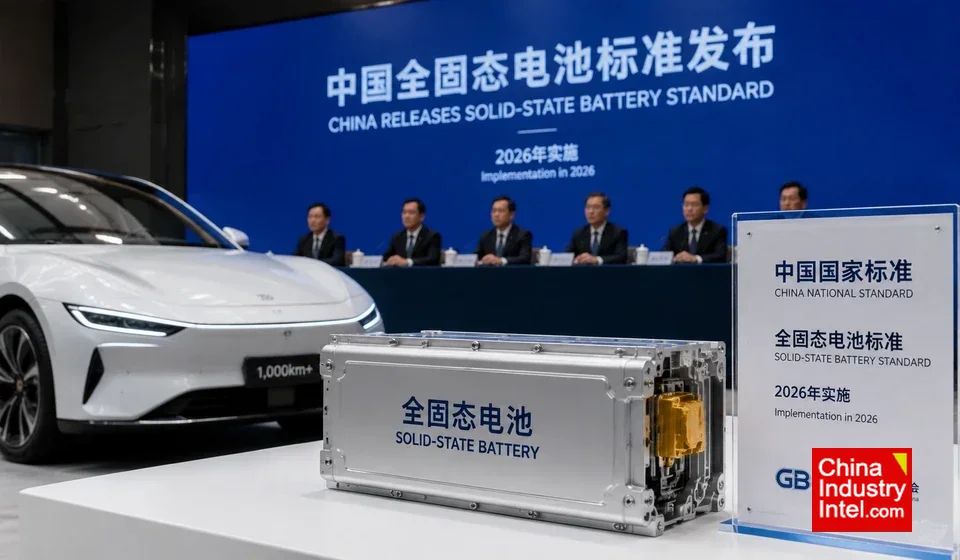
China’s Ministry of Industry and Information Technology (MIIT) is accelerating the formalization of national standards for solid-state batteries (SSBs), targeting a full implementation framework by 2026. This move is designed to transition the EV industry from experimental prototypes to scalable mass production.
The Quest for 1,000km+ Range
The primary driver for the shift to solid-state technology is energy density. By replacing liquid electrolytes with solid materials, batteries can store significantly more energy in the same volume. This is the key to breaking the “range anxiety” barrier, with industry targets now aiming for consistent 1,000km+ ranges on a single charge.
Safety and Charging Efficiency
Beyond range, solid-state batteries offer a critical safety advantage: the elimination of flammable liquid electrolytes, which drastically reduces the risk of thermal runaway. Furthermore, the standardized framework focuses on enhancing fast-charging capabilities, aiming to bring charging times closer to the experience of refueling a traditional internal combustion engine vehicle.
The Battle of the Titans: CATL vs. BYD
The standardization process arrives as industry leaders like CATL and BYD race to perfect their respective SSB chemistries. While CATL has focused on semi-solid state intermediates to bridge the gap, the new 2026 standards will provide the technical benchmarks for “all-solid-state” batteries, ensuring interoperability and safety across the Chinese EV ecosystem.
Global Implications
By setting the standard early, China aims to maintain its dominance over the global battery supply chain. If China successfully scales SSBs by 2026, it will force global competitors to either adopt Chinese standards or accelerate their own R&D to avoid falling behind in the next generation of electromobility.