
China Retail Growth Slows to 1.4% as Online Services Outperform
China’s consumer market expanded slowly in the first five months of 2026, but the headline rate concealed a sharper divide between physical retail formats and faster-growing online services.
National Bureau of Statistics data show total retail sales of consumer goods reached 20.6031 trillion yuan in January-May, up 1.4% from a year earlier. Online retail sales of goods and services grew 5.9%, while catering revenue increased 3.1%.
Online Services Outpaced the Retail Headline
Online retail sales of goods and services totaled 8.3177 trillion yuan, an increase of 5.9%. Online sales of physical goods rose 5.0%, while online services advanced 7.6%.
The difference matters because the aggregate retail figure is not a uniform measure of consumer demand. It combines categories with very different growth rates, and the stronger online-services result points to continued movement toward digital delivery, travel, entertainment and other experience-led spending.
| Indicator | Value | Year-on-year change |
|---|---|---|
| Total retail sales | 20.6031 trillion yuan | 1.4% |
| Retail sales excluding automobiles | 19.0022 trillion yuan | 2.7% |
| Online goods and services | 8.3177 trillion yuan | 5.9% |
| Online physical goods | 6.7068 trillion yuan | 5.0% |
| Catering revenue | 2.2765 trillion yuan | 3.1% |
Store Formats Produced Uneven Results
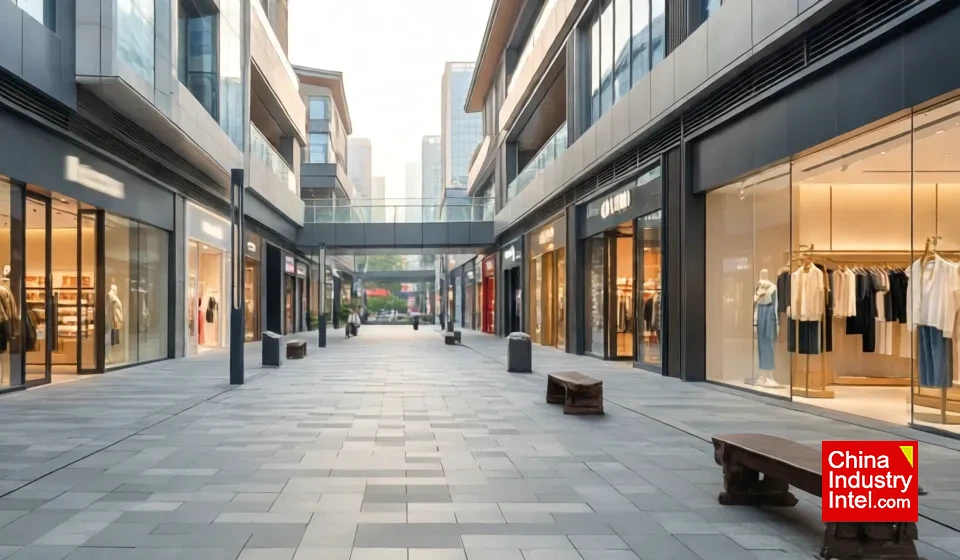
Retail sales at convenience stores operated by enterprises above the designated size increased 6.8%, and supermarket sales rose 3.6%. Specialty stores declined 1.2%, department stores fell 1.8%, and brand-exclusive stores dropped 7.6%.
These figures indicate that consumers continued to favor convenience and value-oriented channels. They do not prove that every operator in a growing format gained market share, because store openings, pricing and product mix also affect the totals.
Food Led Online Product Growth
Within online physical-goods sales, food products increased 15.5%, clothing rose 7.2%, and daily-use goods grew 1.6%. The category split suggests that repeat-purchase necessities remained more resilient than discretionary merchandise.
May alone was weaker: retail sales totaled 4.109 trillion yuan, down 0.6% year on year. One monthly reading can be affected by the timing of promotions and holidays, so the next releases will be important for distinguishing temporary volatility from a broader slowdown.
Industry Trend: Consumption Is Shifting, Not Moving in One Direction
Securities Times’ mid-year economic review described service consumption and newer growth drivers as important supports for the economy. Together with the official retail breakdown, that supports a structural reading: digital services, food delivery and convenience formats can grow even when conventional store categories contract.
For consumer brands, the practical issue is channel selection. Companies selling frequently purchased products may benefit from online distribution and convenience formats, while discretionary brands face greater pressure to demonstrate value and manage inventory.
What to Watch in the Second Half
Key indicators include monthly retail growth, online-services spending, catering revenue and the performance of department and brand-exclusive stores. A sustained recovery would need broader improvement beyond the currently stronger digital and convenience channels.
Related coverage is available in CII’s Consumer Trends archive.
Sources
- National Bureau of Statistics — Retail Sales of Consumer Goods in May 2026
- Securities Times — Mid-year review of China’s economic growth drivers