
Chinese Humanoid Robots Lead Global Shipments Yet Struggle to Transition from Performative Spectacles to Functional I…
In factory labs and public demonstrations across China, humanoid robots are performing breathtaking feats—executing perfect backflips, directing urban traffic with precision, and serving barista-quality coffee with uncanny finesse. This impressive display of technical prowess is underpinning a dramatic manufacturing surge, with Chinese companies shipping thousands of units annually and claiming a dominant 80% share of the global market. Yet, beneath this veneer of robotic capability lies a critical paradox: despite their scale and spectacle, the vast majority of these humanoids remain fundamentally performative rather than functionally deployed in the messy, unpredictable environments of real-world industry. The race to build them is on, but the far more challenging race to find a vast, sustainable market for their use is just beginning.
China’s Scale and Market Dominance: Building Humanoids by the Thousands
The numbers paint a picture of staggering industrial capacity. China has firmly established itself as the world’s production powerhouse for humanoid robots. In 2025, the nation commanded an astonishing market share exceeding 80% of global installations. This dominance is led by a new generation of robotics firms, most notably Shanghai-based AGIBOT and Hangzhou-based Unitree. According to verified data, AGIBOT captured a 30.4% share of worldwide installations, followed closely by Unitree with 26.4%. This concentration of manufacturing and market power has enabled an annual shipment volume that already numbers in the thousands, with industry forecasts suggesting this output is poised for exponential growth. Projections indicate shipments could double to approximately 28,000 units by 2026, fueling a market valued to reach a colossal USD 2.80 billion by 2030, up from USD 0.40 billion in 2025—a compound annual growth rate of 47.6%.
From Assembly Lines to Open-Source Ecosystems
This production scale is not merely about quantity. Companies are leveraging diverse strategies to fuel adoption. AGIBOT, for instance, has combined a diverse product range with an aggressive open-source strategy, aiming to lower barriers for software development and drive commercial deployment across various sectors. Meanwhile, Unitree has captured public imagination and commercial interest with its more affordable, agile models, demonstrating how cost and accessibility are becoming key levers in this nascent market. The infrastructure is there; Beijing’s LY iTech Super Factory for Embodied Artificial Intelligence is a testament to the seriousness of China’s commitment, with assembly lines dedicated to producing everything from sophisticated robotic legs to integrated AI systems.
The Performative Paradox: Spectacle Over Substance in Real-World Application
However, the heart of the current dilemma is that this impressive scale of production is not yet matched by a corresponding scale of *functional* deployment. As industry analysts and market observations confirm, the majority of Chinese humanoid robots shipped today are still “performative rather than functional.” Their primary roles are in controlled, curated environments: as exhibition pieces, interactive performers at events, or novelties in flagship stores. They excel in scripted, repeatable tasks—like the now-famous coffee-making routines or choreographed dances—that are designed to attract attention and showcase technical fluidity rather than solve complex industrial problems. As one expert told Macao Magazine, “robots have been used as hosts or interactive performers,” applications “mainly intended to create novelty and attract public attention rather than replace human workers.”
Why the Gap Between Demo and Deployment Persists
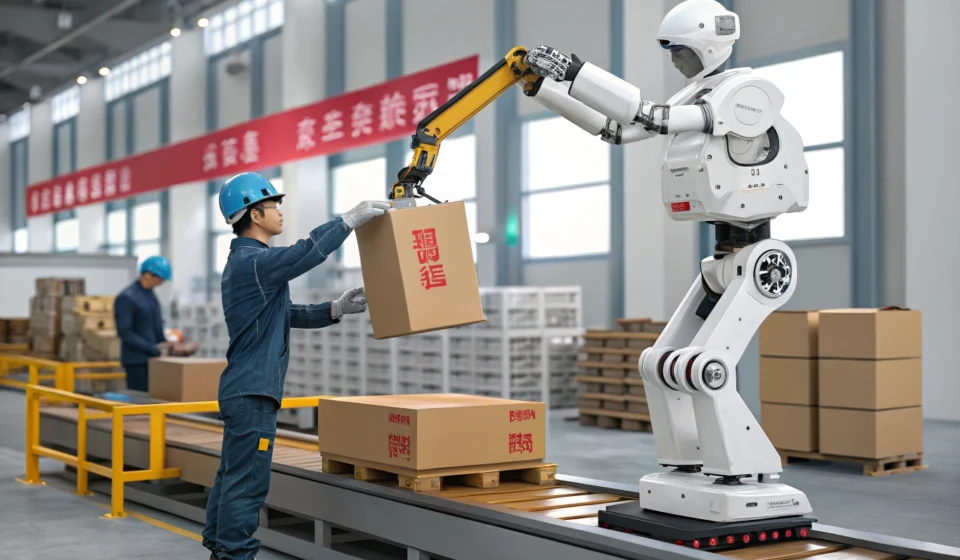
The core issue lies in the chasm between the structured lab environment and the chaotic reality of most workplaces. Humanoid robots are being optimized for balance, movement, and specific demonstrations, but they fall short when required to operate in dynamic settings. Think of a factory floor, a construction site, or a logistics warehouse—these are “messy, unpredictable environments.” They require robots to navigate variable terrain, handle irregularly shaped objects, make real-time decisions without human intervention, and interact safely and flexibly with both humans and other machines. Current humanoids, while marvels of locomotion, often lack the sophisticated perception, dexterity, and adaptive reasoning needed for these tasks. Their high cost further limits them to pilot programs and demonstrations rather than widespread, ROI-driven integration.
Navigating the Future: From Factory Floors to Functional Autonomy
The path forward for the Chinese humanoid robot industry—and indeed the global sector it now leads—is clear, if daunting. The challenge is transitioning from being a manufacturer of impressive machines to a provider of indispensable solutions. This requires a fundamental shift in focus from raw capability to practical utility. Investment must increasingly target the “hard parts” of robotics: advanced AI for environmental understanding, durable and adaptable manipulators for real-world gripping, and the development of clear use-cases where the humanoid form factor provides a tangible advantage over specialized, non-humanoid robots. The verified data showing the market’s future growth potential is an invitation, not a guarantee. It hinges on solving the functional gap.
The coming years will be decisive. As the market balloons toward that 2030 valuation, competition will intensify not just on price and scale, but on demonstrable value in industrial and service applications. The companies that can successfully engineer their humanoids to move beyond the coffee cart and the dance floor—onto the factory line, into hospital logistics, or through complex disaster zones—will not only dominate the market but will also redefine the role of robotics in the global economy. China has won the race to build; now it must lead the race to prove that these machines can truly *work*.