

First-in-Class Epigenetic Silencer TUNE-401 Shows Positive Phase 1b/2a Proof-of-Concept Data for Hepatitis B at EASL 2026
Initial clinical data demonstrates deep and durable antiviral activity, including direct silencing of cccDNA, offering a potential pathway to a finite cure for HBV patients — with significant implications for China, home to the world’s largest hepatitis B burden.

Tune Therapeutics, a leading epigenome editing company based in Durham, North Carolina and Seattle, presented new data at the European Association for the Study of the Liver (EASL) Congress in Barcelona, Spain on May 30, 2026, demonstrating the first clinical evidence of epigenetic silencing in hepatitis B virus (HBV).
The oral presentation was delivered by Dr. Ed Gane, Professor of Medicine at the University of Auckland and a world-renowned HBV authority. The Phase 1b/2a clinical trial evaluated the safety and tolerability of TUNE-401 in patients with Chronic Hepatitis B (CHB).
The Challenge: Why HBV Is So Hard to Cure
CHB affects more than 240 million people globally, and current therapies rarely achieve a functional cure (~1% per annum). The key barrier to cure remains the persistence of intranuclear covalently closed circular DNA (cccDNA) within liver cells, which serves as a stable viral reservoir. Both current and investigational therapies have indirect mechanisms of action that do not directly silence cccDNA; therefore, when these regimens are discontinued, the virus almost universally rebounds.
“The development of a finite HBV cure has long been stalled by a central challenge: how to safely and specifically target and permanently silence cccDNA,” said Dr. Gane. “The TUNE-401 study provides the first clinical evidence that direct epigenetic silencing of HBV cccDNA can achieve this goal, with the potential to meaningfully improve long-term health outcomes for all patients living with chronic hepatitis B.”
How TUNE-401 Works: A “Shut Off the Faucet” Approach
Using Tune’s proprietary TEMPO genetic tuning platform, TUNE-401 is an intravenously delivered LNP-RNA epigenetic silencing therapy. Once in the liver, it is translated into an HBV-targeting protein that potently and selectively methylates both cccDNA and integrated HBV DNA — effectively “shutting off the faucet” of viral production rather than merely “mopping up the water.”
This mechanism is fundamentally different from existing treatments such as nucleos(t)ide analogues (e.g., entecavir, tenofovir), which only suppress viral replication but cannot eliminate the cccDNA reservoir.
Clinical Trial Design and Key Results
The ongoing study was conducted across three sites in New Zealand, Hong Kong, and Moldova, and included:
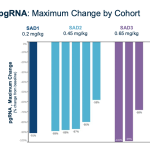
- Single-Ascending-Dose (SAD) cohort: Four dose-escalation levels (SAD1 = 0.2 mg/kg, SAD2 = 0.45 mg/kg, SAD3 = 0.65 mg/kg, SAD4 = 0.85 mg/kg)
- Multiple-Dose (MD) cohort: Up to three IV infusions at 0.65 mg/kg, administered at least four weeks apart
Key findings:
- 100% response rate at dose levels 2-4 (0.45, 0.65, 0.85 mg/kg) — all participants showed HBV biomarker repression
- Durable, dose-dependent repression of all HBV biomarkers including HBsAg (hepatitis B surface antigen), pgRNA (pregenomic RNA), HBeAg, HBcrAg, and P-HBcAg
- Direct evidence of cccDNA silencing — the synchronized decline across all biomarkers indicates TUNE-401 directly targets the viral transcription template
China Context: The World’s Largest HBV Burden
The progress of TUNE-401 carries special significance for China, which bears the heaviest hepatitis B burden in the world:
- 87 million chronic HBV carriers — approximately one-third of the global total (WHO data)
- HBV and HCV infections lead to more than 380,000 cancer-related deaths in China each year
- Less than 25% of infected individuals have been diagnosed
- Only about 10% (2.8 million) of those needing treatment are currently receiving it
- Despite successful mother-to-child transmission prevention (rate reduced to 0.23%), the enormous existing patient population remains underserved
China’s Own Epigenetic HBV Pipeline
Epigenic Therapeutics (Shanghai)

Shanghai-based Epigenic Therapeutics is developing EPI-003, a liver-targeted epigenetic inactivator using LNP-mRNA delivery. The company has received clinical trial approval and is planning studies in New Zealand, Australia, and Hong Kong. EPI-003 uses the company’s proprietary EPIREG technology to make specific epigenetic modifications on the HBV genome, directly blocking transcription of cccDNA and integrated DNA. The company raised $32 million in Series A funding and is backed by Morningside Venture Capital.
AusperBio (Hangzhou / San Francisco)
AusperBio’s antisense oligonucleotide AHB-137 has received Breakthrough Therapy Designation from China’s CDE and has entered Phase III clinical trials. In Phase IIb studies, AHB-137 monotherapy achieved a 30% functional cure rate in HBe-negative CHB patients. The company has raised over $270 million across multiple funding rounds and completed patient enrollment for its Phase III registrational trial (AUSHINE study) in late 2025.
Academic Research
Chinese research institutions, including Chongqing Medical University, have been producing significant findings on the epigenetic regulation of HBV cccDNA, providing theoretical foundations for this emerging therapeutic approach.
Outlook
The Phase 1b/2a data for TUNE-401 marks a major milestone — the first clinical validation that epigenetic editing can silence HBV cccDNA in humans. If larger trials confirm these results, the “one-and-done” treatment paradigm could fundamentally transform care for the world’s 240 million chronic hepatitis B patients.
For China, with 87 million affected individuals and a growing domestic pipeline of epigenetic HBV therapies, this represents both a public health opportunity and a strategic biotechnology frontier.
Sources: Business Wire, WHO China, PMC, Tune Therapeutics, Epigenic Therapeutics, AusperBio