
China Humanoid Robot Mass Production Advances Despite Commercial Demand Challenges and High Costs
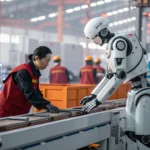
China is rapidly establishing itself as a global powerhouse in the manufacturing of humanoid robots, showcasing machines capable of athletic backflips, complex traffic management, and service tasks like making coffee. This impressive display of engineering and production scale is a testament to the country’s strategic industrial ambitions. However, the industry is now grappling with a fundamental paradox: the ability to build these sophisticated machines at volume has outpaced the development of a clear, scalable market for them. Companies and policymakers are now focused on the critical next step—transitioning from spectacular demonstrations to sustainable commercial deployment by finding enough consistent buyers.
Supply-Side Dominance: China’s Industrial Scale in Humanoid Robotics
Chinese firms have achieved significant milestones in the mass production and technical capabilities of humanoid robots. A landmark moment arrived in late 2025 when UBTECH Robotics began mass production and delivery of its industrial humanoid, the Walker S2. The initial orders exceeded 800 million yuan (approximately $110 million), with a target of 500 units within the year and a scalable goal of 10,000 units by 2027. This represents one of the first large-scale commercial deployments globally, moving the technology from prototype to factory floor. The progress is underpinned by a robust and rapidly expanding market projection. According to the China Humanoid Robot Market Size, Share & Industry Report, 2030, the domestic market is forecast to reach USD 2.80 billion by 2030, growing from USD 0.40 billion in 2025 at a compound annual growth rate (CAGR) of 47.6%.
Driving Forces: Aging Demographics and Labor Economics
A primary driver for this industrial push is China’s demographic reality. With over 320 million people aged 60 and above, the country faces a shrinking labor force and acute shortages in both manufacturing and service sectors, particularly in eldercare. This societal pressure has accelerated the policy and corporate focus on automation. The eldercare robot market, a key application area, is rapidly expanding and is expected to exceed $1.5 billion in 2026. Industry analysis from institutions like Stanford University highlights that human resources both drive and limit China’s automation push—the urgent need for replacement labor is propelling investment, while the complexity of replicating human dexterity and judgment remains a technical bottleneck. As noted in the source article, China’s companies are leveraging their manufacturing prowess to produce robots that can “direct traffic, and even make coffee,” exploring a wide range of potential use cases.
Demand-Side Dilemma: The Quest for Commercial Viability and Clear Use Cases
Despite the impressive supply-side advancements, the core challenge remains igniting sufficient and sustained commercial demand. The supplementary data verifies that insufficient commercial demand and a lack of clear, high-utility use cases are the primary headwinds facing mass adoption. For many potential buyers, the value proposition of a general-purpose humanoid robot is not yet compelling enough to justify the investment. This is often referred to as the search for the industry’s “ChatGPT moment.” As cited in the verification materials, an industry expert noted that the critical breakthrough will arrive when “robots, placed in unfamiliar real-world settings, can complete about 80 percent of tasks simply by following voice or text instructions.” Until that level of versatile, intuitive utility is achieved, many potential applications remain in the realm of pilot projects rather than essential, scaled deployments.
The Cost Barrier: A Major Hurdle to Adoption
A significant factor inhibiting demand is cost. The price of Chinese-made humanoids remains prohibitively high for widespread commercial use. According to analysis cited in the supplementary data, the average cost per unit ranges from CNY 300,000 to 500,000 (approximately EUR 36,000 to EUR 62,500). For comparison, Guotai Securities calculates the commercial viability threshold—based on annual labor costs that the robot could offset—to be around CNY 160,000. This stark gap between current pricing and the break-even point for buyers underscores the challenge. Key takeaways on this barrier include:
- High Initial Investment: Substantial capital outlay is required for acquisition and deployment.
- System Complexity: Integration into existing workflows demands technical expertise and may involve significant ancillary costs.
- Limited ROI Validation: Few large-scale deployments have provided robust, public data on return on investment.
- Technical Limitations: Constraints in battery endurance and AI autonomy further limit continuous, productive use.
Looking Ahead: Navigating the Path from Production to Practical Integration
The future of China’s humanoid robot industry hinges on bridging the gap between production scale and market pull. Government support remains a powerful catalyst, but the trajectory will ultimately be defined by solving the commercial equation. The projected CAGR of 47.6% indicates strong anticipated growth, but realizing this potential requires addressing the dual challenges of cost reduction and application refinement. Companies must move beyond spectacle to demonstrate clear operational and financial benefits in targeted sectors like eldercare, logistics, and specialized manufacturing.
The road ahead involves not only continued technical innovation to lower costs and enhance battery life and AI responsiveness but also deep collaboration with potential end-users to co-develop practical solutions. As the industry matures, a fragmented supply chain must also be consolidated to ensure quality, reliability, and economies of scale. If Chinese manufacturers can successfully navigate these complexities, they are poised to not only dominate production but also define the global commercial landscape for humanoid robotics. The next phase will be less about what the robots can do in a lab or exhibition hall, and more about what they can do for a paying customer on a daily basis.