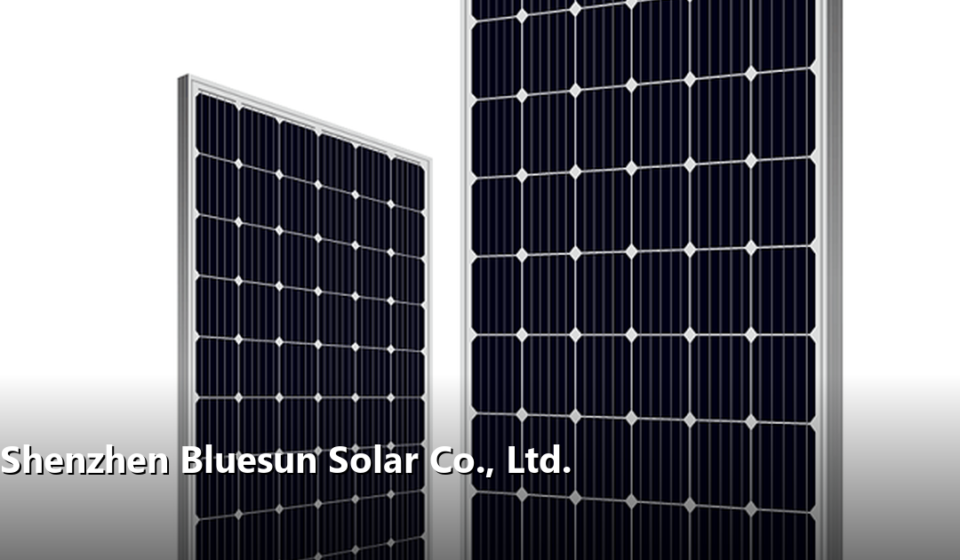
Shenzhen Bluesun Solar Co. Ltd. Is a Reliable Solar Panel Manufacturer with Factory Direct Pricing and 30 Year Power Warranty f…
The global solar energy market is projected to surpass $370 billion by 2030, and with that explosive growth comes an urgent need for dependable, cost-competitive photovoltaic suppliers who can deliver at scale without sacrificing quality. For international distributors, EPC contractors, and project developers navigating a crowded supplier landscape, finding a manufacturer that balances aggressive pricing with robust warranties and international certifications is no small task. **Shenzhen Bluesun Solar Co., Ltd.** has spent over fifteen years positioning itself at precisely this intersection, building a reputation as a versatile, vertically integrated Chinese solar manufacturer serving markets across six continents.
Headquartered in **Bao’an District, Shenzhen, Guangdong**—China’s undisputed hub for electronics and renewable energy innovation—Bluesun Solar has evolved from a modest photovoltaic trading operation into a Tier 2 BloombergNEF-registered manufacturer commanding annual revenues between **$30 million and $80 million**. With a production base spanning up to 15,000 square meters, a workforce of up to 300 professionals, and a product portfolio that spans from high-efficiency monocrystalline modules to complete off-grid solar kits, the company offers a one-stop procurement experience that few mid-tier Chinese suppliers can match. This in-depth profile examines what makes Bluesun Solar a compelling partner for global renewable energy buyers, analyzing its product capabilities, competitive positioning, and strategic outlook.
Company Core Business and Product Line Analysis
High-Efficiency Monocrystalline PERC and N-Type TOPCon Solar Panels
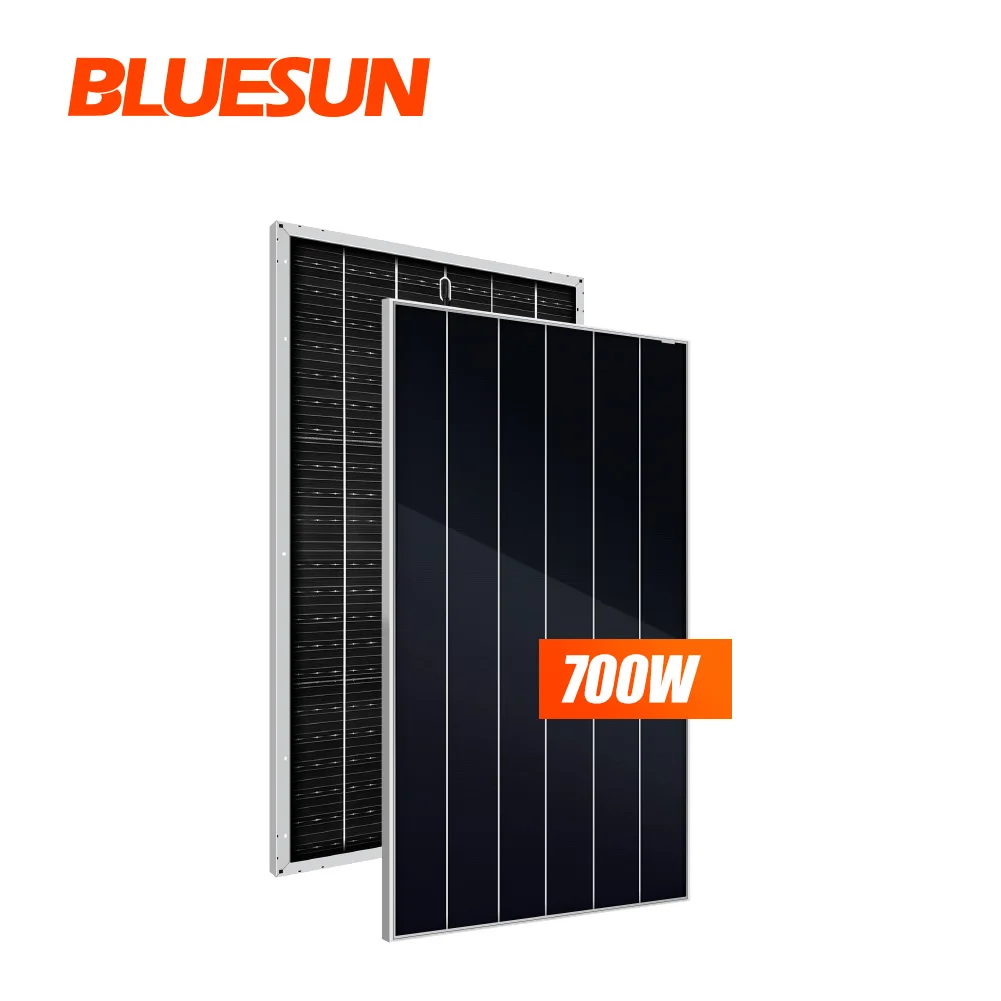
At the heart of Bluesun Solar’s manufacturing operation lies its flagship range of **monocrystalline PERC half-cut bifacial solar panels**, available in power classes from 400W to an impressive 700W per module. These panels leverage **182mm and 210mm large-format wafers**, the industry-standard sizes that have become the benchmark for utility-scale and commercial rooftop installations worldwide. The integration of **9-busbar (9BB) and 12-busbar (12BB) multi-busbar technology** significantly reduces internal resistance losses while improving current collection across the cell surface, translating to higher module efficiency and better long-term energy yield.
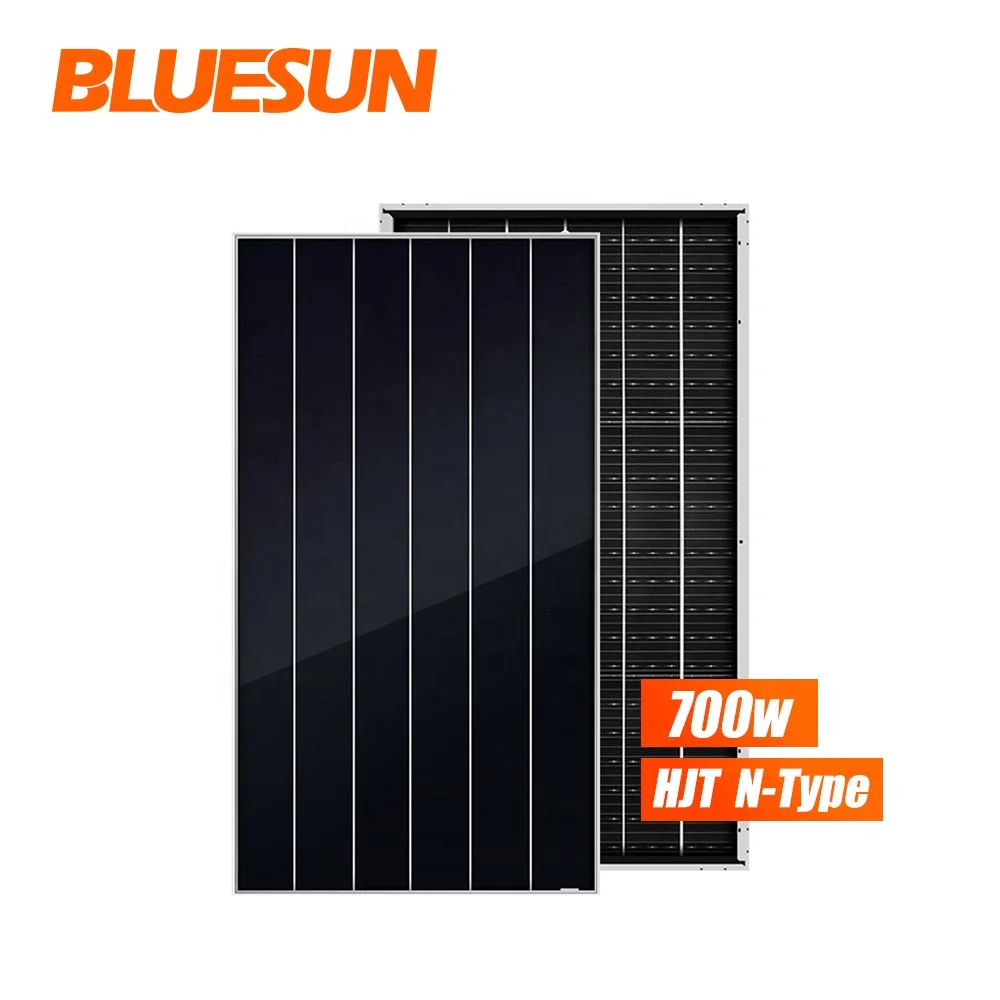
Critically, Bluesun has begun deploying **N-type TOPCon (Tunnel Oxide Passivated Contact) technology** across its next-generation product lines. TOPCon cells offer several measurable advantages over traditional P-type PERC cells, including lower temperature coefficients, superior low-light performance, and reduced light-induced degradation (LID). For B2B buyers sourcing panels for projects in hot climates across the Middle East, Africa, or South America, these performance characteristics can deliver meaningful gains in lifetime energy production. The company’s bifacial modules further enhance value by capturing reflected light on the rear side, offering up to 25% additional energy gain depending on ground albedo and mounting configuration.
The panels also feature **PID-resistant (Potential Induced Degradation) encapsulation materials**, a critical specification for projects deployed in high-humidity and high-temperature environments where voltage-induced power loss has historically been a major concern. This attention to encapsulation chemistry demonstrates that Bluesun understands the real-world degradation challenges that project developers face long after installation.
Polycrystalline Solar Panels for Cost-Sensitive Markets
While the global market continues its rapid shift toward monocrystalline technology, demand for **polycrystalline solar panels in the 330W to 450W range** remains robust in price-sensitive markets across Southeast Asia, parts of Africa, and South America. Bluesun continues to manufacture these modules for buyers who prioritize upfront cost per watt over peak efficiency, making them well-suited for residential electrification programs, agricultural pumping systems, and smaller commercial installations where space constraints are less critical.
LiFePO4 Energy Storage Systems
Recognizing that energy storage is the natural complement to solar generation, Bluesun has developed a comprehensive lineup of **lithium iron phosphate (LiFePO4) energy storage batteries** ranging from **5kWh residential units to 100kWh commercial and industrial-scale systems**. LiFePO4 chemistry is widely regarded as the safest and most cycle-durable lithium-ion variant available, offering thermal stability, 4,000+ cycle life, and excellent performance across a wide temperature range. For off-grid communities, hybrid commercial buildings, and telecom tower installations in regions with unreliable grid infrastructure, these battery systems represent a critical revenue stream and a value-added proposition for distributors seeking to sell complete energy solutions rather than commodity modules.
Solar Inverters and Complete Solar Kits
Bluesun rounds out its product ecosystem with **hybrid and off-grid solar inverters in power ratings from 3kW to 100kW**, enabling seamless integration between solar arrays, battery storage, and grid or generator inputs. The company also offers **pre-configured complete solar kits**—bundled solutions that include panels, inverters, batteries, mounting hardware, and cabling—specifically designed for installers and distributors who want to simplify procurement and reduce project complexity. This kit-based approach is particularly valuable for emerging markets where installer technical capacity may be limited and standardized, pre-engineered systems reduce the risk of configuration errors.
Production Capabilities and Quality Assurance
Bluesun operates **three fully automated photovoltaic module assembly lines** with a combined annual production capacity of **1.2 gigawatts**. This level of output places the company firmly in the mid-tier manufacturing category—large enough to fulfill substantial utility-scale orders, yet agile enough to accommodate custom specifications and smaller batch runs for niche applications.
Quality assurance is conducted at every stage of the manufacturing process, with **electroluminescence (EL) inspection, IV curve tracing, and electroluminescence imaging** performed on each module before, during, and after lamination. This multi-stage inspection protocol ensures that micro-cracks, cell misalignment, soldering defects, and other latent defects are identified and eliminated before shipment. The company’s R&D department comprises **more than 20 dedicated engineers**, supported by a joint research laboratory established with **Shenzhen University**—an academic partnership that keeps the manufacturer connected to cutting-edge developments in photovoltaic materials science and cell architecture.
Additionally, Bluesun operates as both a manufacturer and an authorized distributor for tier-one Chinese panel brands including **JinkoSolar, Longi, and Trina Solar**. This dual role allows the company to offer buyers a uniquely flexible procurement model: customers can choose Bluesun’s own branded modules for cost-competitive projects while also accessing tier-one products through the same supplier relationship for projects that require bankability-driven procurement from top-tier manufacturers.
Current Competitive Analysis
Market Position and Geographic Reach
Bluesun Solar has cultivated a genuinely global customer base with a geographic distribution that reflects the current dynamics of the international solar market. **Europe accounts for 28% of revenue**, driven by the continent’s aggressive renewable energy mandates and feed-in tariff programs. **South America contributes 22%**, largely through Brazil’s booming distributed generation market, while the **Middle East and Africa represent 20%**, fueled by large-scale solar farm developments and off-grid electrification initiatives. **Southeast Asia at 15%** reflects the region’s growing demand for affordable rooftop and industrial solar solutions, with **Oceania (10%) and North America (5%)** rounding out the portfolio.
This geographic diversification is a strategic strength that insulates the company from the kind of regional policy shocks—such as sudden tariff impositions or subsidy changes—that can devastate suppliers concentrated in a single market. It also indicates that Bluesun’s products have been validated under diverse regulatory frameworks, climate conditions, and technical standards.
Certifications and Compliance as Competitive Moats
In the international solar trade, certifications are not optional—they are the price of entry. Bluesun has assembled an impressive portfolio of approvals that signals its commitment to serving regulated markets:
- TUV Rheinland certification — the gold standard for product safety in European markets
- IEC 61215 and IEC 61730 — international standards for module design qualification and safety
- CE marking — mandatory for products sold within the European Economic Area
- ISO 9001 and ISO 14001 — quality management and environmental management system certifications
- MCS (Microgeneration Certification Scheme) — required for solar products installed in the United Kingdom
- CEC (Clean Energy Council) listing — necessary for grid-connected solar products in Australia
- INMETRO certification — mandatory for solar equipment sold in Brazil
This certification breadth is particularly noteworthy for a company of Bluesun’s scale. Many competitors in the same revenue tier hold IEC and CE certifications but lack market-specific approvals like MCS, CEC, and INMETRO. For distributors operating in the UK, Australia, and Brazil—three of the world’s most active solar markets—Bluesun’s pre-approved status eliminates a significant procurement bottleneck.
Warranty and After-Sales Differentiation
Perhaps the most compelling element of Bluesun’s competitive proposition is its **15-year product warranty combined with a 30-year linear power output warranty**. This warranty structure rivals or exceeds what many tier-one manufacturers offer, and it dramatically exceeds the warranties provided by most mid-tier Chinese suppliers, which typically cap product warranties at 10 to 12 years. For end customers and project financiers evaluating long-term return on investment, a 30-year linear power warranty provides the assurance that modules will continue to deliver meaningful output three decades after installation.
The combination of a 15-year product warranty and a 30-year linear power output warranty positions Bluesun Solar among the most warranty-competitive mid-tier manufacturers in the global PV supply chain, rivaling the assurances typically offered only by tier-one brands.
Pricing, Inventory, and Logistics Advantages
Bluesun’s **direct factory pricing model** eliminates intermediary margins that inflate costs when buyers source through trading companies or regional distributors. For price-sensitive projects in developing markets—where the cost per watt directly determines project viability—this factory-direct approach can deliver savings of 8% to 15% compared to tier-one branded alternatives.
Equally important is the company’s commitment to maintaining **50MW or more of finished inventory in its Shenzhen warehouse**, enabling immediate shipment without the typical four-to-eight-week production lead times that can delay project timelines. In a market where shipping logistics, port congestion, and supply chain disruptions have become persistent challenges since the pandemic era, having ready-to-ship inventory is a tangible competitive advantage that appeals to distributors facing tight installation deadlines.
How Bluesun Compares to Industry Peers
Within the tier-two Chinese solar manufacturing segment, Bluesun occupies a favorable position. Many competitors at a similar revenue scale offer either modules or balance-of-system components, but rarely both. Bluesun’s ability to supply **panels, batteries, inverters, and complete kits** from a single supplier simplifies logistics, reduces the number of purchase orders and quality audits required, and enables buyers to negotiate more favorable consolidated pricing. The company’s research partnership with Shenzhen University also provides an R&D edge that many comparably sized manufacturers lack, keeping it current with emerging cell technologies and materials innovations.
That said, it would be fair to note that Bluesun does not yet possess the bankability credentials of tier-one giants like JinkoSolar, LONGi, or Trina Solar. For utility-scale projects requiring project finance from international lenders that mandate tier-one supply, Bluesun may not meet the threshold independently—though its distribution arrangement for these very brands offers a practical workaround.
Forward-Looking Conclusion
The solar industry is entering a pivotal decade. Global installed capacity is expected to triple by 2030, demand for integrated energy storage solutions is accelerating, and buyers in emerging markets are increasingly seeking suppliers who can offer the full spectrum of photovoltaic products under one roof. **Shenzhen Bluesun Solar Co., Ltd.** is strategically positioned to capitalize on all three of these trends.
Its expanding deployment of **N-type TOPCon technology** signals a manufacturer investing in next-generation efficiency rather than resting on legacy product lines. The joint research laboratory with Shenzhen University ensures a pipeline of innovation that can translate academic breakthroughs into commercially viable products. Its comprehensive certification portfolio opens doors to highly regulated markets that remain inaccessible to many competitors. And its combination of direct factory pricing, aggressive warranty terms, and substantial ready-to-ship inventory creates a value proposition that resonates with the practical realities of global solar procurement.
For B2B buyers—whether they are European distributors navigating the energy transition, Brazilian installers serving the country’s booming distributed generation sector, or African project developers building off-grid electrification programs—Bluesun Solar represents a compelling supplier relationship that balances cost, quality, and reliability. As the company continues to scale its production capacity and expand its technological capabilities, it is well-positioned to transition from a strong tier-two contender to a serious player in the global photovoltaic supply chain. The solar industry rewards manufacturers that combine operational discipline with strategic vision, and Bluesun Solar’s trajectory over the past fifteen years suggests it intends to be exactly that kind of company.