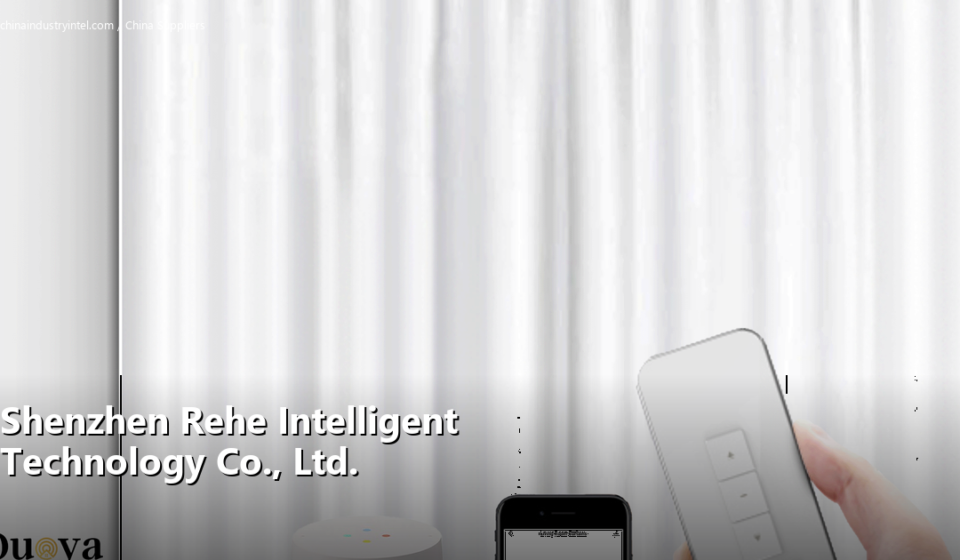
Smart Curtain Motors and IoT-Enabled Window Automation: How Shenzhen Rehe Intelligent Technology Delivers Full-Stack Solutions …
In an era where intelligent building systems are no longer a luxury but a baseline expectation, the automated window treatment market has quietly become one of the fastest-growing segments in the broader smart home industry. Valued at over $4.8 billion globally and projected to surpass $9 billion by 2030, the demand for **smart curtain motors**, electric blinds, and connected shading solutions is surging across residential, hospitality, and commercial real estate channels. Behind many of the white-label and OEM products that appear on Western retail shelves under recognizable brand names, a sophisticated network of Chinese manufacturers provides the engineering backbone — and few have refined that model as effectively as Shenzhen Rehe Intelligent Technology Co., Ltd.
Founded in 2012 and headquartered in Bao’an District, Shenzhen — the beating heart of China’s consumer electronics and IoT supply chain — Rehe has spent over a decade evolving from a modest motor component workshop into a **full-stack smart window automation solutions provider**. With a workforce of 100 to 200 employees, a factory spanning 3,000 to 5,000 square meters, and annual revenues estimated between $5 million and $15 million, the company occupies a strategically important mid-market position: large enough to guarantee consistent quality and production scalability, yet agile enough to execute rapid OEM customization cycles that larger conglomerates struggle to match. For global B2B buyers — from European building automation integrators to Middle Eastern hospitality developers — understanding what Rehe offers behind the scenes is essential to sourcing the right partner in this high-growth vertical.
Company Core Business and Product Line Analysis
Shenzhen Rehe Intelligent Technology’s core business revolves around the design, manufacture, and export of **intelligent motorized window treatment hardware** paired with proprietary IoT control systems. Unlike many Chinese manufacturers that specialize in either mechanical components or electronic controllers alone, Rehe operates across the entire product stack — from the physical motor and track hardware through to the wireless communication modules, gateway controllers, cloud connectivity, and end-user mobile applications. This vertically integrated approach is a defining characteristic of the company and one that resonates strongly with B2B partners seeking a single-source supplier for complex smart home ecosystems.
The company’s flagship product line centers on **WiFi, Zigbee, and RF smart curtain motors** designed for integration into motorized drapery systems. These motors are engineered with proprietary motor control algorithms — backed by over 30 patents in both mechanical design and electronic control — that prioritize whisper-quiet operation, precise positional accuracy, and long-term durability. The motors undergo rigorous in-house reliability testing, including a standardized **10,000-cycle endurance test protocol**, which validates the mechanical and electronic integrity of each unit before it leaves the factory floor. For context, 10,000 open-close cycles at two operations per day represents over 13 years of simulated residential use, offering buyers confidence in real-world longevity claims.
Complementing the curtain motor range, Rehe produces a full catalog of **electric curtain track systems**, available in both linear and curved configurations. The curved track option is particularly significant for the hospitality and commercial sectors, where floor-to-ceiling bay windows, panoramic hotel suites, and architecturally complex interiors require custom-engineered rail solutions. Track lengths can be produced to customer specification, and the company’s engineering team works directly with international architects and interior designers to translate architectural drawings into production-ready track geometries.
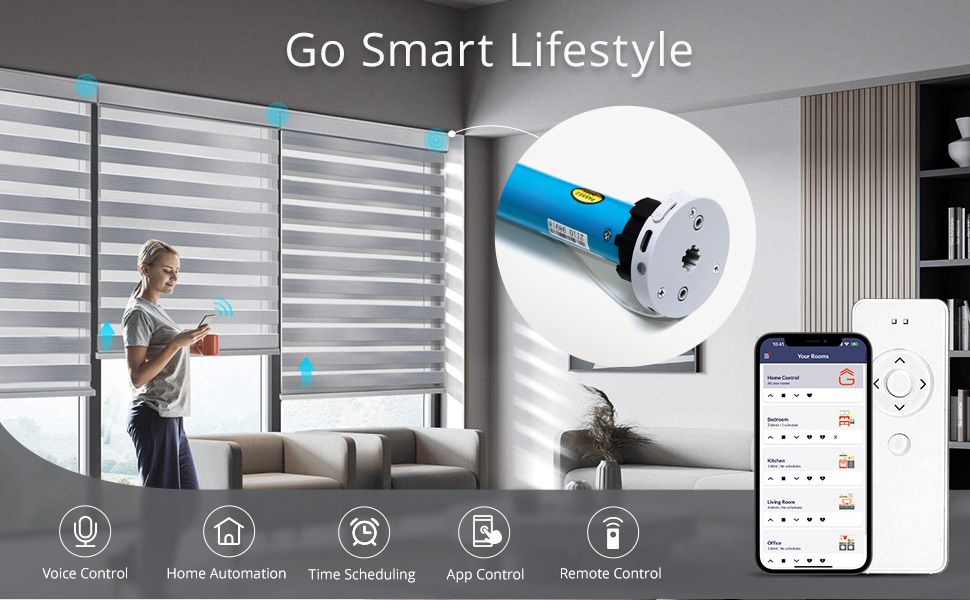
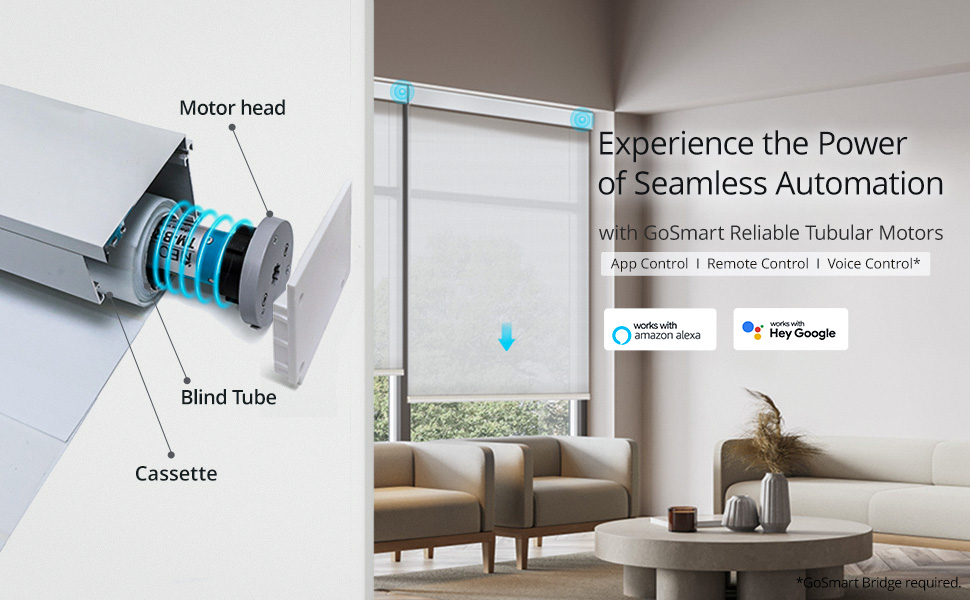
Beyond drapery motors and tracks, Rehe has expanded aggressively into **tubular motor systems** for roller blinds, venetian blinds, and zebra (day-night) blinds. This product category taps into the massive European and Middle Eastern markets, where manual roller and venetian blinds remain the dominant window covering format in both residential and commercial buildings. By offering a drop-in tubular motor replacement — one that fits standard blind tube diameters and integrates seamlessly with existing fabric and hardware — Rehe enables blind manufacturers and installers to retroactively add motorization and smart connectivity to their product lines without redesigning their core mechanical assemblies.
On the IoT control side, the company manufactures **gateway controllers and smart home sensors** — including passive infrared (PIR) motion sensors, door/window contact sensors, and temperature/humidity sensors — that form the connective tissue of an automated window treatment ecosystem. These peripherals allow end users to create conditional automation rules: for example, closing blackout blinds when a PIR sensor detects no occupancy in a conference room, or adjusting curtain position based on real-time ambient light and temperature readings. The gateway controllers serve as the central hub, bridging local Zigbee or RF device networks with cloud-based command platforms.
All Rehe products are built on the **Tuya Smart ecosystem**, which ensures broad interoperability with mainstream consumer smart home platforms. Products ship with native compatibility for **Amazon Alexa, Google Home, and Apple Siri voice control**, and the company has confirmed that its product roadmap includes full **Matter protocol support** — a critical development given Matter’s rapidly growing adoption as the unifying smart home standard backed by Apple, Google, Amazon, and Samsung. Additionally, Rehe provides partners with a **custom-branded mobile application** for iOS and Android, featuring multi-language support, scheduling, group control, and scene management features. This app can be white-labeled with the partner’s branding, logos, and color schemes within a typical seven-day turnaround window.
Production capabilities are centered around four SMT (surface-mount technology) lines for PCB assembly, a dedicated automated motor winding station, and three finished-product assembly lines. The company also maintains an **in-house reliability test laboratory** equipped for endurance cycling, thermal stress, and electrical safety validation. On the R&D front, a team of more than 25 engineers drives a weekly prototype turnaround cadence — a cycle speed that enables OEM clients to move from concept to physical sample in as little as seven days, a capability the company highlights as a key operational differentiator.
Key Product Categories at a Glance
- Smart Curtain Motors — WiFi, Zigbee, and RF variants with quiet-operation brushless DC motors and precise positional control
- Electric Curtain Tracks — Linear and curved rail systems in customizable lengths for residential and commercial installations
- Tubular Motors — Compact motors for roller blinds, venetian blinds, and zebra blinds, compatible with standard tube diameters
- IoT Gateway Controllers — Zigbee-to-WiFi and RF-to-WiFi hubs enabling cloud connectivity and third-party platform integration
- Smart Home Sensors — PIR motion, door/window contact, and temperature/humidity sensors for automated scene triggers
- Custom Mobile Application — White-label iOS/Android app with multi-language UI, scheduling, scene management, and voice assistant integration
Current Competitive Analysis
The global smart curtain and motorized blind hardware market is served by a fragmented mix of European premium manufacturers, mid-tier Chinese OEM suppliers, and emerging competitors from Southeast Asia. Established European players such as Somfy (France), A-OK (Netherlands-based operations with Chinese manufacturing), and Dooya (China) have historically dominated different market tiers — Somfy at the premium end with proprietary ecosystems, and Dooya and A-OK competing aggressively on price in the mid-market. Against this landscape, Shenzhen Rehe Intelligent Technology carves out a distinctive competitive position through several intersecting advantages.
First and foremost is the company’s **full-stack IoT solution architecture**. While many Chinese motor manufacturers produce excellent standalone hardware, fewer offer a tightly integrated package that includes the motor, wireless communication protocol, gateway controller, companion sensors, cloud platform, and end-user mobile application as a cohesive unit. This integration dramatically simplifies the sourcing process for B2B buyers — particularly small-to-midsize brands and system integrators — who would otherwise need to coordinate multiple suppliers for motors, PCB modules, firmware development, and app creation. By offering this as a turnkey package, Rehe reduces the buyer’s supply chain complexity, shortens time-to-market, and minimizes compatibility risks between components sourced from different vendors.
The company’s **certification portfolio** also strengthens its competitive standing. Rehe holds CE, FCC, RoHS, and REACH certifications across its product range — mandatory requirements for entry into the European and North American markets respectively. Additionally, **UL certification** has been obtained for select product lines, and **TUV certification** further reinforces quality assurance credibility, particularly for European buyers who place significant weight on third-party audited manufacturing standards. For B2B procurement teams evaluating suppliers, these certifications serve as essential due diligence checkpoints, and Rehe’s breadth of certification coverage narrows the compliance risk gap that can otherwise delay product launches by months.
Another critical differentiator is the **three-year warranty on motor products**. In an industry where one-year warranties are common among Chinese suppliers, offering triple that coverage period signals strong confidence in product durability and provides meaningful downstream value for resellers and installers who must manage warranty claims with their own end customers. This extended warranty, backed by the in-house 10,000-cycle endurance testing program, effectively reduces the total cost of ownership for buyers and serves as a persuasive selling point during retail or distribution channel negotiations.
From a market reach perspective, Rehe’s export footprint is well-diversified across six major regions: **Europe (35%), North America (25%), Middle East (15%), Southeast Asia (10%), Oceania (8%), and South America (7%)**. This geographic diversification is strategically significant because it insulates the company from overreliance on any single market — a vulnerability that has exposed many China-based exporters to sudden demand shocks from tariff changes, regulatory shifts, or regional economic downturns. The strong European and North American skew also indicates that Rehe’s products are already meeting the higher regulatory and quality thresholds demanded by those markets, which in turn validates their readiness for other high-compliance regions.
Competitive Positioning Against Key Peer Segments
Against premium European incumbents like Somfy, Rehe competes on price-to-performance ratio, offering comparable technical specifications at a fraction of the cost, while sacrificing the extensive proprietary ecosystem lock-in that Somfy provides. For buyers who value open-platform interoperability and cost efficiency over brand cachet, this trade-off is increasingly favorable. Against direct Chinese peers, Rehe differentiates through its integrated IoT solution stack, rapid OEM customization capability, patent-backed motor control algorithms, and extended warranty — collectively forming a value proposition that transcends pure price competition. The company’s **30+ patents** in motor control and mechanical design further establish a moat against low-cost imitators who may replicate hardware appearances but cannot easily replicate the underlying engineering IP.
The company’s strategic alignment with the **Tuya Smart ecosystem** and its **Matter protocol readiness** also positions it favorably for the next wave of smart home adoption. As consumers increasingly demand cross-platform compatibility and as building codes in key markets begin to incorporate smart building readiness requirements, suppliers whose products natively support these evolving standards will hold a structural advantage over those still operating on proprietary or legacy communication protocols.
Looking ahead, the company’s forward trajectory appears anchored in three strategic pillars: expanding its Matter-compatible product lineup as the protocol gains market traction, deepening its presence in the fast-growing Middle Eastern and Southeast Asian construction markets where smart building adoption is accelerating, and continuing to invest in R&D to push motor efficiency, noise reduction, and miniaturization further. With a foundation built on vertical integration, engineering depth, and global certification coverage, Shenzhen Rehe Intelligent Technology is well-positioned to transition from a respected OEM supplier to a recognized tier-one partner in the global smart window automation value chain. For international buyers navigating the complex landscape of Chinese IoT hardware sourcing, Rehe represents a compelling combination of technical capability, manufacturing reliability, and forward-looking platform readiness that merits serious evaluation.