China’s Silent Manufacturing Revolution: How Humanoid Robots Are Reshaping Global Industry
The scene at the sprawling Lingyi iTech factory on the outskirts of Beijing is almost surreal: dozens of humanoid robots stand motionless in precise rows, their sleek forms hinting at an imminent, seismic shift in global manufacturing. This is not a scene from a science fiction film, but the vanguard of China’s next great economic shock—a fully automated industrial workforce. As engineers take meticulous notes, the world’s second-largest economy is systematically deploying a new generation of intelligent machines, a move that promises to upend traditional cost advantages, reconfigure global supply chains, and challenge the very concept of comparative advantage that has defined international trade for decades. The silent revolution is already underway, and its consequences will be felt in every factory, boardroom, and economy worldwide.
The Scale and Strategy of China’s Robotics Ambition
China’s foray into advanced robotics is not a scattered experimental effort but a coordinated, state-backed industrial strategy of massive scale. The deployment at Lingyi iTech is a microcosm of a national initiative that integrates humanoid robotics into the “Made in China 2025” and subsequent long-term plans. The ambition is clear: to move beyond being the world’s workshop for labor-intensive goods and to dominate the high-value, automated production of the future. This strategy leverages China’s unparalleled manufacturing ecosystem, its vast pool of engineering talent, and significant government subsidies to accelerate development and deployment. The goal is to create a seamless, data-driven production environment where humanoid robots and human experts collaborate, with the machines handling precision, endurance, and repetitive tasks while engineers focus on innovation, oversight, and complex problem-solving.
From Factory Floor to Global Command Center
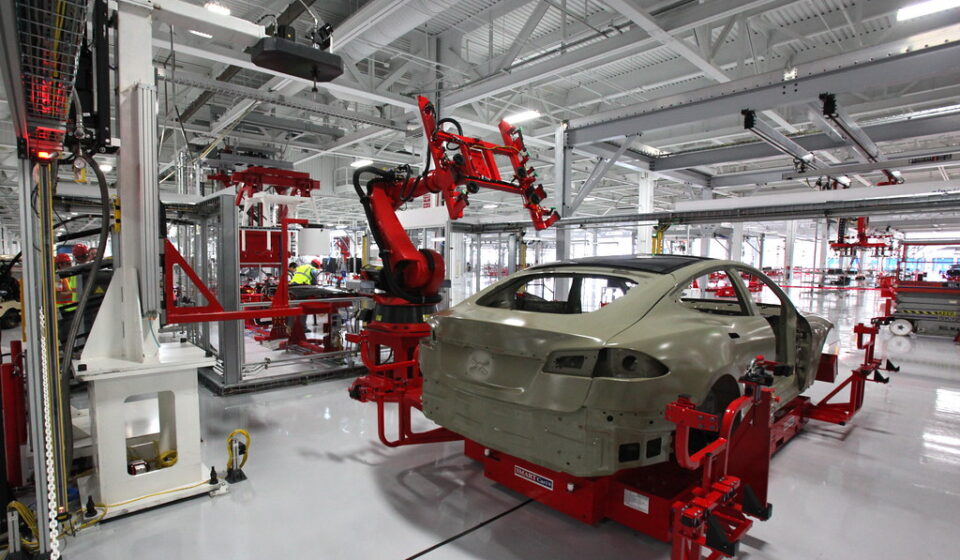
The integration of these robots represents a leap in industrial automation. Unlike traditional single-task arms, these humanoid or multi-functional robots are designed for flexibility and adaptability within existing human-centric workspaces. As detailed in the source material, the engineers’ role evolves from direct manipulation to supervision, data analysis, and system optimization. This creates a new paradigm where the factory floor becomes a command center, with production efficiency and quality governed by real-time data flows between machines and human managers. This systemic approach aims to achieve unprecedented levels of output consistency and operational uptime, further cementing China’s production capabilities.
Global Competitive Pressures and the Erosion of Traditional Advantages
The rise of China’s robotic workforce presents a formidable challenge to competitors in both developed and developing economies. For decades, advanced economies like Germany, Japan, and the United States maintained a technological edge, while emerging markets in Southeast Asia and elsewhere competed on low labor costs. China’s automation drive threatens to erode both these advantages simultaneously. By deploying cost-effective, highly capable robots, Chinese manufacturers can produce sophisticated goods—electronics, automobiles, and machinery—with minimal human labor, drastically reducing the impact of rising domestic wages. This neutralizes the cost incentive for companies to relocate production to other low-wage countries, a trend that had begun to diversify global supply chains.
A Double Squeeze on Developed and Developing Nations
For developed nations, the challenge is one of re-shoring and technological parity. While some advocate for bringing manufacturing back home, the infrastructure, workforce skills, and sheer scale of China’s automated ecosystem make that an uphill battle. Competing requires matching not just the technology, but the integration and speed of deployment seen in Chinese facilities. For developing nations, the threat is more existential. Their traditional ladder of economic development—moving from agriculture to low-skill manufacturing—could be kicked away as automated Chinese factories produce those very goods more efficiently and reliably. This could lead to a scenario of premature deindustrialization in parts of the Global South, with profound social and economic consequences.
Geopolitical Ramifications and the Future of Work
The diffusion of advanced robotics is inherently a geopolitical issue. Control over the key technologies—artificial intelligence, sensors, and robotic actuators—translates into economic and strategic power. China’s push is, in part, a drive for technological sovereignty, reducing reliance on foreign automation giants and setting its own industry standards. This could lead to a bifurcation of global manufacturing standards, with one sphere influenced by Chinese platforms and another by Western or Japanese systems. The result would be a more fragmented, less efficient global industrial network, increasing costs and complexity for multinational corporations.
Adapting to an Automated Global Economy
The societal impact within China and beyond cannot be overlooked. While automation boosts productivity, it also disrupts labor markets. China itself faces the challenge of retraining millions of workers whose jobs may be displaced by the very robots it champions. The success of this transition will depend on the efficacy of education and social support systems. Internationally, countries must rethink their economic models. Future competitiveness will hinge less on cheap labor and more on innovation capacity, workforce adaptability, and the ability to create complementary roles for human workers in an increasingly automated landscape. The education systems that produce the next generation of engineers, programmers, and system integrators will become a primary arena of economic competition.
In conclusion, the silent rows of robots at Lingyi iTech are harbingers of a profound and irreversible transformation. China’s determined march toward an automated manufacturing powerhouse is setting in motion a new “China shock” that will redefine global trade, challenge geopolitical balances, and force every major economy to confront the future of work. The companies and countries that respond with agility—investing in next-generation technology, fostering human-machine collaboration, and building resilient, innovative workforces—will not only survive this shock but may find new avenues for growth. The era of competing on labor cost alone is ending; the era of competing on intelligent integration has begun.