Skip to content
China Industry Intel China Industry Intel China Industry Intel

Intelligence on China’s Industries, Markets, Technology, and Manufacturing

China Industry Intel China Industry Intel China Industry Intel

Intelligence on China’s Industries, Markets, Technology, and Manufacturing

  • Home
  • INDUSTRIES
    • AI
    • Healthcare & Biotech
    • Robotics
    • Energy & Renewable
    • Semiconductor
    • EV & Battery
    • Manufacturing
  • BUSINESS
    • Logistics
    • Suppliers
    • Supply Chain
    • Stock Market
    • Economic Trends
    • Trade & Tariffs
  • TECH & CONSUMER
    • Global Industry Insights
    • Tech & Internet
    • Consumer Trends & New Product Releases
  • About
  • Contact
  • Home
  • INDUSTRIES
    • AI
    • Healthcare & Biotech
    • Robotics
    • Energy & Renewable
    • Semiconductor
    • EV & Battery
    • Manufacturing
  • BUSINESS
    • Logistics
    • Suppliers
    • Supply Chain
    • Stock Market
    • Economic Trends
    • Trade & Tariffs
  • TECH & CONSUMER
    • Global Industry Insights
    • Tech & Internet
    • Consumer Trends & New Product Releases
  • About
  • Contact
  • https://www.facebook.com/
  • https://twitter.com/
  • https://t.me/
  • https://www.instagram.com/
  • https://youtube.com/
Subscribe
China Industry Intel China Industry Intel China Industry Intel

Intelligence on China’s Industries, Markets, Technology, and Manufacturing

China Industry Intel China Industry Intel China Industry Intel

Intelligence on China’s Industries, Markets, Technology, and Manufacturing

  • Home
  • INDUSTRIES
    • AI
    • Healthcare & Biotech
    • Robotics
    • Energy & Renewable
    • Semiconductor
    • EV & Battery
    • Manufacturing
  • BUSINESS
    • Logistics
    • Suppliers
    • Supply Chain
    • Stock Market
    • Economic Trends
    • Trade & Tariffs
  • TECH & CONSUMER
    • Global Industry Insights
    • Tech & Internet
    • Consumer Trends & New Product Releases
  • About
  • Contact
  • Home
  • INDUSTRIES
    • AI
    • Healthcare & Biotech
    • Robotics
    • Energy & Renewable
    • Semiconductor
    • EV & Battery
    • Manufacturing
  • BUSINESS
    • Logistics
    • Suppliers
    • Supply Chain
    • Stock Market
    • Economic Trends
    • Trade & Tariffs
  • TECH & CONSUMER
    • Global Industry Insights
    • Tech & Internet
    • Consumer Trends & New Product Releases
  • About
  • Contact
  • https://www.facebook.com/
  • https://twitter.com/
  • https://t.me/
  • https://www.instagram.com/
  • https://youtube.com/
Subscribe
Home/INDUSTRIES/Healthcare & Biotech/How China’s Pharmaceutical Industry is Pivoting from Generics to Biotech Innovation in 2024
Healthcare & Biotech

How China’s Pharmaceutical Industry is Pivoting from Generics to Biotech Innovation in 2024

By ChinaIndustryIntel.com
08.06.2026 5 Min Read

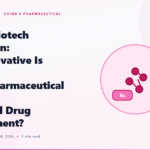
The narrative of China’s pharmaceutical sector has fundamentally changed. For decades, the industry was synonymous with high-volume generic drug manufacturing, serving as the world’s pharmacy for cost-effective copies. Today, a seismic shift is underway. Fueled by strategic national policies, massive R&D investment, and a burgeoning domestic biotech ecosystem, China is rapidly transforming into a powerhouse of innovative drug development. This pivot is not merely incremental; it is a dramatic reorientation captured in stark data points and market trajectories that signal a new era of global competition and scientific advancement. The transition from a volume-driven model to a value-driven innovation engine is reshaping the industry’s structure, redefining its global role, and positioning China at the forefront of next-generation medicine.

From Copy to Creation: The R&D Revolution and Surging Innovative Approvals

The core of this transformation lies in a strategic pivot towards independent research and development. Responding to global competitive pressures and domestic health demands, China’s pharmaceutical industry has accelerated its capabilities in designing and discovering novel therapeutics. This commitment is bearing fruit, as evidenced by the dramatic surge in the number of innovative drugs launched within the country. The statistics reveal a compelling growth curve: in 2019, China launched 11 innovative drugs. By 2024, that number skyrocketed to 46, marking a more than fourfold increase in just five years. This explosion in approvals is a direct result of a maturing R&D ecosystem and streamlined regulatory pathways designed to fast-track novel treatments.

A Domestic Renaissance: The Narrowing Gap with Multinational Innovators

Crucially, this wave of innovation is increasingly homegrown. While multinational corporations have historically led the market, domestic Chinese pharmaceutical companies are now claiming a significant share of new approvals. In 2024, for instance, domestic Chinese firms were responsible for 34 of the newly approved innovative drugs, a figure that is approaching the output of multinational corporations operating in the country. This trend highlights the maturation of local biotech and pharmaceutical enterprises, which are now competing head-to-head with global giants in bringing new molecular entities to the Chinese market. The implications are profound, suggesting that the era of China solely as a market for foreign innovation is ending, replaced by a dynamic where Chinese discovery is a major contributor to local and potentially global therapeutic landscapes.

Beyond Small Molecules: The Ascendancy of Biologics in the Pipeline

The qualitative nature of China’s innovation is also evolving, aligning with a dominant global trend: the rise of biologics. These complex drugs, derived from living systems, represent the cutting edge of medicine for treating cancers, autoimmune diseases, and rare conditions. Globally, biological drugs have steadily captured a larger share of the pharmaceutical R&D pipeline, growing from a minor component in the mid-1990s to approximately 40% of all pipeline drugs by 2024. China’s industry is mirroring and accelerating this shift. The domestic pipeline has nearly doubled in recent years, with a particularly strong emphasis on next-generation biologics, including cell and gene therapies like CAR-T, nucleic-acid-based drugs, and novel antibody formats.

Market Validation: Innovative Drugs Commanding Growing Share

The market is validating this strategic shift. The size of China’s innovative drug market has expanded robustly, growing from 550.6 billion RMB in 2019 to 711.3 billion RMB in 2023. Projections for 2024 place its value at 753.4 billion RMB, with innovative therapies expected to capture a commanding 35% of the total pharmaceutical market share. This growth is powered not just by new launches, but by the superior efficacy profiles of biologics and targeted therapies, which command premium pricing and are gaining acceptance within China’s healthcare reimbursement systems. Industry analysis suggests this upward trajectory is set to continue, with market share for innovative drugs projected to surpass 50% in the coming years, cementing them as the core driver of industry transformation.

China’s innovative drug market expanded from 550.6 billion RMB in 2019 to a projected 753.4 billion RMB in 2024, capturing 35% market share. This growth reflects strong investment in R&D and supportive policies.

Industrial Upgrades: The Foundational Build-Out of Manufacturing Prowess

Behind the scenes of drug discovery, the industrial infrastructure required to manufacture these sophisticated new therapies is also undergoing rapid upgrading. The pharmaceutical equipment market provides a clear indicator of this foundational shift. The market size expanded from 30.7 billion RMB in 2016 to 72.8 billion RMB in 2023, reflecting significant investments in modernizing production facilities. This growth is essential, as the manufacturing of biologics and advanced therapies demands far more complex, precise, and controlled processes than traditional chemical-based generics.

Key indicators of this industrial and R&D transformation include:

  • Innovative Drug Approvals: Surged from 11 in 2019 to 46 in 2024.
  • Innovative Market Size: Grew from 550.6 billion RMB (2019) to a projected 753.4 billion RMB (2024).
  • Biologics Pipeline Share: Reached ~40% of the global R&D pipeline by 2024, a trend strongly reflected in China.
  • Pharmaceutical Equipment Market: Expanded from 30.7 billion RMB (2016) to 72.8 billion RMB (2023).

Strategic Dependence Reduction and Policy Support

While progress is substantial, challenges remain, particularly in high-end pharmaceutical manufacturing equipment, where reliance on imports persists. Recognizing this, China’s 14th Five-Year Plan has outlined strategic goals to bolster local development and reduce this dependence, aiming for greater self-sufficiency across the entire pharmaceutical value chain. This policy thrust, combined with sustained capital flow into biotech infrastructure, is creating a virtuous cycle: advanced manufacturing enables the production of complex innovative drugs, which in turn drives further investment in high-tech equipment.

Conclusion: A New Chapter in Global Pharma Leadership

China’s pharmaceutical industry is in the midst of its most significant transformation in over four decades. The pivot from generic to innovative, and from small molecules to biologics, is no longer just an aspiration but a measurable reality, backed by soaring approval numbers and market growth data. This evolution is building an integrated ecosystem where R&D discovery, advanced biologic manufacturing, and a supportive policy environment converge. Looking ahead, the trajectory is clear. Fueled by demographic demands, rising healthcare expenditure, and a relentless push for technological sovereignty, China is solidifying its position as a global epicenter for pharmaceutical innovation. The coming decade will likely see Chinese-developed drugs not only dominate the domestic market but increasingly compete on the world stage, rewriting the script of the global pharmaceutical industry and heralding a new chapter in the delivery of modern medicine.

Tags:

Belt and RoadBiotechInnovationInvestmentManufacturingPharmaceuticalPolicyStock Market
Author

ChinaIndustryIntel.com

Follow Me
Other Articles
Previous

China’s NMPA Approves Vcare PharmaTech’s Next-Generation TRK Inhibitor Eratrectinib, Marking a Milestone in Domestic …

Next

China’s Biotech Revolution: How Innovative Is China in Global Pharmaceutical R&D and Novel Drug Development?

No Comment! Be the first one.

Leave a Reply Cancel reply

You must be logged in to post a comment.

Recent Posts

  • First-in-Class Epigenetic Silencer TUNE-401 Shows Positive Phase 1b/2a Proof-of-Concept Data for Hepatitis B at EASL 2026
  • DeepSeek’s Quiet Conquest: How a Chinese AI Startup Became US Enterprises’ Fastest-Growing Vendor
  • How the End of De Minimis Exemption and Surging Jet Fuel Costs Threaten Shein, Temu, and China’s Cross-Border E-Comme…
  • China’s Palantir Xunce Technology Stock Price Doubles After Hong Kong IPO as AI Data Solutions Market Surges
  • The Double Squeeze: How De Minimis Policy Changes and Jet Fuel Costs Challenge Shein and Temu’s Global Dominance

Archives

  • June 2026

Categories

  • BUSINESS
    • Economic Trends
    • Stock Market
    • Suppliers
    • Supply Chain
      • Logistics
    • Trade & Tariffs
  • INDUSTRIES
    • AI
    • Energy & Renewable
    • EV & Battery
    • Healthcare & Biotech
    • Manufacturing
    • Robotics
    • Semiconductor
  • TECH & CONSUMER
    • Consumer Trends & New Product Releases
    • Global Industry Insights
    • Tech & Internet
Independent coverage of China’s industries, technology, manufacturing, supply chains, and market trends.

Focused on AI, semiconductors, EVs, robotics, logistics, trade, and global industrial intelligence.

  • X
  • Instagram
  • Facebook
  • YouTube
Short Version
We welcome industry news tips, research contributions, press releases, and collaboration inquiries related to China’s industrial and technology sectors.
Contact: editor@chinaindustryintel.com

Available for Hire
Get In Touch

Recent Posts

  • First-in-Class Epigenetic Silencer TUNE-401 Shows Positive Phase 1b/2a Proof-of-Concept Data for Hepatitis B at EASL 2026
    by CII-Contributing Analyst
    14.06.2026
  • 10th Huawei ICT Competition Global Final Concludes with Record 220,000 Participants from 49 Countries in Shenzhen10.06.2026
  • 42 Rules for Sourcing and Manufacturing in China: Navigating Quality, Culture, and Operational Realities for Global B…09.06.2026
  • A Comprehensive Guide: The 12-Step Framework for Successfully Opening a Factory in China in 202609.06.2026

Search...

Tag

5G AI Autonomous Driving Belt and Road Biotech China Supplier Cloud Computing Cybersecurity E-commerce Economy Electronics EV Export Global Sourcing Guangdong Innovation Investment Lighting LLM Manufacturing New Energy OpenAI Pharmaceutical Policy Product Innovation Quality Control Robot Semiconductor Stock Market Supply Chain Trade War

You May Have Missed

Healthcare & Biotech

First-in-Class Epigenetic Silencer TUNE-401 Shows Positive Phase 1b/2a Proof-of-Concept Data for Hepatitis B at EASL 2026

By CII-Contributing Analyst
14.06.2026
AI

DeepSeek’s Quiet Conquest: How a Chinese AI Startup Became US Enterprises’ Fastest-Growing Vendor

By ChinaIndustryIntel.com
10.06.2026
Trade & Tariffs

How the End of De Minimis Exemption and Surging Jet Fuel Costs Threaten Shein, Temu, and China’s Cross-Border E-Comme…

By ChinaIndustryIntel.com
10.06.2026
Stock Market

China’s Palantir Xunce Technology Stock Price Doubles After Hong Kong IPO as AI Data Solutions Market Surges

By ChinaIndustryIntel.com
10.06.2026
Trade & Tariffs

The Double Squeeze: How De Minimis Policy Changes and Jet Fuel Costs Challenge Shein and Temu’s Global Dominance

By ChinaIndustryIntel.com
10.06.2026
Manufacturing

Advanced Automotive Supply Chain Analysis: How BAIC Foton and Qingling Motors Showcase China’s Hardcore Manufacturing…

By ChinaIndustryIntel.com
10.06.2026
Suppliers

China’s Advanced Peptide Manufacturers: Supplying Global Research and Wellness Markets with Precision Synthesis

By ChinaIndustryIntel.com
10.06.2026
Manufacturing

Evolution of the Chinese Auto Industry: How Beijing Automotive Group Powers Global Supply Chains

By ChinaIndustryIntel.com
10.06.2026
Healthcare & Biotech

Leading China-Based Peptide Manufacturer for FDA-Approved and Custom API Production

By ChinaIndustryIntel.com
10.06.2026

China Industry Intel is an independent media and intelligence platform covering China’s industrial economy, emerging technologies, manufacturing ecosystems, and global supply chains.

We provide curated analysis on AI, semiconductors, robotics, EVs, healthcare, logistics, trade policy, and consumer technology — helping readers understand how China’s industries are shaping global markets.

  • Facebook
  • X
  • Instagram
  • LinkedIn

Latest Posts

  • Zhejiang Momali Valve Co., Ltd. Expands Global Footprint as a Leading Brass Sanitary Ware Manufacturer from China’s Valve Capital
    In the fiercely competitive world of plumbing and sanitary ware manufacturing, few regions on earth carry the industrial weight and concentrated expertise of Yuhuan, Taizhou — widely known as **China
  • Xunce Technology Stock Price Doubles on Hong Kong IPO: Why China’s “Palantir” Large Model Data Leader Is Attracting G…
    The Hong Kong Stock Exchange has long served as a barometer for China's most innovative technology companies, and late 2025 delivered one of its most striking debuts in recent memory. On December 30,
  • Xunce Technology Hong Kong IPO: Why ‘China’s Palantir’ is a Data Analytics Stock to Watch in 2026
    The global tech investment community is perpetually scanning the horizon for the next paradigm-shifting company, a "next Palantir" that can harness the exponential value of data. While Silicon Valley

Contact

alibaba.com

Contact

Phone

+77 822411

Email

editor@chinaindustryintel.com

Location

New York, USA

Copyright 2026 — China Industry Intel. All rights reserved. Blogsy WordPress Theme