Navigating China’s Manufacturing Landscape: A Practical Guide to Sourcing, Avoiding Scams, and Choosing the Right Par…
For global businesses seeking cost-effective production, manufacturing in China remains a dominant strategy in 2025. The country accounts for over 30 percent of the world’s manufacturing output — nearly double its nearest competitor — and its industrial ecosystem is supported by an unparalleled logistics network, specialized clusters, and decades of accumulated expertise. Yet the path from product idea to finished goods shipped from a Chinese factory is fraught with complexity, from navigating language barriers and business customs to identifying trustworthy suppliers and avoiding costly scams. Whether you are a first-time importer or a seasoned brand looking to optimize your supply chain, understanding the nuances of sourcing from China — including the roles of sourcing agents, trading companies, and direct factory partnerships — is essential for success. This guide draws on industry best practices and verified data to help you make informed decisions.
Understanding Sourcing Companies: Your Gateway to Chinese Manufacturing
A sourcing company in China is a third-party entity that assists international businesses in finding, vetting, and managing relationships with local manufacturers and suppliers. These firms serve as intermediaries with deep knowledge of the local market, including fluency in Mandarin, familiarity with traditional business customs, and expertise in international trade procedures. For companies unfamiliar with the Chinese manufacturing landscape, partnering with a reputable sourcing agent can dramatically reduce the learning curve and mitigate risk.
How Sourcing Agents Add Value for Global Buyers
The primary advantage of working with a China sourcing agent lies in their ability to negotiate better prices, ensure quality control, and manage lead times on behalf of the buyer. According to industry data, sourcing companies like JingSourcing — a Yiwu-based specialist focusing on everyday consumer items such as electronics accessories, toys, and homeware — employ dozens of English-speaking agents who handle everything from supplier search and price negotiation to quality inspections and logistics coordination. This level of hands-on support is particularly valuable for businesses that lack in-house expertise in Chinese trade practices.
Sourcing agents typically leverage established relationships with factories to secure favorable terms, and their local presence allows them to conduct on-the-ground quality inspections that would be impractical for overseas buyers. Attending major trade fairs like the Canton Fair or Global Sources Fairs is another avenue sourcing agents use to vet suppliers, enabling face-to-face meetings, on-the-spot sample reviews, and customization discussions — opportunities that significantly reduce the risk of miscommunication.
Cost Considerations: When Sourcing Agents Make Financial Sense
While sourcing companies offer clear operational benefits, they are not without cost. Most agents charge a commission — either a percentage of the order value or a flat service fee — that can make them expensive for small-volume orders. Businesses ordering limited quantities may find that the agent’s fee erodes much of the cost savings achieved through cheaper Chinese production. However, for larger orders, the economies of scale in Chinese manufacturing — combined with the agent’s negotiating power — often result in significant net savings. As one industry analysis notes, sourcing from China remains cost-effective due to these economies of scale and the country’s highly efficient production methods, even when factoring in agent commissions.
- China accounts for over 30% of global manufacturing output, making it the world’s largest manufacturing nation.
- Sourcing agents typically charge commissions ranging from 5% to 15% of the order value, depending on complexity.
- Trade fairs like the Canton Fair offer direct access to thousands of verified suppliers under one roof.
- For small orders, the per-unit cost advantage of using a sourcing agent may be minimal — direct factory contact or trading companies may be more appropriate.
- China’s top 10 ports processed approximately 239 million TEUs in 2024, underscoring the scale of its export infrastructure.
Mitigating Risks: Avoiding Scams and Ensuring Quality in Chinese Manufacturing
Despite China’s massive manufacturing capabilities, doing business with an unknown factory carries significant risks. Industry sources consistently warn that companies working with Chinese manufacturers for the first time are vulnerable to scams, fraud, poor product quality, counterfeit goods, and protracted shipping delays. The problem is compounded by the sheer size of the market: with millions of suppliers operating across diverse industrial clusters, distinguishing legitimate manufacturers from fraudulent operators requires rigorous due diligence.
Common Scams and Red Flags to Watch For
One of the most pervasive issues in China sourcing is the misrepresentation of supplier identity. Trading companies posing as factories — sometimes even using stolen credentials or fabricated business licenses — is a well-documented problem. Other common scams include bait-and-switch tactics (where samples are high-quality but production goods are inferior), upfront payment fraud (where the supplier disappears after receiving a deposit), and deliberate under-quoting followed by mid-production price increases. As one industry guide warns, “there are several Chinese scammers that pose as manufacturers simply to take your money and run.”
“Manufacturing in China comes with a ton of benefits, but it poses some risks, too. Securing a manufacturer can be difficult and trying. Thorough research and communication are essential to avoid falling victim to fraud.” — Industry sourcing guide
Best Practices for Due Diligence and Quality Assurance
Mitigating these risks requires a multi-layered approach. First, always verify a supplier’s legitimacy through independent channels — checking business registration documents, requesting references from past clients, and cross-referencing information on platforms like Alibaba or Made-in-China. Second, third-party quality inspections are widely regarded as essential: hiring an independent inspection firm to check goods before shipment can catch defects, substitutions, and other quality issues before they leave the factory. Third, secure payment methods — such as letters of credit or escrow services — protect buyers from the financial impact of fraud. Industry experts also recommend starting with a small trial order to evaluate a new supplier before committing to large-volume production.
Talking to business professionals in your sector who have direct experience with Chinese manufacturers can provide invaluable, real-world insights that no amount of online research can replicate. Peer referrals remain one of the most reliable ways to identify trustworthy suppliers and avoid common pitfalls.
Trading Companies vs. Factories: Making the Right Choice for Your Business
When searching for a manufacturer in China, businesses frequently encounter two distinct types of suppliers: factories (direct manufacturers) and trading companies (middlemen). Understanding the difference is critical, as each offers a fundamentally different value proposition. Factories produce goods directly and typically offer lower unit costs and greater control over production processes, while trading companies source products from factories and resell them at a markup — often providing easier communication, lower minimum order quantities (MOQs), and more streamlined logistics in return.
The Advantages and Disadvantages of Working with Trading Companies
Trading companies in China are particularly popular with small and mid-sized businesses that may not meet the high MOQs demanded by factories. Because traders consolidate orders from multiple buyers, they can offer significantly lower minimum quantities — sometimes as few as a few hundred units, compared to the thousands or tens of thousands a factory might require. They also tend to provide better English-language communication, often employing dedicated translators, and can handle export documentation and shipping logistics under one roof.
However, these conveniences come at a cost. Trading companies charge fixed prices that are considerably higher than direct factory rates, and buyers typically have no visibility into — or control over — the actual production process or quality standards at the underlying factory. As one industry comparison notes, “you may not know which factory produced your goods,” which introduces a layer of opacity that can be problematic if quality issues arise. For businesses prioritizing cost efficiency and quality assurance, direct factory partnerships are almost always the superior choice — provided they can meet the MOQ requirements.
China’s Manufacturing Infrastructure: Why Geography Matters
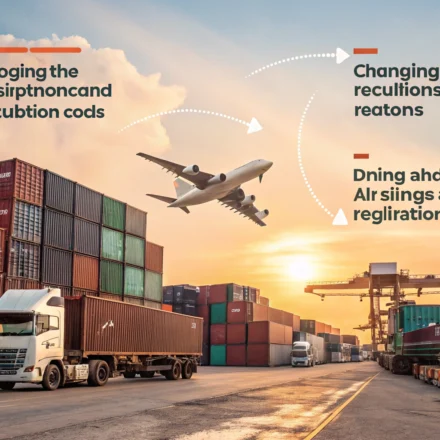
China’s manufacturing prowess is underpinned by world-class infrastructure. The country’s major manufacturing regions are clustered near key economic zones and port cities, with seven of the world’s ten busiest container ports located on Chinese soil. The Port of Shanghai, the world’s busiest, processed over 49 million TEUs in 2024, while other major hubs — including Shenzhen, Ningbo-Zhoushan, Guangzhou, and Tianjin — collectively moved hundreds of millions more. This extraordinary logistics capacity ensures that goods can move from factory floor to international shipping container with remarkable speed and efficiency.
The geographic concentration of Chinese manufacturing also means that entire supply chains — from raw materials to component suppliers to final assembly — are often located within a single industrial cluster. Cities like Shenzhen dominate electronics, Guangzhou leads in automotive and machinery, and Yiwu is the global capital of small commodities. This clustering effect reduces lead times, lowers transportation costs, and enables rapid iteration — advantages that continue to make China the go-to destination for custom product manufacturing despite rising labor costs and growing competition from other Asian markets.
Conclusion: Positioning Your Business for Success in Chinese Manufacturing
Manufacturing in China in 2025 offers enormous opportunities for global businesses willing to invest the time and resources in proper planning and due diligence. The decision to work with a sourcing agent, trading company, or direct factory depends on your order volume, quality requirements, budget, and risk tolerance. For large orders requiring tight quality control, direct factory partnerships — supported by third-party inspections and secure payment methods — offer the best combination of cost and control. For smaller orders or businesses new to the Chinese market, a reputable sourcing agent or trading company can provide a valuable bridge, albeit at a higher per-unit cost.
Regardless of which path you choose, the fundamentals remain the same: verify your suppliers thoroughly, start small, leverage peer networks for referrals, and never underestimate the importance of on-the-ground quality assurance. With China’s industrial infrastructure continuing to expand and modernize — and its port network handling record volumes year after year — the country’s position as the world’s manufacturing hub shows no signs of weakening. The businesses that succeed will be those that approach the market with informed caution, strategic patience, and a commitment to building genuine, transparent partnerships with their Chinese counterparts.