
Skip to content
China Industry Intel China Industry Intel China Industry Intel

Intelligence on China’s Industries, Markets, Technology, and Manufacturing

China Industry Intel China Industry Intel China Industry Intel

Intelligence on China’s Industries, Markets, Technology, and Manufacturing

  • Home
  • INDUSTRIES
    • AI
    • Healthcare & Biotech
    • Robotics
    • Energy & Renewable
    • Semiconductor
    • EV & Battery
    • Manufacturing
  • BUSINESS
    • Logistics
    • Suppliers
    • Supply Chain
    • Stock Market
    • Economic Trends
    • Trade & Tariffs
  • TECH & CONSUMER
    • Global Industry Insights
    • Tech & Internet
    • Consumer Trends & New Product Releases
  • About
  • Contact
  • Home
  • INDUSTRIES
    • AI
    • Healthcare & Biotech
    • Robotics
    • Energy & Renewable
    • Semiconductor
    • EV & Battery
    • Manufacturing
  • BUSINESS
    • Logistics
    • Suppliers
    • Supply Chain
    • Stock Market
    • Economic Trends
    • Trade & Tariffs
  • TECH & CONSUMER
    • Global Industry Insights
    • Tech & Internet
    • Consumer Trends & New Product Releases
  • About
  • Contact
  • https://www.facebook.com/
  • https://twitter.com/
  • https://t.me/
  • https://www.instagram.com/
  • https://youtube.com/
Subscribe
China Industry Intel China Industry Intel China Industry Intel

Intelligence on China’s Industries, Markets, Technology, and Manufacturing

China Industry Intel China Industry Intel China Industry Intel

Intelligence on China’s Industries, Markets, Technology, and Manufacturing

  • Home
  • INDUSTRIES
    • AI
    • Healthcare & Biotech
    • Robotics
    • Energy & Renewable
    • Semiconductor
    • EV & Battery
    • Manufacturing
  • BUSINESS
    • Logistics
    • Suppliers
    • Supply Chain
    • Stock Market
    • Economic Trends
    • Trade & Tariffs
  • TECH & CONSUMER
    • Global Industry Insights
    • Tech & Internet
    • Consumer Trends & New Product Releases
  • About
  • Contact
  • Home
  • INDUSTRIES
    • AI
    • Healthcare & Biotech
    • Robotics
    • Energy & Renewable
    • Semiconductor
    • EV & Battery
    • Manufacturing
  • BUSINESS
    • Logistics
    • Suppliers
    • Supply Chain
    • Stock Market
    • Economic Trends
    • Trade & Tariffs
  • TECH & CONSUMER
    • Global Industry Insights
    • Tech & Internet
    • Consumer Trends & New Product Releases
  • About
  • Contact
  • https://www.facebook.com/
  • https://twitter.com/
  • https://t.me/
  • https://www.instagram.com/
  • https://youtube.com/
Subscribe
Home/BUSINESS/Trade & Tariffs/Shein and Temu Face Double Squeeze from De Minimis End and Surging Jet Fuel Costs
Trade & Tariffs

Shein and Temu Face Double Squeeze from De Minimis End and Surging Jet Fuel Costs

By ChinaIndustryIntel.com
10.06.2026 5 Min Read

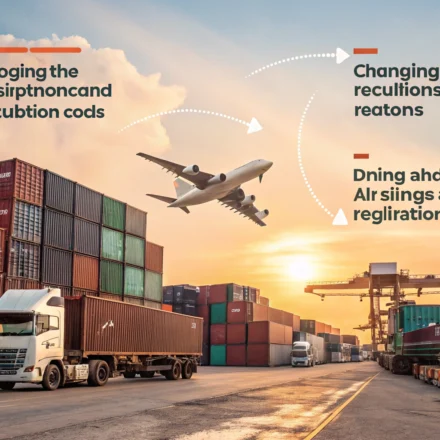
The golden era of ultra-cheap, direct-to-consumer shipping from China is facing its most severe test. A perfect storm is brewing for giants like Shein and Temu, as the impending end of the U.S. duty-free de minimis exemption collides with a sharp, sustained increase in global jet fuel prices. This dual pressure threatens to fundamentally reshape the economics of cross-border e-commerce, forcing a strategic pivot from rapid, low-cost small parcels to more complex and costly logistics models. The companies that once built empires on $5 dresses and $10 gadgets shipped for free must now navigate a landscape where their core cost advantages are rapidly eroding.

The End of the De Minimis Loophole: A Direct Hit to Cross-Border E-Commerce

The primary and most impactful pressure comes from regulatory change. The U.S. de minimis threshold, previously set at $800, allowed small packages to enter the country without paying import duties or facing rigorous customs checks. This provision was the bedrock of the direct-from-China e-commerce model. The source article underscores that the final rule from the U.S. Department of Homeland Security to tighten this exemption, primarily targeting e-commerce shipments, will eliminate this crucial cost-saving mechanism. For companies processing millions of small-value shipments monthly, the financial implication is staggering. The article cites internal estimates suggesting Shein’s U.S. business could face hundreds of millions of dollars in new annual duties, while Temu might see costs rise by hundreds of millions as well.

Financial Impact and the Shift in Logistics Strategy

The direct financial hit is forcing an immediate operational reckoning. The duty-free model allowed for a simple, efficient logistics chain: individual items were packed in China and air-shipped directly to consumers’ doors. With duties now applicable, this model becomes prohibitively expensive. The source indicates that Temu has already begun accelerating a shift to a bulk shipping model, where goods are consolidated and sent in large containers to U.S. warehouses. This approach, similar to Amazon’s Fulfillment by Amazon (FBA) model, allows companies to pay duties in bulk on the wholesale value, which is lower than the retail value, and significantly reduces per-unit air freight costs. However, it requires massive upfront investment in inventory and warehousing infrastructure, a stark contrast to the asset-light, direct-ship model.

Competitive Disadvantage Against Domestic Rivals

This shift inadvertently levels the playing field in favor of domestic U.S. competitors and marketplace giants like Amazon. These rivals already operate on a warehoused inventory model and have sophisticated, localized fulfillment networks. By forcing Shein and Temu into the same logistical playbook, the de minimis change removes a key differentiator—speed and cost of direct shipping. Furthermore, the transition period is fraught with risk. Building out or leasing warehouse space in the U.S. is capital-intensive and can take years, during which the Chinese platforms may struggle with service consistency and delivery times, potentially alienating customers accustomed to next-day or two-day delivery from competitors.

Compounding the Crisis: Surging Jet Fuel Costs and Air Freight Capacity

Just as the regulatory ground shifted, the cost of moving goods across the Pacific skyrocketed. Jet fuel, a primary component of air cargo costs, has seen significant price surges due to geopolitical instability and post-pandemic demand recovery. The article highlights that this fuel surge worsens the demand slump already triggered by the de minimis changes. Air freight, which was the lifeblood of the small-parcel model, is becoming economically unviable for low-margin goods.

The Economics of Air Freight Under Pressure

The combination of higher fuel costs and the new duty regime creates a devastating calculus. Shipping a $15 sweater via air freight, which previously was duty-free and had a manageable fuel surcharge, may now attract a 20% duty plus a much higher freight cost. This can easily double the landed cost of the item, erasing the very price advantage that attracted consumers. Consequently, demand for express air freight for e-commerce shipments is softening. The source notes a “demand slump,” indicating that consumer appetite wanes as final retail prices rise to reflect these new costs, creating a vicious cycle for the platforms.

The Strain on Global Logistics Networks

The logistics sector itself is caught in the squeeze. Air cargo carriers, which had expanded capacity to serve the e-commerce boom, now face uncertain demand. Major Asian cargo hubs are seeing shifts in traffic patterns as volumes reallocate. The pressure is pushing some shippers to experiment with slower, hybrid models. For instance, using sea-air combinations—where goods are shipped by sea to a hub like Dubai and then flown to the U.S.—or even a greater reliance on ocean freight for non-seasonal items. This introduces longer lead times, challenging the instant gratification model that fueled the growth of Shein and Temu, and requiring them to better forecast demand—a skill not traditionally central to their business.

Strategic Pivots and the Future of Ultra-Low-Cost E-Commerce

Facing this double squeeze, the industry is at an inflection point. The response from companies like Shein and Temu will determine whether they can retain their market positions or if the era of disruptive, ultra-cheap global e-commerce is drawing to a close. The strategy is clearly moving from pure speed and cost to a more balanced, hybrid approach.

Accelerating Localization and Inventory Holding

The most significant pivot is toward localization. Temu’s move to bulk shipping is just the first step. The next phase will involve deeper localization: establishing regional distribution centers, potentially near-shoring some production or final assembly, and holding larger inventories domestically. Shein has already begun exploring on-demand manufacturing and local warehouse partnerships in other markets to reduce overproduction and shipping volumes. This shift transforms them from pure e-commerce platforms into more traditional hybrid retailers, with all the associated overhead and risk management challenges.

The Road Ahead: Adaptation or Decline

The forward-looking conclusion is clear: adaptability is now survival. Companies will need to leverage data analytics more intensely to manage localized inventory, reducing the risk of deadstock that comes with holding physical goods. They may also strategically segment their product offerings, reserving direct air shipping for only the highest-value or most time-sensitive items. The future likely holds a more consolidated market, where only players with the capital to invest in global logistics infrastructure and sophisticated inventory management will thrive. The end of the de minimis era and the era of cheap fuel mark the end of an uncomplicated growth chapter for cross-border e-commerce, ushering in a new, more complex, and capital-intensive phase of global retail competition.

The pressures from policy and fuel costs are not a temporary storm but a permanent shift in the operating environment. Shein, Temu, and their peers must now prove that their business models can evolve as rapidly as the markets they once disrupted.

Tags:

AIE-commerceEVInvestmentManufacturingStock MarketSupply Chain
Author

ChinaIndustryIntel.com

Follow Me
Other Articles
Previous

Exceptional Small-Batch Men’s Sportswear Manufacturer: Cixi Haixia Garment Factory’s Niche in Global Fitness Apparel

Next

Xunce Technology Stock Price Doubles on Hong Kong IPO: Why China’s “Palantir” Large Model Data Leader Is Attracting G…

No Comment! Be the first one.

Leave a Reply Cancel reply

You must be logged in to post a comment.

Recent Posts

  • First-in-Class Epigenetic Silencer TUNE-401 Shows Positive Phase 1b/2a Proof-of-Concept Data for Hepatitis B at EASL 2026
  • DeepSeek’s Quiet Conquest: How a Chinese AI Startup Became US Enterprises’ Fastest-Growing Vendor
  • How the End of De Minimis Exemption and Surging Jet Fuel Costs Threaten Shein, Temu, and China’s Cross-Border E-Comme…
  • China’s Palantir Xunce Technology Stock Price Doubles After Hong Kong IPO as AI Data Solutions Market Surges
  • The Double Squeeze: How De Minimis Policy Changes and Jet Fuel Costs Challenge Shein and Temu’s Global Dominance

Archives

  • June 2026

Categories

  • BUSINESS
    • Economic Trends
    • Stock Market
    • Suppliers
    • Supply Chain
      • Logistics
    • Trade & Tariffs
  • INDUSTRIES
    • AI
    • Energy & Renewable
    • EV & Battery
    • Healthcare & Biotech
    • Manufacturing
    • Robotics
    • Semiconductor
  • TECH & CONSUMER
    • Consumer Trends & New Product Releases
    • Global Industry Insights
    • Tech & Internet
Independent coverage of China’s industries, technology, manufacturing, supply chains, and market trends.

Focused on AI, semiconductors, EVs, robotics, logistics, trade, and global industrial intelligence.

  • X
  • Instagram
  • Facebook
  • YouTube
Short Version
We welcome industry news tips, research contributions, press releases, and collaboration inquiries related to China’s industrial and technology sectors.
Contact: editor@chinaindustryintel.com

Available for Hire
Get In Touch

Recent Posts

  • First-in-Class Epigenetic Silencer TUNE-401 Shows Positive Phase 1b/2a Proof-of-Concept Data for Hepatitis B at EASL 2026
    by CII-Contributing Analyst
    14.06.2026
  • 10th Huawei ICT Competition Global Final Concludes with Record 220,000 Participants from 49 Countries in Shenzhen10.06.2026
  • 42 Rules for Sourcing and Manufacturing in China: Navigating Quality, Culture, and Operational Realities for Global B…09.06.2026
  • A Comprehensive Guide: The 12-Step Framework for Successfully Opening a Factory in China in 202609.06.2026

Search...

Tag

5G AI Autonomous Driving Belt and Road Biotech China Supplier Cloud Computing Cybersecurity E-commerce Economy Electronics EV Export Global Sourcing Guangdong Innovation Investment Lighting LLM Manufacturing New Energy OpenAI Pharmaceutical Policy Product Innovation Quality Control Robot Semiconductor Stock Market Supply Chain Trade War

You May Have Missed

Healthcare & Biotech

First-in-Class Epigenetic Silencer TUNE-401 Shows Positive Phase 1b/2a Proof-of-Concept Data for Hepatitis B at EASL 2026

By CII-Contributing Analyst
14.06.2026
AI

DeepSeek’s Quiet Conquest: How a Chinese AI Startup Became US Enterprises’ Fastest-Growing Vendor

By ChinaIndustryIntel.com
10.06.2026
Trade & Tariffs

How the End of De Minimis Exemption and Surging Jet Fuel Costs Threaten Shein, Temu, and China’s Cross-Border E-Comme…

By ChinaIndustryIntel.com
10.06.2026
Stock Market

China’s Palantir Xunce Technology Stock Price Doubles After Hong Kong IPO as AI Data Solutions Market Surges

By ChinaIndustryIntel.com
10.06.2026
Trade & Tariffs

The Double Squeeze: How De Minimis Policy Changes and Jet Fuel Costs Challenge Shein and Temu’s Global Dominance

By ChinaIndustryIntel.com
10.06.2026
Manufacturing

Advanced Automotive Supply Chain Analysis: How BAIC Foton and Qingling Motors Showcase China’s Hardcore Manufacturing…

By ChinaIndustryIntel.com
10.06.2026
Suppliers

China’s Advanced Peptide Manufacturers: Supplying Global Research and Wellness Markets with Precision Synthesis

By ChinaIndustryIntel.com
10.06.2026
Manufacturing

Evolution of the Chinese Auto Industry: How Beijing Automotive Group Powers Global Supply Chains

By ChinaIndustryIntel.com
10.06.2026
Healthcare & Biotech

Leading China-Based Peptide Manufacturer for FDA-Approved and Custom API Production

By ChinaIndustryIntel.com
10.06.2026

China Industry Intel is an independent media and intelligence platform covering China’s industrial economy, emerging technologies, manufacturing ecosystems, and global supply chains.

We provide curated analysis on AI, semiconductors, robotics, EVs, healthcare, logistics, trade policy, and consumer technology — helping readers understand how China’s industries are shaping global markets.

  • Facebook
  • X
  • Instagram
  • LinkedIn

Latest Posts

  • Zhejiang Momali Valve Co., Ltd. Expands Global Footprint as a Leading Brass Sanitary Ware Manufacturer from China’s Valve Capital
    In the fiercely competitive world of plumbing and sanitary ware manufacturing, few regions on earth carry the industrial weight and concentrated expertise of Yuhuan, Taizhou — widely known as **China
  • Xunce Technology Stock Price Doubles on Hong Kong IPO: Why China’s “Palantir” Large Model Data Leader Is Attracting G…
    The Hong Kong Stock Exchange has long served as a barometer for China's most innovative technology companies, and late 2025 delivered one of its most striking debuts in recent memory. On December 30,
  • Xunce Technology Hong Kong IPO: Why ‘China’s Palantir’ is a Data Analytics Stock to Watch in 2026
    The global tech investment community is perpetually scanning the horizon for the next paradigm-shifting company, a "next Palantir" that can harness the exponential value of data. While Silicon Valley

Contact

alibaba.com

Contact

Phone

+77 822411

Email

editor@chinaindustryintel.com

Location

New York, USA

Copyright 2026 — China Industry Intel. All rights reserved. Blogsy WordPress Theme