Why the 2026 FIFA World Cup Official Match Ball is Still “Made in China”: Guangdong’s Enduring Role in Global High-En…
The Technical Prowess Behind “Made in China” World Cup Footballs
The journey of an official FIFA World Cup match ball from design to the pitch is a formidable test of manufacturing excellence. For the 2026 tournament in North America, this test is being passed by a factory in Guangdong, China, where Adidas’s “TRIONDA” ball is produced and embossed with the iconic “MADE IN CHINA” mark. This is not a simple stamped product; it represents the pinnacle of sports equipment engineering. The ball’s new four-panel construction demands extreme precision in material science, thermal bonding, and quality control that goes far beyond standard mass production. Each ball must undergo rigorous testing for consistency in weight, roundness, water absorption, and flight stability, meeting the stringent performance standards set by FIFA for competitive play.
Engineering Complexity and Precision Manufacturing
The shift to a simplified four-panel design, while aesthetically clean, actually increases the manufacturing complexity. Fewer panels mean larger, more intricate pieces that must bond perfectly without compromising the ball’s structural integrity or aerodynamic properties. The Guangdong facility employs advanced processes like computer-controlled thermal molding and laser-guided cutting to achieve this. This level of sophistication is what differentiates a match-grade football from a consumer replica. While the outer appearance may be similar, the internal composition, sensor integration for VAR technology, and the unwavering quality control at every step are what justify production remaining in a high-capability ecosystem like China’s.
Decoding the Global Football Manufacturing Divide
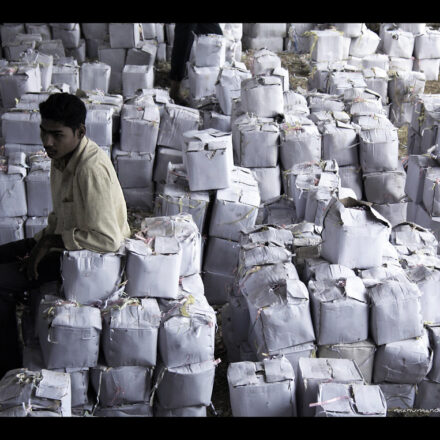
It is a common misconception that all footballs are produced in one place. The global supply chain is highly specialized and tiered. The city of Sialkot in Pakistan is a historic and vital hub, responsible for an estimated 70% of the world’s footballs, including countless training balls and tournament replicas. This region excels in skilled hand-stitching and cost-effective high-volume production. However, the source material and Adidas’s own statements point to a clear bifurcation: mass-market and traditional stitched balls are centered in South Asia, while the most technologically advanced, sensor-embedded balls destined for the world’s top stadiums are produced in China’s Pearl River Delta.
Supply Chain Specialization: Replicas vs. Elite Match Balls
This division of labor is a logical outcome of comparative advantage. The key differentiators for elite match balls are automation, R&D integration, and precision engineering. Chinese manufacturing clusters have moved beyond simple assembly, investing heavily in smart factories and collaborative robotics. This allows for the seamless integration of complex components like near-field communication (NFC) chips and internal motion sensors—features that are now standard in World Cup official balls. The ability to maintain batch-to-batch consistency with microscopic tolerances is a non-negotiable requirement for FIFA, a standard that aligns with China’s advanced industrial quality control systems.
China’s Strategic Position in the High-Value Manufacturing Landscape
The persistent role of Guangdong in producing the World Cup’s centerpiece equipment is a powerful indicator of broader trends. As global supply chains undergo recalibration, with some segments migrating to Southeast Asia for cost advantages, the high-end, technology-intensive tier is consolidating where the necessary ecosystem exists. This ecosystem includes not just assembly lines, but deep supplier networks for advanced polymers, adhesives, and electronic components, coupled with a workforce skilled in operating and maintaining sophisticated machinery. The “Made in China” stamp on the TRIONDA ball is therefore a statement about the country’s evolving niche: it is becoming the central workshop for the world’s most demanding sporting goods, where innovation and precision are the primary competitive currencies.
From Quantity to Quality: The Evolution of “Factory of the World”
The narrative surrounding Chinese manufacturing is no longer solely about volume and cost. It is increasingly about capability, reliability, and innovation. The continued trust of global brands like Adidas to produce their most visible and scrutinized products—those used in the final of the World Cup—speaks volumes. This trust is built on years of deepening technical expertise and infrastructure. Looking forward, as sports technology incorporates more data analytics and smart features, the manufacturing hubs that can combine hardware production with software integration will dominate. China’s established position gives it a head start in this high-stakes race, ensuring that even as other aspects of global trade shift, the center of gravity for premium sports manufacturing remains firmly within its industrial heartland.
In conclusion, the “MADE IN CHINA” inscription on the 2026 World Cup football is far more than a label of origin. It is a testament to a successful specialization within the global manufacturing ecosystem. While Sialkot rightfully holds its title as the volume capital of football production, Guangdong has cemented its role as the engine room for elite sporting innovation. This dual-track supply chain highlights a mature and pragmatic global division of labor. As long as the world’s biggest sporting events demand perfection in performance and technology, the factories best equipped to deliver it—wherever they are—will remain on the field. For now, and for the foreseeable future, that critical role is played by Chinese manufacturing, a key player that has earned its spot at the very center of the global sports arena.