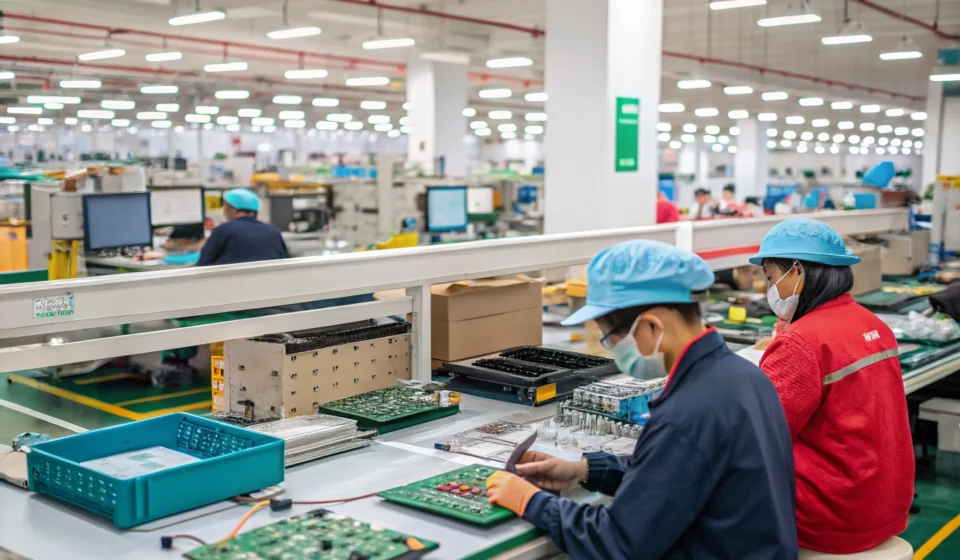
Shenzhen’s PCB Powerhouses: How China’s Small and Medium-Sized OEMs Dominate Global Electronics Supply Chains
The global electronics industry, valued at nearly $350 billion in 2020, is a complex tapestry of innovation and manufacturing might. While industry giants like Apple and Dell command headlines, the true backbone of the sector resides in the dynamic and often overlooked network of small and medium-sized enterprises (SMEs). Nowhere is this ecosystem more potent than in Shenzhen, China, a city often referred to as the “hardware capital of the world.” This article delves into the world of China’s OEM/ODM electronic manufacturers, specifically those specializing in PCB production and assembly, exploring how these SMEs—operating with revenues between US$1 million and US$10 million—leverage Shenzhen’s unparalleled ecosystem and digital trade platforms to service a diversified global market. Their story is one of scale, reliability, and adaptability, proving that in modern electronics supply chains, agility can be just as valuable as sheer size.
The Shenzhen Ecosystem: A Breeding Ground for OEM and ODM Innovation
Shenzhen’s reputation as a major electronics manufacturing hub is well-founded, with estimates suggesting it produces upwards of 90% of the world’s electronics. This staggering statistic is made possible by an dense infrastructure of tens of thousands of factories, thousands of design houses, and a vast network of component suppliers. For the small and medium-sized OEM/ODM suppliers profiled, this ecosystem is not just a location; it is a critical competitive advantage. A company like Shenzhen Wide Way Optoelectronics Co., Ltd., which specializes in LED displays for advertising, can source everything from circuit boards to custom plastic housings within a short radius, dramatically reducing lead times and costs.
Core Specializations in a Hyper-Connected Hub
Within this environment, companies carve out specific niches. A review of supplier profiles reveals a clear concentration on PCB (Printed Circuit Board) production and assembly. Firms like Shenzhen Sato Intelligent Technology Ltd. and Shenzhen Manners Technology Co., Ltd. explicitly market their custom-made multilayer PCB and PCBA services. This specialization is strategic; the PCB is the foundational component of virtually all electronic devices. By mastering this core element, these SMEs position themselves as indispensable partners for everything from consumer gadgets to industrial equipment. The supplementary data confirms this trend, listing top Chinese OEM PCB manufacturers like Zhen Ding Tech Group and Viasion Technology Co., Ltd. as leaders known for delivering high-quality, reliable components that allow global clients to scale their production without sacrificing efficiency.
Beyond the Factory Floor: Building Trust and Reliability in Global Trade
For international buyers, sourcing from overseas SMEs presents inherent risks: quality control, communication barriers, and payment security. Chinese electronics manufacturers have adeptly leveraged digital B2B platforms like Alibaba to mitigate these concerns, using transparent metrics and formalized programs to build trust. The data provided by these platforms offers a clear blueprint for identifying reliable partners.
Decoding Alibaba’s Trust Signals
Two metrics stand out as critical indicators of a supplier’s professionalism and dedication: **Response Rate** and platform certifications. The suppliers in our analysis boast impressively high response rates, ranging from **88.9% to 98.0%**. As verified industry guides explain, this metric is fundamental; a high response rate signifies a supplier is attentive, dedicated to business, and committed to prompt communication—a vital trait when navigating complex custom orders across time zones.
Furthermore, certifications like **”Gold Supplier”** and participation in the **”Trade Assurance”** program provide concrete layers of security. Trade Assurance, in particular, is a free service that protects a buyer’s payment against missed shipment deadlines or failures to meet quality requirements. For an SME generating US$5-10 million in annual revenue, offering Trade Assurance is a strong signal of financial stability and confidence in their operational processes. This combination of high-touch communication and backed-by-platform guarantees is reshaping how global procurement teams evaluate and engage with small-scale Chinese manufacturers.
A Diversified Global Footprint: Markets and Growth Drivers
The export data for these suppliers underscores a strategic and diversified international customer base, moving beyond a singular dependency on any one region. For a company like the one reporting revenue of US$5-10 million, the top markets are **North America (26%), Western Europe (23%), and Southern Europe (12%)**. Another supplier focused on traffic control products serves a different mix, with 50% domestic, 28% Southeast Asia, and 8% South America. This diversification is a buffer against geopolitical or economic shifts in any single market.
Industry Growth and SME Resilience
This global outreach is buoyed by a resilient and growing industry backdrop. China’s electronic information manufacturing sector posted a robust **10.6% year-on-year growth in its value-added industrial output in 2025**, as reported by the Ministry of Industry and Information Technology. While large players like Goertek (a key Meta Quest and TWS earphone manufacturer) dominate the macro view, the SME segment forms the critical supplier tier for both large assemblers and smaller niche brands. The industry’s scale—worth hundreds of billions of dollars—ensures consistent demand for PCB fabrication, assembly, and custom electronic manufacturing services, the very core competencies of the Shenzhen-based suppliers profiled.
In conclusion, the landscape of China’s electronics OEM/ODM sector is far more nuanced than monolithic factory images suggest. It is a dynamic arena powered by agile SMEs rooted in the world-class hardware ecosystem of Shenzhen. These companies, with revenues typically in the US$1-10 million range, have mastered the critical fundamentals: specializing in essential components like PCBs, building verifiable trust through high responsiveness and platform-backed guarantees, and cultivating a diversified export portfolio across North America, Europe, and Asia. As global electronics supply chains continue to seek resilience, efficiency, and specialized partnerships, the role of these nimble, reliable, and strategically located Chinese suppliers will only grow in importance. They are not just manufacturers; they are integral, adaptive nodes in the complex nervous system of global technology production, poised to play a pivotal role in the industry’s continued evolution.