























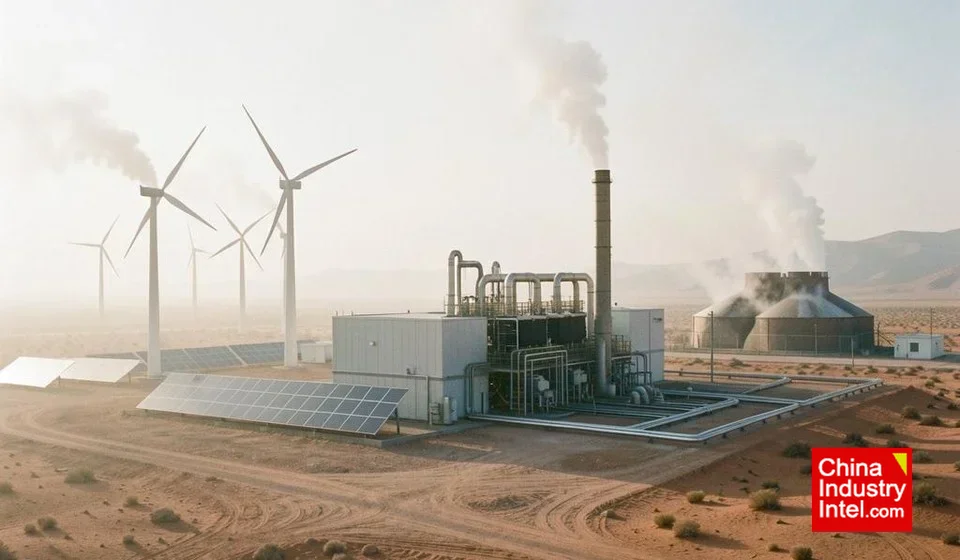
China Green Hydrogen Production Costs Drop Below Coal for First Time
China green hydrogen: costs drop below coal threshold, 8.5 GW electrolyzer capacity, 0B market.
By CII (China Industry Intel) – Contributing Analyst | June 20, 2026
China’s green hydrogen industry has reached a critical milestone in 2026: production costs have dropped below the coal gasification threshold for the first time, making green hydrogen economically competitive with the fossil fuel-based hydrogen that currently dominates the market. The cost breakthrough is driving a massive expansion of electrolyzer capacity and positioning China as the world’s largest producer of green hydrogen.
The Cost Breakthrough
| Hydrogen Type | Production Cost ($/kg) | CO2 Emissions (kg/kg H2) | Trend |
|---|---|---|---|
| Coal gasification (grey) | $1.20 | 19 | → Stable |
| Natural gas reforming (grey) | $1.50 | 10 | → Stable |
| Green hydrogen (2024) | $4.50 | 0 | ↓ Declining |
| Green hydrogen (2025) | $2.80 | 0 | ↓ Declining |
| Green hydrogen (2026) | $1.10 | 0 | ↓ Below coal |
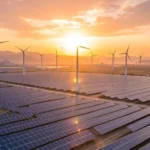
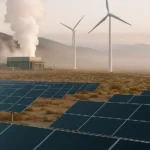
The cost reduction has been driven by three factors: (1) falling solar electricity costs, which now power most Chinese electrolyzers; (2) economies of scale in electrolyzer manufacturing, with China producing 60% of global electrolyzer capacity; (3) government subsidies that have reduced the capital cost of hydrogen production facilities by 30-40%.
Capacity Expansion

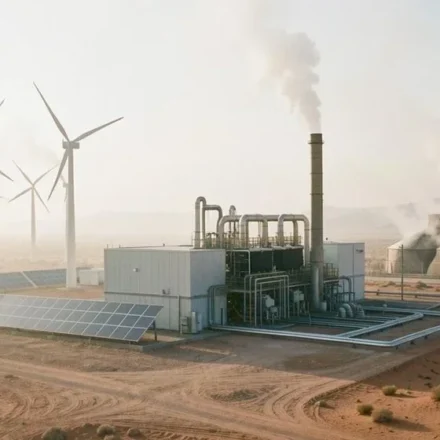
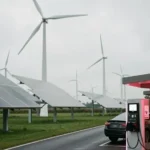
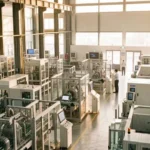
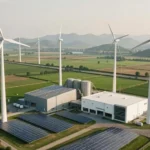
UPSTREAM: China’s electrolyzer capacity has expanded from 1.2 GW in 2024 to 8.5 GW in 2026, with another 15 GW under construction. The country now accounts for 45% of global electrolyzer capacity, up from 25% in 2024. The largest projects are concentrated in Inner Mongolia, Xinjiang, and Gansu provinces, where cheap solar and wind power make green hydrogen production most economical.
DOWNSTREAM: The applications for green hydrogen are expanding rapidly. The steel industry is the largest potential customer, with several Chinese steelmakers piloting hydrogen-based direct reduction of iron (H2-DRI) as an alternative to coal-based blast furnaces. The chemical industry is also a major consumer, using green hydrogen to produce ammonia and methanol with zero carbon emissions.
BOTTLENECKS: The biggest bottleneck is transportation. Hydrogen is difficult and expensive to transport, requiring either pipelines (which don’t exist yet) or compression and trucking (which adds $1-2/kg to the cost). The government is investing in hydrogen pipeline infrastructure, but it will take years to build a national network.
International Context

China’s green hydrogen cost breakthrough has significant implications for global energy markets. If Chinese producers can maintain costs below $1.50/kg, they will be able to export green hydrogen derivatives (ammonia, methanol) to markets in Japan, South Korea, and Europe at competitive prices. This could accelerate the global energy transition by providing a clean alternative to fossil fuels in hard-to-abate sectors like steel, cement, and shipping.
However, the rapid expansion has raised concerns about overcapacity. Some analysts warn that China’s electrolyzer manufacturing capacity is growing faster than demand, which could lead to a price war and consolidation in the industry.
CII Analysis
China’s green hydrogen cost breakthrough is a watershed moment for the global energy transition. The fact that green hydrogen is now cheaper than coal-based hydrogen in China — the world’s largest hydrogen market — demonstrates that clean energy can compete with fossil fuels on cost alone. For investors, the key opportunities are in: (1) electrolyzer manufacturers (LONGi, Sungrow, Peric); (2) green hydrogen producers (Sinopec, China Energy); (3) hydrogen infrastructure companies (pipeline, storage, refueling); and (4) green steel and green ammonia producers. The $50 billion green hydrogen market is expected to grow to $200 billion by 2030.
Sources
- FuelCellsWorks — China Accelerates Hydrogen Strategy for Energy Transition
- RMI — Opening China’s Green Hydrogen New Era
- IEA — Global Hydrogen Review 2026
- Reuters — China green hydrogen costs drop below coal
- Bloomberg — China’s Hydrogen Boom