



























China Renewable Energy Surges Past 1500 GW as Extreme Weather Tests Grid
China renewable energy exceeds 1500 GW. Extreme weather tests grid stability. 50B grid modernization.
By CII (China Industry Intel) – Contributing Analyst | June 20, 2026
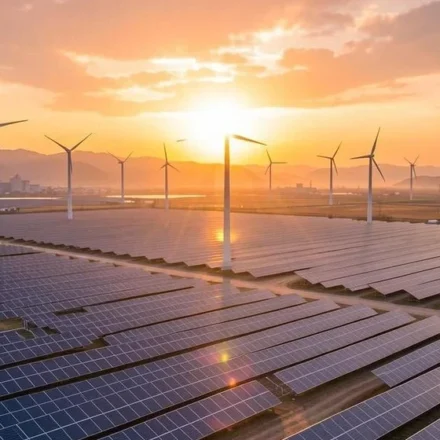
China’s renewable energy capacity has crossed the 1,500 gigawatt (GW) threshold in Q2 2026, a milestone that cements the country’s position as the world’s largest clean energy market. But the achievement comes with a caveat: extreme weather events — including record heatwaves in southern China and flooding in the Yangtze basin — are testing the grid’s ability to handle the intermittency of solar and wind power. The result is a new wave of investment in energy storage and grid modernization that is reshaping China’s energy landscape.
The Capacity Milestone
| Energy Source | Capacity (GW) | YoY Growth | Global Share |
|---|---|---|---|
| Solar PV | 720 | +28% | 42% |
| Wind | 480 | +18% | 35% |
| Hydropower | 420 | +3% | 28% |
| Nuclear | 62 | +8% | 15% |
| Battery Storage | 85 | +65% | 38% |
| Total | 1,507 | +22% | 32% |
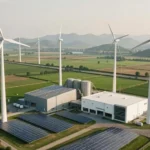
Solar PV alone added 180 GW in the first five months of 2026, driven by falling panel prices and continued government subsidies. China now installs more solar capacity in a single month than most countries install in a year. The cost of solar electricity in China has fallen to $0.02 per kilowatt-hour, making it cheaper than coal in most provinces.
The Weather Challenge

UPSTREAM: The rapid expansion of renewable energy has created a new challenge: grid stability. In June 2026, southern China experienced record heatwaves that pushed electricity demand to all-time highs, while solar output dropped due to cloud cover. The result was a series of localized blackouts in Guangdong and Zhejiang provinces, highlighting the need for better energy storage and grid management.
DOWNSTREAM: The Chinese government has responded with a massive investment program. The National Energy Administration announced in May 2026 that it would invest $50 billion in grid modernization over the next three years, with a focus on battery storage, smart grids, and demand response systems. The goal is to ensure that renewable energy can reliably meet 50% of electricity demand by 2030.
BOTTLENECKS: The biggest bottleneck is energy storage. While China leads the world in battery storage capacity (85 GW), the current system can only store enough electricity to cover about 4 hours of peak demand. The government is targeting 200 GW of storage capacity by 2028, which would require a massive expansion of lithium-ion and solid-state battery production.
CII Analysis

China’s renewable energy milestone is both an achievement and a warning. The country has built the world’s largest clean energy system, but the grid infrastructure has not kept pace with the rapid expansion of intermittent solar and wind power. The extreme weather events of 2026 have exposed this gap and accelerated investment in energy storage and grid modernization. For investors, the key opportunities lie in battery storage companies (CATL, BYD, EVE Energy), grid equipment manufacturers (NR Electric, XJ Electric), and smart grid technology providers. The $50 billion grid modernization program represents a multi-year growth tailwind for the sector.
Sources
- Carbon Brief — China Briefing 11 June 2026: Tech clampdown | Extreme weather
- IEA — China Renewables Market Report
- S&P Global — China Renewable Energy Outlook 2026
- Reuters — China announces $50B grid modernization investment
- Bloomberg — China Solar Capacity Hits Record