

























Ford Starts Making CATL LFP Batteries in Michigan for $30K EV Truck
Ford has begun producing LFP battery cells using CATL technology at its Michigan plant. The 0,000 compact EV truck arrives in 2027.
By CII (China Industry Intel) – Contributing Analyst | June 20, 2026
Ford Starts Making CATL LFP Batteries in Michigan for $30K EV Truck
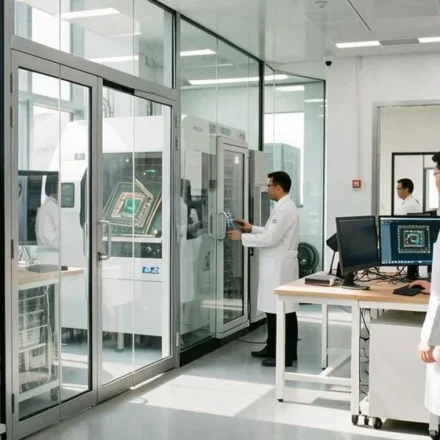
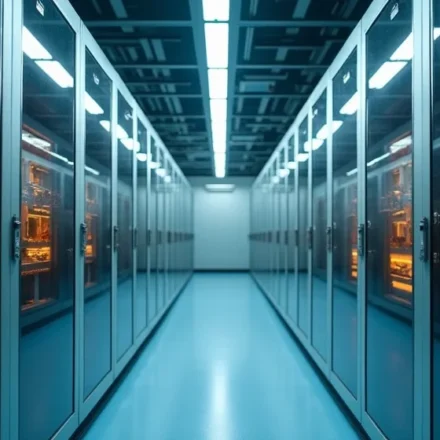
Ford Motor Company (NYSE: F) has officially started producing lithium iron phosphate (LFP) battery cells at its BlueOval Battery Park in Michigan, using technology licensed from China’s CATL (SZSE: 300750). The facility delivered its first full prismatic LFP cells recently, Ford CEO Jim Farley confirmed, making Ford the first automaker in the United States to manufacture and ship LFP batteries for mass-market vehicles.
The batteries will power Ford’s highly anticipated $30,000 compact electric truck, slated for 2027, and represent a bet that Chinese battery technology is the only viable path to genuinely affordable EVs in the American market.
Why LFP changes the equation
Traditional EV batteries rely on nickel and cobalt — expensive, volatile materials that drive up vehicle prices. LFP chemistry eliminates both. The result is a battery that is significantly cheaper to produce, more durable, and inherently safer, though with somewhat lower energy density.
| Battery Chemistry | Cost (est. $/kWh) | Energy Density | Thermal Stability | Cycle Life |
|---|---|---|---|---|
| NMC (nickel-manganese-cobalt) | $110-130 | High | Moderate | 1,000-2,000 |
| LFP (lithium iron phosphate) | $60-80 | Moderate | High | 3,000-5,000 |
| CATL Shenxing (LFP) | $55-70 | Moderate-High | High | 3,000+ |
Ford’s specific prismatic cells, based on CATL’s design, are lighter and more compact than competing LFP formats. This gives engineers more flexibility in vehicle packaging — critical for a compact truck where interior space is at a premium. Ford Vice President Lisa Drake has argued that this technology is “the only viable path to producing genuinely affordable EVs” while creating American manufacturing jobs.
The political tightrope

The decision to license CATL technology was not without controversy. Republican lawmakers criticized Ford for partnering with a Chinese company, arguing it deepens US dependence on Chinese battery supply chains. Drake pushed back, pointing out that the alternative — importing finished battery packs from China — would be worse for American jobs and national security.
The licensing arrangement is structured so that Ford owns and operates the Michigan facility. CATL provides the manufacturing know-how and cell chemistry, but the production, workforce, and output are American. This arrangement was designed to satisfy both the Inflation Reduction Act’s domestic manufacturing requirements and the political need to avoid direct Chinese ownership of US battery production.
CATL (Shenzhen: 300750) is the world’s largest battery manufacturer, commanding roughly 37% of global EV battery market share as of Q1 2026. The company’s revenue reached approximately $50 billion in 2025, with net profit margins of around 14%. CATL’s Shenxing LFP battery, which forms the basis of the Ford deal, can deliver 700km range on a single charge and charges from 10% to 80% in 18 minutes.
Ford’s $30,000 truck: the make-or-break product

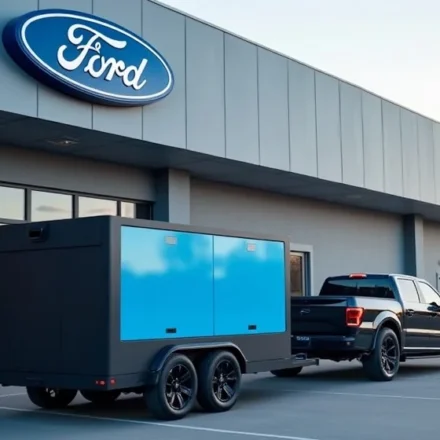
The compact electric pickup, built on Ford’s new Universal Electric Vehicle (UEV) platform, is arguably the most important product in Ford’s EV strategy. A camouflaged prototype was recently spotted testing around Long Beach, California. The vehicle will be assembled at Ford’s Louisville assembly plant in Kentucky.
The $30,000 price point is critical. Ford’s previous EV efforts — the F-150 Lightning and the Mustang Mach-E — have struggled with profitability because of high battery costs. The Lightning, which starts at around $50,000, has seen sales slow as buyers balk at the premium over gasoline trucks. A $30,000 compact truck using cheap LFP cells would enter a completely different market segment.
Ford is also planning to use the UEV platform’s battery technology in its growing energy storage business. The company has invested $19.5 billion in EV-related infrastructure since 2021, and the Michigan LFP plant is the centerpiece of that bet.
China’s grip on LFP technology
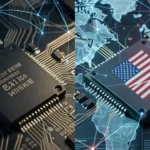
Ford’s reliance on CATL technology underscores a uncomfortable reality: China dominates LFP battery production. Ford’s CATL battery plant demonstrates China’s grip on the EV supply chain — the technology, the supply chain, and the manufacturing expertise all flow from Chinese companies.
CATL and BYD together account for over 60% of global LFP battery production. The raw materials supply chain — lithium processing, iron phosphate cathode production, and electrolyte manufacturing — is overwhelmingly concentrated in China. Even with domestic cell assembly, Ford’s Michigan plant depends on Chinese-sourced materials and expertise.
CATL’s Shenxing battery has delivered 1,500km range breakthroughs in testing, pushing the boundaries of what LFP chemistry can achieve. The technology gap between Chinese and Western battery manufacturers continues to widen, even as Western companies invest billions to catch up.
Competitive landscape
| Company | LFP Status | US Production | Affordable EV Timeline |
|---|---|---|---|
| Ford (via CATL) | Production started | Michigan (BlueOval) | $30K truck in 2027 |
| Tesla | Using BYD LFP cells | Imported (China) | $25K Model 2 rumored |
| GM | Testing LFP | Ohio (Ultium, 2027+) | 2028+ at earliest |
| Toyota | LFP in development | North Carolina (2027) | 2028+ |
| BYD | Vertically integrated | None (Mexico planned) | Already selling globally |
CII Analysis
Ford’s Michigan LFP plant is both a technological milestone and a geopolitical statement. It proves that Chinese battery technology can be deployed on American soil under American ownership — a model that other automakers will likely follow. It also proves that the path to affordable EVs in America runs through Shenzhen, whether politicians like it or not.
The $30,000 truck is Ford’s best chance to crack the mass-market EV segment. If the vehicle delivers on price, range, and capability, it could transform Ford’s EV business from a money-losing experiment into a genuine growth engine. If the LFP cells underperform or the price creeps up, Ford will have spent $5.5 billion on a Michigan battery plant to produce a niche product.
For CATL, the Ford deal is a beachhead. Even as a technology licensor rather than a direct manufacturer, CATL establishes its chemistry as the standard for affordable American EVs. Every future Ford EV built on the UEV platform will use CATL-derived cells. That is a long-term revenue stream that no tariff can block.
Follow CII on LinkedIn for daily analysis of China’s EV supply chain.
Sources
- Autoblog — The Key to Ford’s $30,000 EV Truck Comes From China (June 19, 2026)
- Autoblog — CATL says America can’t build EVs without China
- Autoblog — Ford CEO: $30K EV truck reaches prototype stage
- Autoblog — Ford’s $5.5 billion battery plan
- Autoblog — CATL million-mile battery