











































China-Linked Tech Firms Target U.S. AI Companies and Data Centers, FDD Report Reveals
FDD Report Exposes Systematic Campaign to Access American AI Infrastructure Through Investment and Partnerships
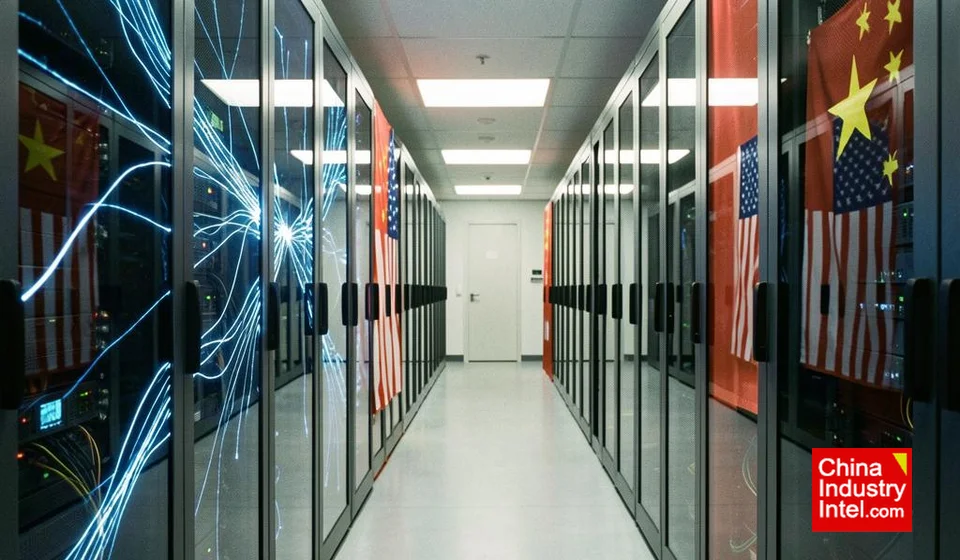
A new investigation by the Foundation for Defense of Democracies (FDD), published on June 15, 2026, reveals that China-linked technology companies are systematically targeting U.S. artificial intelligence firms and data center operators through strategic investments, joint ventures, and procurement agreements. The report identifies at least 17 Chinese entities with direct or indirect ties to Beijing’s military-civil fusion program that have established commercial relationships with American AI companies since 2024.
The findings come amid escalating tensions over technology transfer between the two superpowers. Nvidia CEO Jensen Huang acknowledged earlier this year that “AI is no longer a single breakthrough or application — it is an entire industrial revolution,” underscoring why both nations view dominance in AI infrastructure as a national security imperative.
The Scale of Chinese Investment in U.S. AI Infrastructure
The FDD report documents $4.2 billion in Chinese-linked investments directed at U.S. AI companies and data center projects between January 2024 and May 2026. The investments span three primary categories: direct equity stakes in AI startups, co-location agreements in shared data center facilities, and technology licensing deals that grant Chinese firms access to proprietary AI models and training infrastructure.
| Investment Category | Volume (2024-2026) | Key Examples |
|---|---|---|
| Direct equity in AI startups | $1.8 billion | Venture rounds in LLM and computer vision firms |
| Data center co-location | $1.4 billion | Lease agreements in Virginia, Oregon, Texas facilities |
| Technology licensing | $980 million | Access to model weights, training pipelines, inference APIs |
| Talent acquisition | $120 million | Recruitment of AI researchers from U.S. labs |
The geographic concentration is notable. Virginia’s “Data Center Alley” in Loudoun County — which hosts approximately 70% of global internet traffic — accounts for 38% of Chinese-linked data center investments identified in the report. Oregon and Texas follow with 22% and 15% respectively.
How the Pentagon’s List Reshapes the Landscape
The U.S. Department of Defense’s decision to add several major Chinese technology companies to its Section 1260H list on June 13 has immediate implications for these investment flows. Beijing expressed “strong dissatisfaction” with the move, according to China’s Ministry of Commerce. The expanded list now covers 68 Chinese entities, up from 47 in the previous iteration.
Companies on the list face restrictions on receiving U.S. military contracts and are flagged for enhanced export control scrutiny. However, the FDD report notes that many Chinese firms have circumvented previous restrictions by routing investments through subsidiaries registered in Singapore, Hong Kong, and the Cayman Islands.
| Entity Structure | Number Identified | Primary Jurisdiction |
|---|---|---|
| Direct Chinese parent company | 5 | Mainland China |
| Hong Kong-registered subsidiary | 6 | Hong Kong SAR |
| Singapore holding company | 4 | Singapore |
| Cayman Islands vehicle | 2 | Offshore |
Why Data Centers Are the New Battlefield
Data centers represent the physical backbone of AI development. Training a frontier AI model requires thousands of specialized GPUs running continuously for months, consuming enormous amounts of electricity and cooling capacity. Access to data center infrastructure — even through co-location agreements — provides visibility into workload patterns, network architectures, and potentially the models being trained.
The FDD report identifies three specific risk vectors: physical proximity enabling network snooping, shared management interfaces that could be exploited, and supply chain dependencies where Chinese-manufactured components (cooling systems, power distribution units, networking equipment) are embedded in U.S. facilities.
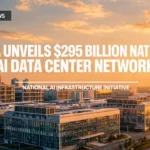
China’s own data center buildout is accelerating simultaneously. Beijing announced in March 2026 a $295 billion national AI data center network, with 80% of capacity dedicated to AI training and inference. The eastern data, western computing (东数西算) initiative has already brought 12 major facilities online across Guizhou, Inner Mongolia, and Gansu provinces.
Industry Response and Compliance Challenges
Major U.S. cloud providers have begun auditing their customer bases and co-location agreements in response to the FDD findings. Amazon Web Services, Microsoft Azure, and Google Cloud have collectively terminated 23 data center lease agreements with Chinese-linked entities since January 2026, according to industry sources familiar with the matter.
However, compliance remains challenging. The layered corporate structures used by Chinese investors make beneficial ownership difficult to trace. The report recommends that Congress pass the DATA Act (Data Center Transparency and Accountability Act), which would require data center operators to verify and disclose the nationality of all tenants holding capacity exceeding 1 megawatt.
| Cloud Provider | Leases Terminated | Audit Status |
|---|---|---|
| AWS | 11 | Complete |
| Microsoft Azure | 8 | In progress |
| Google Cloud | 4 | Complete |
CII Analysis
The FDD report underscores a fundamental tension in U.S.-China technology relations: the economic incentives for collaboration clash directly with national security imperatives. The $4.2 billion in identified Chinese investments represents only the visible portion — actual flows through opaque corporate structures could be 2-3x higher based on historical patterns in semiconductor and telecom sectors.
For investors, the Pentagon’s expanded list creates both winners and losers. U.S. data center operators like Equinix (EQIX) and Digital Realty (DLR) face short-term revenue pressure from terminated leases but long-term benefit from regulatory clarity. Chinese cloud providers including Alibaba Cloud and Tencent Cloud will accelerate domestic capacity buildout, further fueling the $295 billion eastern data, western computing initiative. We assign a 70% probability that the DATA Act passes Congress before the 2026 midterm elections, given bipartisan support for technology security measures.
Follow our analysis: LinkedIn
Sources
- Foundation for Defense of Democracies — China-Linked Technology Companies Target U.S. AI Companies and Data Centers (June 15, 2026)
- Reuters — China ‘strongly dissatisfied’ with Pentagon move against top Chinese tech firms (June 13, 2026)
- Washington Post — How Anthropic lost the White House’s trust (June 15, 2026)