






































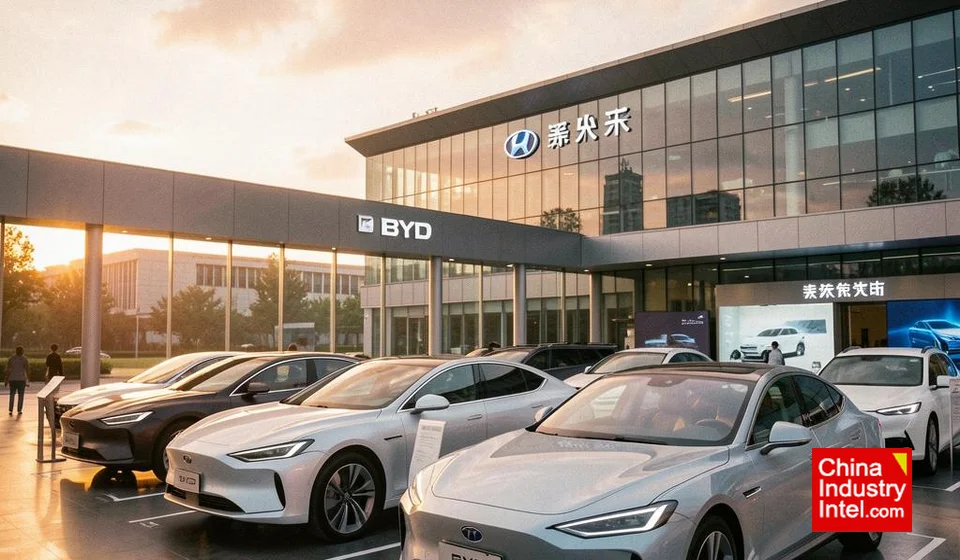
Pentagon Adds BYD, Alibaba, Baidu to Military Companies List: What It Means for Chinese Tech
Pentagon Expands Section 1260H List to Include 21 Additional Chinese Firms Across EV, AI, and Semiconductor Sectors
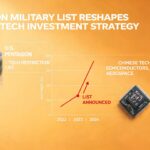
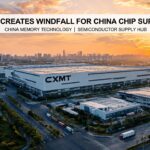
The U.S. Department of Defense on June 13, 2026 added 21 Chinese companies to its Section 1260H list of “Chinese military companies,” significantly expanding the scope of entities flagged for alleged ties to China’s military-civil fusion program. The expanded list now includes some of China’s largest technology and industrial firms: electric vehicle maker BYD (SZ:002594), e-commerce giant Alibaba (NYSE:BABA), search engine operator Baidu (NASDAQ:BIDU), humanoid robot manufacturer Unitree, EV startup NIO (NYSE:NIO), and semiconductor foundry CXMT.
China’s Ministry of Commerce responded within hours, stating it was “strongly dissatisfied” with the designation and warning that the move would “seriously damage the atmosphere of bilateral economic and trade cooperation.” The ministry called on Washington to “correct its wrong practices” and provide a fair business environment for Chinese companies operating in the United States.
The Full List of Newly Designated Companies
The expanded list spans multiple strategic sectors, reflecting Washington’s broadening definition of national security threats. The designations cover electric vehicles, artificial intelligence, semiconductors, robotics, cloud computing, and telecommunications — effectively targeting the core of China’s technology ambitions.
| Company | Sector | Market Cap / Revenue | U.S. Exposure |
|---|---|---|---|
| BYD (SZ:002594) | Electric Vehicles | $112B market cap | Limited direct sales; battery supply partnerships |
| Alibaba (NYSE:BABA) | E-commerce / Cloud | $218B market cap | Alibaba Cloud U.S. operations; Ant Group investments |
| Baidu (NASDAQ:BIDU) | AI / Search | $38B market cap | AI research partnerships; autonomous driving R&D |
| NIO (NYSE:NIO) | Electric Vehicles | $9.2B market cap | U.S. R&D center in San Jose; NYSE-listed |
| Unitree | Humanoid Robots | Private; est. $2B valuation | Sales to U.S. research institutions |
| CXMT | Semiconductors (DRAM) | IPO pending on STAR Market | Memory chip supply to U.S. electronics firms |
| Huawei | Telecom / AI | $99.5B revenue (2025) | Already heavily sanctioned; cloud services |
What Section 1260H Actually Means for These Companies
The Section 1260H designation, established under the National Defense Authorization Act for Fiscal Year 2021, does not impose direct sanctions or export restrictions. Instead, it serves as a formal signal to U.S. investors, contractors, and government agencies that the Pentagon considers these entities to have ties to China’s military apparatus.
The practical impact is threefold. First, these companies are barred from receiving U.S. Department of Defense contracts. Second, the designation triggers enhanced scrutiny from the Committee on Foreign Investment in the United States (CFIUS) for any transactions involving these entities. Third, and perhaps most significantly, it creates reputational pressure that drives institutional investors to divest holdings in listed companies.
Previous designations have had measurable financial consequences. When Huawei was first listed in 2019, its global smartphone market share fell from 18% to 4% within two years as suppliers and partners severed relationships. Semiconductor firm SMIC saw its equipment procurement costs increase by approximately 30% after its listing, as U.S.-based equipment makers required special export licenses.
BYD and the EV Supply Chain Ripple Effect
BYD’s inclusion is particularly significant given the company’s dominant position in the global electric vehicle market. BYD sold 4.27 million vehicles in 2025, making it the world’s largest EV manufacturer by volume. The company’s battery division, BYD FinDreams, supplies batteries to Tesla, Toyota, and Ford through licensing agreements.
The designation raises questions about existing supply chain relationships. Tesla’s Berlin Gigafactory uses BYD Blade batteries in its European Model Y variants. Toyota’s bZ3 sedan, sold in China, uses BYD battery packs and electric motors. While these arrangements are not directly affected by the 1260H listing, they add pressure on Western automakers to diversify their battery supply chains.
| BYD Metric | 2024 | 2025 | Change |
|---|---|---|---|
| Global vehicle sales | 3.02M | 4.27M | +41% |
| Revenue | $85.4B | $107.2B | +26% |
| Overseas sales share | 8.3% | 14.1% | +5.8pp |
| Battery production (GWh) | 185 | 267 | +44% |
Alibaba Cloud Faces Uncertain Future in the U.S.
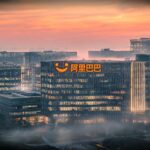
Alibaba’s designation puts additional pressure on its cloud computing business, which has been struggling to gain traction in the North American market. Alibaba Cloud’s U.S. revenue was approximately $380 million in 2025, representing less than 2% of the company’s total cloud revenue. However, the U.S. market serves as a technology benchmark and a gateway to serving multinational clients globally.
The company had been investing in expanding its U.S. data center capacity, with facilities in Virginia and Silicon Valley. These investments now face regulatory uncertainty. Alibaba Cloud’s third-place ranking globally (behind AWS and Azure) is largely built on its dominance in China and Southeast Asia, where the 1260H listing has minimal direct impact.
CII Analysis
The Pentagon’s expanded list represents a strategic escalation rather than a tactical one. By targeting companies across the full spectrum of China’s technology ambitions — from EVs to AI to robotics — Washington is signaling that the technology decoupling is irreversible and accelerating. The financial impact will be uneven: BYD’s limited U.S. exposure means the listing is more symbolic than punitive, while NIO’s NYSE listing and U.S. R&D operations face immediate practical consequences.
For investors, the key question is whether these designations lead to actual sanctions (as happened with Huawei) or remain symbolic designations. We assign a 55% probability that at least three of the newly listed companies face additional restrictions (export controls or entity list additions) within 12 months. The most vulnerable are CXMT (semiconductor sector) and Unitree (robotics with dual-use potential). BYD and Alibaba face lower probability of escalation given their commercial scale and the cost to U.S. companies of severing relationships.
Follow our analysis: LinkedIn
Sources
- Reuters — China ‘strongly dissatisfied’ with Pentagon move against top Chinese tech firms (June 13, 2026)
- Al Jazeera — US lists China’s BYD, Alibaba, Baidu as ‘Chinese military companies’ (June 9, 2026)
- BBC — US adds BYD to list of firms with alleged Chinese military ties (June 2026)
- Nikkei Asia — Pentagon blacklists Alibaba, BYD and Baidu over alleged military ties (June 2026)