



















The Pharma Choke Point: U.S. Depends on China for 97% of Antibiotics, CFR Report Warns
CFR Report Warns U.S. Dependence on Chinese Active Pharmaceutical Ingredients Mirrors Rare Earths Vulnerability

A comprehensive report released by the Council on Foreign Relations (CFR) on June 14, 2026 warns that the U.S. pharmaceutical supply chain faces a dependency on China that is “equal to the rare-earths challenge” — a comparison that places drug ingredients in the same national security category as the minerals essential for electronics, defense systems, and clean energy technology.
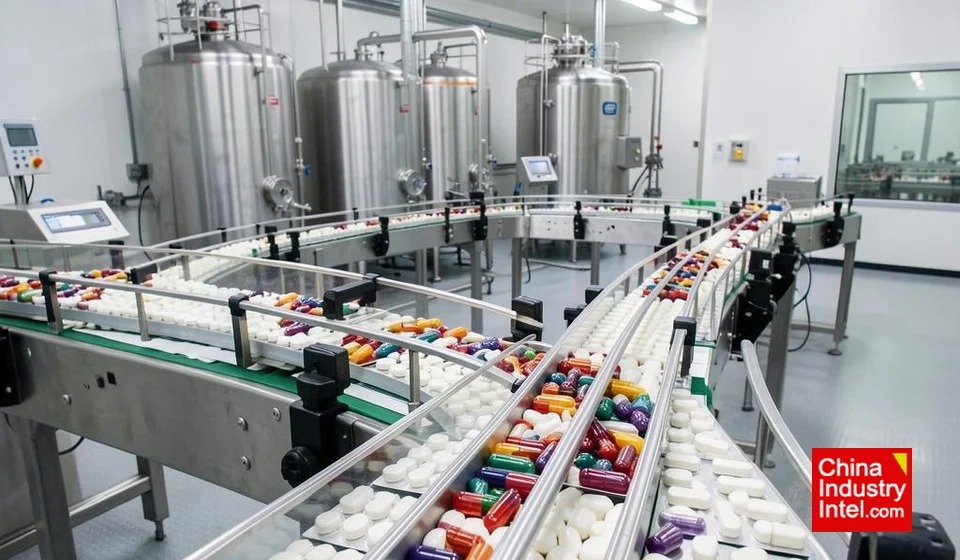
The report, titled “The Pharma Choke Point,” documents how China has become the dominant global supplier of active pharmaceutical ingredients (APIs), the chemical compounds that give drugs their therapeutic effect. According to CFR’s analysis, China supplies approximately 40% of global APIs and an estimated 80% of the APIs used in generic drugs sold in the United States — a dependency that creates vulnerability in the event of a trade conflict, pandemic, or deliberate supply disruption.
The Scale of U.S. Dependence on Chinese APIs

The CFR report provides the most detailed publicly available analysis of U.S.-China pharmaceutical supply chain dependencies. The findings are alarming: 97% of antibiotics sold in the U.S. are manufactured in China or with Chinese-sourced APIs. For blood pressure medications (ACE inhibitors), the figure is 91%. For blood thinners (heparin), it is 95%. These are not specialty drugs — they are everyday medications taken by tens of millions of Americans.
| Drug Category | % from China (API or finished) | U.S. Annual Consumption | Risk Level |
|---|---|---|---|
| Antibiotics (penicillin, cephalosporins) | 97% | $14.2B | Critical |
| Blood thinners (heparin) | 95% | $8.7B | Critical |
| Blood pressure (ACE inhibitors) | 91% | $12.1B | High |
| Diabetes (metformin) | 84% | $6.3B | High |
| Cholesterol (statins) | 78% | $9.8B | Moderate |
| Pain relief (ibuprofen, acetaminophen) | 72% | $4.1B | Moderate |
How China Captured the API Market

China’s dominance in API manufacturing is the result of a deliberate 20-year strategy. In 2004, China’s State Council designated pharmaceutical manufacturing as a “strategic emerging industry” and provided subsidized land, tax holidays, and below-market loans to API producers. Environmental regulations were laxer than in Western countries, reducing compliance costs by an estimated 15-20%. Labor costs were one-fifth of U.S. levels.
The result was a massive shift in production. In 2000, China produced approximately 15% of global APIs. By 2010, the figure was 25%. By 2020, it was 35%. Today, at 40%, China’s share continues to grow as Western API manufacturers exit the business due to cost pressures. The CFR report identifies 340 API production facilities in China that supply U.S. pharmaceutical companies, compared to just 28 in the United States.
The Strategic Vulnerability
The CFR report draws explicit parallels to China’s rare earths monopoly, which Beijing weaponized in 2010 by restricting exports to Japan during a territorial dispute. “The pharmaceutical dependency is potentially more dangerous because it directly affects human health,” the report states. “A supply disruption of antibiotics or blood thinners could cause deaths within weeks, not months.”
China has not explicitly threatened to restrict pharmaceutical exports, but the report notes several concerning trends. In 2020, during the early COVID-19 pandemic, Chinese state media commentators suggested that China could impose export controls on pharmaceuticals. In 2023, China’s National Development and Reform Commission (NDRC) proposed consolidating API production under fewer, larger state-influenced companies — a move that would increase Beijing’s control over the sector.
The Reshoring Challenge

The Biden and Trump administrations both identified pharmaceutical supply chain security as a priority, but progress has been slow. The bipartisan Securing America’s Medicine Cabinet Act, passed in 2024, allocated $3.2 billion for domestic API production incentives. However, the CFR report estimates that rebuilding U.S. API capacity to supply just 50% of domestic needs would require $35-50 billion in investment over 8-10 years.
The cost challenge is formidable. Chinese API producers operate at 40-60% lower cost than potential U.S. competitors, according to analysis by the Boston Consulting Group. Even with government subsidies, U.S.-made APIs would cost 25-35% more than Chinese equivalents — a premium that generic drug manufacturers, operating on razor-thin margins, cannot easily absorb.
| Reshoring Scenario | Investment Required | Timeline | Cost Premium vs China |
|---|---|---|---|
| 50% domestic API supply | $35-50B | 8-10 years | +25-35% |
| 75% domestic API supply | $80-120B | 12-15 years | +30-45% |
| Full domestic API supply | $200B+ | 15-20 years | +40-60% |
CII Analysis
The CFR’s “Pharma Choke Point” report is the most authoritative assessment yet of a vulnerability that has been building for two decades. The 97% dependence on Chinese antibiotics is particularly alarming — it means the U.S. has virtually no domestic fallback for its most essential medications. While reshoring efforts are underway, the timeline and cost are daunting: even the most optimistic scenario envisions 50% domestic supply only by 2034.
For investors, the report creates opportunities in three areas: U.S.-based API manufacturers (Catalent, Cambrex), Indian API producers who offer a China alternative (Divi’s Laboratories, Dr. Reddy’s), and pharmaceutical supply chain visibility platforms (TraceLink). We see a 70% probability that Congress passes additional API reshoring legislation before the 2028 presidential election, with $15-20 billion in new incentives. Chinese API companies (Zhejiang Hisun, North China Pharmaceutical) face long-term headwinds from diversification but remain cost-competitive in the medium term.
Follow our analysis: LinkedIn