




























G7 Pledges Supply Chain Diversification From China Without Tariffs
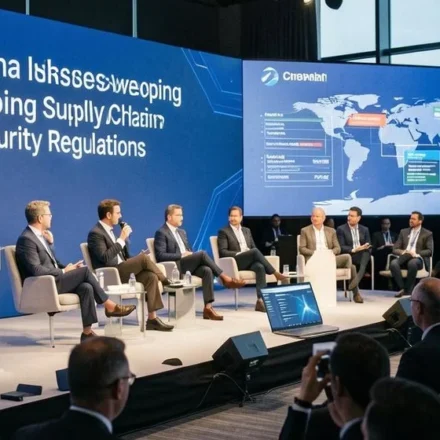
The Group of Seven industrial nations pledged at their summit this week to diversify critical supply chains away from China, adding momentum to the European Union’s own push to counter a growing trade imbalance with the world’s largest exporter. The commitment, reported by Bloomberg on June 18, stops short of the tariff-driven confrontation that defined the US-China trade war under the Trump administration, but it signals a coordinated Western strategy to reduce dependence on Chinese manufacturing in sectors ranging from semiconductors to pharmaceuticals.
European Commission President Ursula von der Leyen, speaking at the G7 summit in Kananaskis, Alberta on June 17, said the EU would “pursue de-risking, not decoupling” — a phrase that has become the bloc’s official policy since it was first articulated in March 2023. But the practical details of what de-risking means in 2026 are sharper than the rhetoric suggests.
What the G7 actually committed to — and what it didn’t
The G7 communiqué, released on June 17, included three concrete measures. First, a joint investment fund of $4.7 billion to support critical mineral projects in Africa, South America, and Central Asia — regions where Chinese companies have dominated mining and processing for two decades. Second, a mutual recognition framework for export controls on advanced technology, designed to prevent Chinese entities from circumventing restrictions by routing purchases through third countries. Third, a pledge to source at least 30 percent of semiconductor manufacturing equipment from non-Chinese suppliers by 2030.

What the communiqué did not include was equally telling. There were no joint tariffs on Chinese goods. No restrictions on Chinese investment in G7 countries. No coordinated ban on specific Chinese companies. The absence of punitive measures reflects the divergent interests within the G7: Germany and France want to protect their automotive and luxury goods exports to China, while the US and UK push for harder restrictions.
“The G7 is trying to walk a tightrope,” said Alicia García-Herrero, chief economist for Asia-Pacific at Natixis, in a June 18 analysis. “They want to reduce China dependence without triggering retaliation that would hurt their own exporters. History shows that’s a hard line to hold.”
The EU’s separate track: trade defense without a trade war
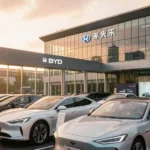
Beyond the G7 framework, the EU has been building its own set of trade defense tools. On June 12, the European Commission published preliminary findings from its anti-subsidy investigation into Chinese electric vehicles, concluding that BYD, SAIC, and Geely received unfair state support that undercut European competitors. Provisional tariffs of 17-38 percent on Chinese EVs, first imposed in October 2024, were extended through 2027.
The EU also finalized its Foreign Subsidies Regulation (FSR) on June 10, giving Brussels the power to block mergers, acquisitions, and public procurement bids that benefit from non-EU government subsidies. Chinese companies bidding on European infrastructure projects — 5G networks, port equipment, rail systems — now face mandatory disclosure requirements that effectively screen out firms receiving large state subsidies.
| EU Trade Measure | Status | Target | Impact on China |
|---|---|---|---|
| Anti-subsidy EV tariffs (17-38%) | Extended through 2027 | BYD, SAIC, Geely EV exports | Higher prices in EU, diversion to SE Asia |
| Foreign Subsidies Regulation | Finalized June 10, 2026 | Chinese bids on EU infrastructure | Blocks subsidized competitors |
| Critical Raw Materials Act | Implementation phase | Mineral supply chain diversification | Reduces EU reliance on Chinese processing |
| Carbon Border Adjustment (CBAM) | Transitional period through 2025, full implementation 2026 | Carbon-intensive imports | Raises cost of Chinese steel, aluminum, cement |
How China is responding to the diversification push
Beijing’s response has been measured but firm. On June 14, China’s Ministry of Commerce (MOFCOM) issued a statement saying it “firmly opposes” the G7’s supply chain diversification language and warned that “politicizing trade and investment will harm all parties.” The statement did not announce retaliatory measures, but it referenced China’s own anti-foreign sanctions law, enacted in June 2021, which gives Beijing the authority to restrict trade with countries that impose sanctions on Chinese entities.
More significantly, China has accelerated its own supply chain diversification — away from Western dependence. The State Council published new guidelines on June 11 for “supply chain resilience,” calling for Chinese companies to reduce reliance on imported semiconductor equipment, software, and raw materials. The guidelines set targets: by 2028, at least 50 percent of China’s semiconductor equipment should be domestically sourced, up from an estimated 25 percent in 2025.
“The irony is that both sides are trying to diversify away from each other at the same time,” said Dan Wang, a director at Eurasia Group, in a June 17 briefing. “The question is who can do it faster and at lower cost. China has the advantage of state coordination and scale. The G7 has the advantage of technology and capital markets.”

Sector-by-sector: where the diversification is hitting hardest
Critical minerals: China controls 60 percent of rare earth mining and 90 percent of rare earth processing globally. The G7’s $4.7 billion investment fund targets new projects in the Democratic Republic of Congo (cobalt), Chile (lithium), and Australia (rare earths). But new mines take 7-10 years to reach production. In the medium term, China’s dominance is secure.
Semiconductors: The EU’s Chips Act, the US CHIPS Act, and Japan’s semiconductor subsidy program have collectively committed over $100 billion to domestic chip manufacturing. But these investments focus on leading-edge nodes (7nm and below), where China is already restricted by export controls. For mature nodes (28nm and above), which power automotive, industrial, and consumer electronics, Chinese fabs are expanding rapidly and undercutting global competitors on price.
Pharmaceuticals: The EU sourced 60 percent of its active pharmaceutical ingredients (APIs) from China and India in 2025. The G7 communiqué set a target to reduce China-origin API dependency to below 40 percent by 2030. This is achievable — India, Southeast Asia, and domestic European production can absorb the shift — but it requires investment and time.
Market signal: what investors should watch
Bull case: The diversification push creates new investment opportunities in critical minerals, semiconductor equipment, and alternative manufacturing hubs (Vietnam, India, Mexico). Companies that position early in these supply chains — like Lynas Rare Earths in Australia or Tata Electronics in India — benefit from long-term structural demand.
Bear case: Retaliatory trade measures from China disrupt existing supply chains faster than alternatives can be built. Chinese export controls on gallium, germanium, and rare earths, first imposed in August 2023 and expanded in 2024, could tighten further, causing short-term supply shocks and price spikes.
Base case: Gradual diversification over 5-7 years. China’s share of critical mineral processing declines from 90 percent to 70 percent by 2030. Semiconductor equipment sourcing becomes more diversified but remains China-heavy for mature nodes. The overall impact is manageable but requires active supply chain management.
CII Analysis
The G7’s supply chain diversification pledge is more significant for its direction than its immediate impact. The $4.7 billion investment fund is modest compared to the scale of Chinese dominance in critical minerals and manufacturing. But the framework — mutual recognition of export controls, joint investment in alternatives, coordinated standards — creates a scaffolding that individual countries can build on. The EU’s separate track on EV tariffs, foreign subsidies, and carbon border adjustments gives the bloc sharper tools than the G7 communiqué alone. For Chinese exporters, the cumulative effect of these measures is a slow narrowing of market access in Europe and North America. The response — accelerated domestic sourcing, diversification into Southeast Asia and the Global South — is already underway. The question is not whether supply chains will restructure, but whether the restructuring happens on a timeline that allows for orderly adjustment or creates disruptive short-term shocks.