China Tech Giants Set to Lead AI Growth in 2026 Despite Challenges
China Tech Giants Set to Lead AI Growth in 2026 Despite Challenges
China’s largest technology companies — Alibaba (NYSE: BABA; market capitalization approximately $280 billion as of June 2026), Tencent (HK:0700; market capitalization approximately HK$4.2 trillion), and ByteDance (privately held; estimated valuation $225 billion based on its most recent secondary share transaction in March 2026) — are accelerating their artificial intelligence strategies in 2026, even as they contend with tighter US export controls, intensifying domestic competition from DeepSeek, and the rising cost of compute infrastructure.
Alibaba’s Cloud-First AI Pivot
Alibaba’s AI strategy is anchored to its cloud computing division, Alibaba Cloud, which reported revenue of 32.4 billion yuan ($4.5 billion) for the quarter ending March 31, 2026 — a 21 percent year-over-year increase and the fastest growth rate in seven quarters. The company’s large language model, Tongyi Qianwen 3.0, was released on April 15, 2026, at a launch event in Hangzhou, and is now integrated across Alibaba’s e-commerce platforms, logistics network, and enterprise SaaS products.
CEO Eddie Wu, speaking on the company’s earnings call on May 15, 2026, described AI as “the single most important investment Alibaba will make this decade.” The company has committed 50 billion yuan to AI infrastructure in its 2026 fiscal year, including expansion of data centers in Hangzhou, Shanghai, and Zhangbei (Hebei Province). Alibaba Cloud’s latest facility in Zhangbei, which broke ground on March 22, 2026, will house approximately 100,000 AI-optimized GPUs when completed in Q1 2027.
Alibaba’s AI push extends beyond infrastructure. The company recently made a significant move into physical retail through its $1.5 billion bid for Pupu Supermarket, which integrates AI-driven demand forecasting and logistics optimization into instant commerce — a sector where data and algorithms determine competitive advantage.
Tencent’s Cautious but Steady Approach
Tencent has taken a more measured approach to AI than its peers, prioritizing integration over frontier model development. The company’s Hunyuan large language model, first released in 2023, reached version 3.5 in May 2026 and is now deployed across Tencent’s WeChat ecosystem, gaming studios, and enterprise software tools.
On the enterprise side, Tencent Cloud reported AI-related revenue growth of 45 percent year-over-year in Q1 2026, driven primarily by demand from financial institutions and healthcare companies building custom applications on top of Tencent’s model APIs. The company’s total capital expenditure for the quarter was 11.8 billion yuan, up 33 percent from the prior year, with the majority directed toward GPU procurement and data center expansion in Chongqing and Guangzhou.
Tencent’s AI ambitions are also reshaping its consumer-facing products. The company’s WeChat platform has opened its AI agent ecosystem, allowing third-party developers to build intelligent assistants for food orders, flight bookings, and other services directly within the app — a move that positions WeChat as a primary distribution channel for AI-powered services in China.
ByteDance: The Quiet Contender
ByteDance, the world’s most valuable private technology company, has been the most aggressive spender on AI infrastructure among the three. The company’s Doubao large language model, released in August 2025, has rapidly gained market share in China’s consumer AI chatbot segment, reaching 85 million monthly active users by May 2026, according to data from QuestMobile.
ByteDance’s AI investment is closely linked to its core advertising business. The company’s recommendation algorithms, which power TikTok globally and Douyin in China, already rely heavily on machine learning. Upgrading these systems with large language model capabilities has improved ad targeting precision, contributing to a 28 percent increase in advertising revenue in Q1 2026, according to people familiar with the figures.
The company’s total AI-related capital expenditure is estimated at $8-10 billion for 2026, based on procurement data from server manufacturers and GPU distributors. ByteDance has been among the largest buyers of Huawei’s Ascend 910C AI chips, which serve as domestic alternatives to Nvidia’s A100 and H100 processors that are restricted under US export controls.
The DeepSeek Factor
The competitive dynamics in China’s AI sector have been upended by DeepSeek, the Hangzhou-based startup whose open-source models have demonstrated performance comparable to frontier systems from OpenAI and Google at a fraction of the training cost. DeepSeek’s R1 model, released in January 2026, cost an estimated $5.6 million to train — roughly one-tenth of what comparable Western models require, according to analysis by researchers at Stanford University’s Institute for Human-Centered AI.
The open-source strategy has put pressure on Alibaba, Tencent, and ByteDance to justify the premium pricing of their proprietary model APIs. DeepSeek and the open-source strategy are reshaping China’s AI industry, forcing incumbents to differentiate on ecosystem integration, enterprise support, and vertical specialization rather than raw model capability alone.
Alibaba responded by open-sourcing the 72-billion-parameter version of Tongyi Qianwen 3.0 on May 28, 2026, making it freely available for commercial use. Tencent followed on June 5, 2026, with the release of Hunyuan 3.5’s 14-billion-parameter variant under an Apache 2.0 license. ByteDance has so far declined to open-source its models, instead competing on price: the company cut its API pricing by 40 percent in April 2026.
Infrastructure Spending: A National Priority
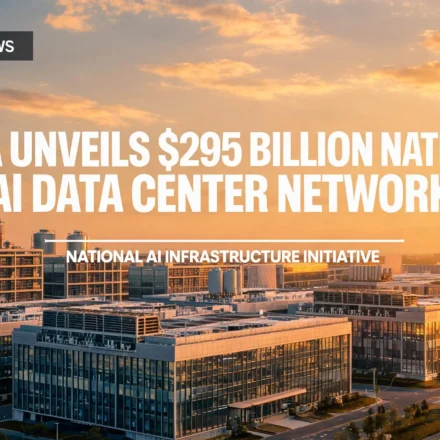
The scale of AI infrastructure investment in China has become a matter of national economic policy. The Chinese government’s $295 billion commitment to a nationwide AI data center network provides the foundation upon which Alibaba, Tencent, and ByteDance are building their own facilities. The government plan, announced in January 2026, envisions eight national computing hubs connected by dedicated fiber-optic links, with total installed capacity exceeding 300 exaflops by 2028.
The infrastructure push has created a booming domestic market for AI chips, networking equipment, and cooling systems. Chinese GPU startups including Biren Technology, Moore Threads, and Enflame Technology have all reported order backlogs extending into 2027. Huawei’s Ascend chip division, meanwhile, has become the default supplier for government-affiliated data centers, with shipments estimated at 500,000 units in 2026.
Cloud Computing Growth
Cloud computing remains the primary monetization vehicle for AI in China. The combined cloud infrastructure revenue of Alibaba, Tencent, and Huawei grew 26 percent year-over-year in Q1 2026, reaching approximately 62 billion yuan, according to data from Canalys. Alibaba Cloud maintained its leading market share at 36 percent, followed by Huawei Cloud at 19 percent and Tencent Cloud at 16 percent.
The growth is being driven not just by AI training workloads but by inference — the process of running trained models to generate outputs for end users. As AI applications proliferate across e-commerce, healthcare, finance, and manufacturing, inference demand is growing faster than training demand, creating a more diversified and sustainable revenue base for cloud providers.
For global investors evaluating China’s tech sector, the AI pivot represents a structural growth story that transcends short-term regulatory or geopolitical noise. The challenge lies in separating genuine capability from marketing hype — a task made harder by the opacity of privately held companies like ByteDance and the rapid pace of model improvement across the industry. What is clear is that the AI race between China and the US in 2026 is closer than many Western observers assumed even a year ago, and China’s tech giants are determined to keep it that way.