





































China Issues Sweeping Supply Chain Security Regulations
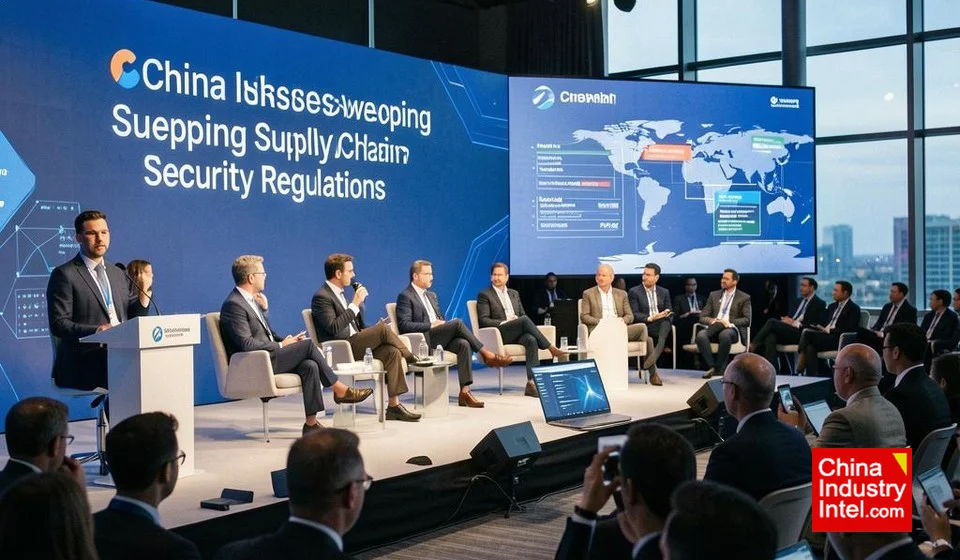
China Issues Sweeping Supply Chain Security Regulations Targeting Critical Industries
Published: June 18, 2026 | Category: Supply Chain & Policy Analysis
Beijing has unveiled a comprehensive set of supply chain security regulations effective June 2026, marking the most ambitious effort yet by Chinese authorities to insulate the nation’s industrial base from external disruption. The new rules, issued jointly by the Ministry of Industry and Information Technology (MIIT) and the State Council, mandate that companies operating in designated critical sectors map their entire supply chains and develop contingency plans for sourcing disruptions. The regulations arrive amid escalating geopolitical tensions and a global scramble by governments to secure access to essential materials, components, and manufacturing capacity.
Why Beijing Is Moving Now to Lock Down Its Industrial Supply Lines
The timing of the regulations is not accidental. Over the past three years, a series of export controls, sanctions, and trade restrictions—particularly from the United States and the European Union—have exposed vulnerabilities in China’s access to advanced manufacturing inputs. Semiconductor equipment restrictions, rare earth export negotiations, and pharmaceutical precursor dependencies have all contributed to a sense of urgency in Zhongnanhai. Chinese policymakers view supply chain security as inseparable from national security, and the new regulations reflect that doctrine.
The regulations establish a tiered classification system for industries deemed critical to national economic stability. Each tier carries different compliance obligations, reporting requirements, and government support entitlements. The highest tier—designated “strategic essential”—includes semiconductors, electric vehicle batteries, and active pharmaceutical ingredients (APIs).
Which Sectors Face the Tightest New Mapping and Reporting Requirements
The regulations carve out specific obligations for three priority sectors that account for a disproportionate share of China’s strategic vulnerabilities and export revenues:
| Sector | Mapping Depth Required | Alternative Supplier Deadline | Annual Compliance Filing | Subsidy Eligibility |
|---|---|---|---|---|
| Semiconductors | Tier 1–4 suppliers, raw materials, equipment | December 2026 | Q1 each year | Up to ¥2B per firm |
| EV Batteries | Tier 1–3 suppliers, mineral sourcing, recycling | March 2027 | Q2 each year | Up to ¥1.5B per firm |
| Pharmaceuticals (APIs) | Tier 1–3 suppliers, chemical precursors, logistics | June 2027 | Q1 each year | Up to ¥800M per firm |
| Rare Earth Processing | Tier 1–2 suppliers, mining concessions, export channels | December 2026 | Q1 each year | Up to ¥1B per firm |
| Advanced Materials | Tier 1–3 suppliers, R&D dependencies, IP licensing | June 2027 | Q2 each year | Up to ¥500M per firm |
Companies classified under “strategic essential” must submit detailed supply chain maps that trace dependencies back to the fourth-tier supplier level in the semiconductor sector and at least the third tier for EV batteries and pharmaceuticals. These maps must identify single points of failure, geographic concentrations of supply, and any foreign dependencies that could be disrupted by sanctions or trade actions.
How the Government Plans to Subsidize Diversification Efforts
One of the most consequential elements of the new regulations is the establishment of a dedicated Supply Chain Resilience Fund, capitalized at ¥150 billion (approximately USD $21 billion) over three years. The fund will provide direct subsidies, low-interest loans, and tax incentives to companies that successfully diversify their supply chains away from concentrated or foreign-dependent sources.
Eligibility criteria include demonstrated investment in alternative supplier qualification, domestic capacity expansion, or strategic stockpiling of critical inputs. Companies that maintain a single-source dependency for any classified input beyond the regulatory deadline face escalating penalties, starting at 2% of annual China-sourced revenue and rising to 5% for repeat violations.
The fund also supports cross-border supply chain development, encouraging Chinese firms to establish manufacturing and sourcing relationships in Southeast Asia, Central Asia, Africa, and Latin America—regions Beijing views as strategically aligned and less susceptible to Western pressure.
What These Rules Mean for Foreign Companies Sourcing from China
The implications for multinational corporations are significant. Foreign companies that source components, materials, or finished goods from Chinese suppliers will find themselves subject to new transparency requirements. Chinese suppliers are now obligated to disclose supply chain mapping data to government regulators, and in certain cases, to their foreign customers. This creates both compliance burdens and strategic opportunities for international firms.
Foreign companies operating manufacturing facilities in China must also comply with the mapping requirements if they fall within designated sectors. This includes joint ventures and wholly foreign-owned enterprises. Non-compliance risks not only financial penalties but also potential restrictions on operating licenses and market access.
On the positive side, the regulations may accelerate the professionalization and transparency of Chinese supply chains, making it easier for foreign buyers to conduct due diligence and risk assessments. Companies that invest early in compliance infrastructure may gain a competitive advantage as the regulatory framework matures.
The Strategic Calculus Behind China’s Supply Chain Sovereignty Push
Analysts view the regulations as part of a broader Chinese strategy to achieve what policymakers call “supply chain sovereignty”—the capacity to sustain critical industrial output regardless of external disruptions. This concept has gained prominence in Chinese policy circles since the semiconductor export controls of 2022–2023 and has only intensified as US-China technology competition deepens.
The regulations also serve a domestic industrial policy function. By requiring companies to identify alternative suppliers, Beijing is effectively forcing the creation of a more redundant and competitive domestic supplier ecosystem. This aligns with existing initiatives to build indigenous capacity in chips, batteries, and pharmaceuticals—sectors where China currently depends on foreign technology for key inputs.
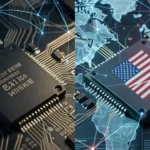
The China semiconductor ecosystem is particularly central to this effort. The new mapping requirements will expose exactly where Chinese chipmakers depend on foreign equipment, software, and materials—information that Beijing can then use to prioritize domestic R&D investment and targeted acquisitions.
How the New Framework Intersects with Existing Trade and Industrial Policies
The supply chain security regulations do not exist in isolation. They interact with a growing web of Chinese industrial policies, including the Made in China 2025 initiative, the Dual Circulation strategy, and sector-specific plans for China’s EV supply chain. Companies must navigate overlapping compliance regimes, and the regulations explicitly reference coordination with existing anti-monopoly, data security, and export control frameworks.
For the EV battery sector, the regulations complement existing raw material security strategies that prioritize access to lithium, cobalt, nickel, and manganese. Chinese battery giants like CATL and BYD have already moved to secure mining concessions and long-term supply agreements in Africa, South America, and Indonesia—efforts that will now be formally tracked and supported under the new regulatory architecture.
In semiconductics, the regulations reinforce the massive state-backed investment campaign that has poured hundreds of billions of yuan into domestic chipmaking capacity. The new mapping requirements will help identify remaining chokepoints where Chinese progress lags, particularly in advanced lithography equipment, EDA software, and specialty gases.
CII Analysis: Navigating the New Supply Chain Compliance Landscape
China’s new supply chain security regulations represent a paradigm shift in how Beijing manages industrial risk. The rules are simultaneously defensive—protecting against external disruption—and offensive—accelerating domestic capability building. For foreign companies, the regulations create a compliance environment that is more complex but also more transparent. The key risk is that supply chain data disclosed to Chinese regulators could be used to advantage domestic competitors or to retaliate against companies from adversarial nations. The key opportunity is that the subsidies and diversification incentives create new partnership possibilities for firms positioned as alternative suppliers. Companies should begin compliance preparation immediately, prioritizing semiconductor and EV battery supply chains given the earlier deadlines. Investment in supply chain mapping technology and local compliance expertise will be essential. The firms that treat these regulations as a strategic planning exercise rather than a box-ticking compliance burden will emerge with stronger, more resilient China operations and a clearer view of their competitive positioning in the world’s most consequential manufacturing ecosystem.