






































China NEV Sales Hit 56.9 Percent Penetration as Exports Double in May 2026
What Happened
China’s new energy vehicle sector continued its dominance in May 2026, with NEV sales reaching 1.496 million units — a 14.4% year-over-year increase — while total vehicle sales declined 2.1% to 2.629 million units, according to data released by the China Association of Automobile Manufacturers (CAAM) on June 10, 2026.
The most significant milestone: NEVs accounted for 56.9% of all new car sales in May, the first time the technology has crossed the 50% threshold for two consecutive months. Meanwhile, passenger vehicle sales — dominated by internal combustion engine models — fell 4.2% year-over-year.
Key Developments
NEV Penetration Hits Record 56.9%
In May 2026, China’s NEV production reached 1.554 million units (+22.4% YoY), while sales hit 1.496 million units (+14.4% YoY). The NEV penetration rate of 56.9% means that for every 10 new cars sold in China, nearly 6 were electric or hybrid vehicles. For the first five months of 2026, NEV sales totaled 5.802 million units, representing 47.5% of all new car sales.
Exports Surge 68.7% — NEV Exports Double
China’s vehicle exports reached 930,000 units in May, a staggering 68.7% year-over-year increase. NEV exports were the standout, reaching 446,000 units — a 110% increase year-over-year. For January-May 2026, total vehicle exports reached 4.059 million units (+63%), with NEV exports at 1.833 million units (+110%).
Passenger Cars Decline, Commercial Vehicles Grow
The divergence between passenger and commercial vehicles widened in May. Passenger car sales fell 4.2% to 2.253 million units, while commercial vehicle sales rose 12.5% to 376,000 units. For the first five months, passenger car sales declined 6.2% while commercial vehicles grew 7.7%.
| Metric | May 2026 | YoY Change | Jan-May 2026 | YoY Change |
|---|---|---|---|---|
| Total Production | 2.616M | -1.2% | 12.235M | -4.6% |
| Total Sales | 2.629M | -2.1% | 12.207M | -4.2% |
| NEV Production | 1.554M | +22.4% | 5.841M | +2.5% |
| NEV Sales | 1.496M | +14.4% | 5.802M | +3.5% |
| NEV Penetration | 56.9% | +12pp | 47.5% | +8pp |
| Total Exports | 930K | +68.7% | 4.059M | +63% |
| NEV Exports | 446K | +110% | 1.833M | +110% |
| Passenger Car Sales | 2.253M | -4.2% | 10.318M | -6.2% |
| Commercial Vehicle Sales | 376K | +12.5% | 1.888M | +7.7% |
Why It Matters
The May 2026 data confirms that China’s automotive market has reached a structural tipping point. The 56.9% NEV penetration rate — meaning electric and hybrid vehicles now outsell traditional combustion engine cars — represents a permanent shift in the world’s largest auto market.
For global automakers, the implications are stark: companies without competitive EV offerings in China are rapidly losing market share. The 4.2% decline in passenger car sales masks an even sharper decline in ICE-only vehicles, as NEV sales continue to grow at double-digit rates.
The export surge is equally significant. China’s vehicle exports are on track to exceed 10 million units in 2026, with NEV exports potentially reaching 4.5 million units. This is reshaping global trade flows and triggering protectionist responses from the EU, US, and other markets.
China Industry Impact
BYD and Tesla China Lead the Charge
BYD (1211.HK/002594.SZ) continues to dominate China’s NEV market, with monthly sales regularly exceeding 300,000 units. The company’s vertically integrated supply chain — from batteries to semiconductors to vehicles — gives it a significant cost advantage. BYD’s market cap has surpassed $100 billion, making it the world’s most valuable automaker after Tesla.
Tesla China remains a strong number two in the premium segment, but faces increasing competition from domestic brands like NIO, XPeng, and Li Auto. Tesla’s Shanghai Gigafactory now produces more vehicles for export than for domestic consumption.
Supply Chain Winners
CATL (300750.SZ) and BYD dominate the battery supply chain, together controlling over 60% of China’s EV battery market. CATL’s Q1 2026 revenue exceeded 100 billion yuan, driven by strong demand for its Shenxing and Qilin batteries.
The surge in NEV exports is also benefiting logistics and shipping companies. COSCO Shipping and BYD’s own logistics arm have expanded their car carrier fleets to meet the growing demand for vehicle exports.
ICE Manufacturers Under Pressure
Traditional ICE-focused manufacturers are facing a dual challenge: declining domestic sales and increasing competition from NEV exports. Joint ventures with foreign brands — once the profit engines of Chinese automakers — are seeing the sharpest declines. Companies like FAW-Volkswagen and SAIC-GM have announced production cuts and workforce reductions.
Supply Chain Implications
Upstream: Battery Materials
The continued growth in NEV production is sustaining demand for lithium, cobalt, nickel, and manganese. However, lithium prices have stabilized after the 2023-2024 crash, with battery-grade lithium carbonate trading around 80,000-90,000 yuan per ton. Chinese battery makers are increasingly sourcing from domestic lithium projects in Qinghai and Sichuan.
Midstream: Charging Infrastructure
China’s charging infrastructure continues to expand rapidly. As of May 2026, China had over 3.5 million public charging points, with fast-charging stations growing at 40% annually. The government’s target of 5 million public chargers by 2027 is on track.
Downstream: Export Logistics
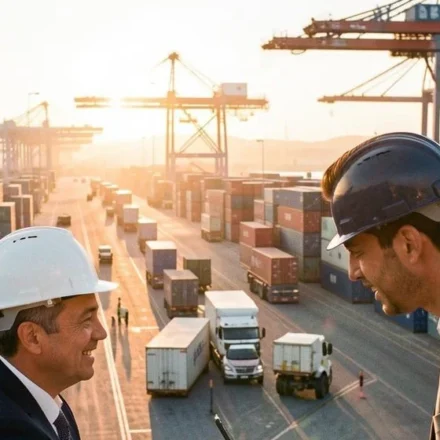
The surge in vehicle exports is straining port capacity. Major export ports like Shanghai, Tianjin, and Guangzhou have expanded their vehicle processing facilities. BYD has invested in its own fleet of car carrier ships, with the BYD Explorer No. 1 now in service.
CII Analysis
Our Take: The May 2026 data represents a watershed moment for China’s automotive industry. The 56.9% NEV penetration rate is not just a Chinese phenomenon — it’s a preview of what other major markets will experience in the coming years. China’s NEV ecosystem — from battery manufacturing to charging infrastructure to export logistics — is now the most advanced in the world.
For investors, the key takeaway is that the NEV transition in China is no longer a growth story — it’s a market share story. The winners will be companies with scale, vertical integration, and export capabilities. BYD, CATL, and the emerging battery recycling companies are well-positioned. Traditional ICE-focused players face an existential challenge.
The export surge is the other major story. China is on track to export over 10 million vehicles in 2026, making it the world’s largest auto exporter. This is triggering trade tensions, but it also represents a massive opportunity for Chinese brands to establish global presence. The key risk is protectionism — the EU’s tariffs on Chinese EVs and the US’s 100% tariff on Chinese EVs are already limiting market access.
For deeper coverage of China’s EV supply chain, see our China EV Supply Chain 2026 pillar page.
By CII Research Team | China Industry Intel
Sources
1. China Association of Automobile Manufacturers (CAAM), “2026年5月汽车工业经济运行情况,” June 10, 2026. Ministry of Industry and Information Technology
2. China Passenger Car Association (CPCA), NEV Market Share Data, May 2026.
3. Bloomberg Intelligence, “China NEV Exports Double in May,” June 11, 2026.
4. Reuters, “China’s May auto exports surge 68.7% as NEV shipments double,” June 10, 2026.
5. Financial Times, “China’s EV dominance reshapes global auto industry,” June 12, 2026.
Disclaimer: This article is for informational purposes only and does not constitute investment advice. Data sourced from official Chinese government statistics and industry reports.