





























Global Logistics Faces New Disruptions as Red Sea Crisis Enters Year Two
By China Industry Intel | June 21, 2026
The Red Sea shipping crisis, triggered by Houthi attacks on commercial vessels in late 2023, has now entered its second full year with no resolution in sight. What was initially expected to be a temporary disruption has reshaped global logistics networks, driven up costs, and accelerated structural changes in how goods move between Asia and Europe — with profound implications for China’s export-dependent economy.
The Current State of Red Sea Shipping
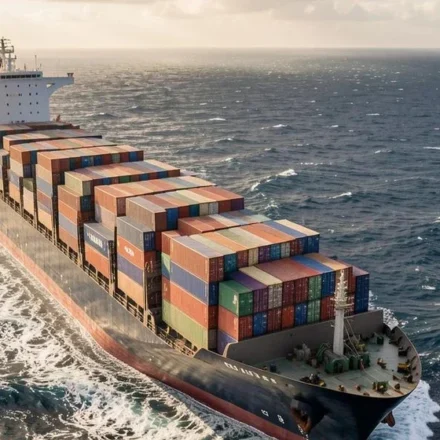
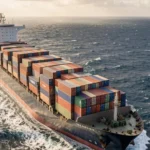
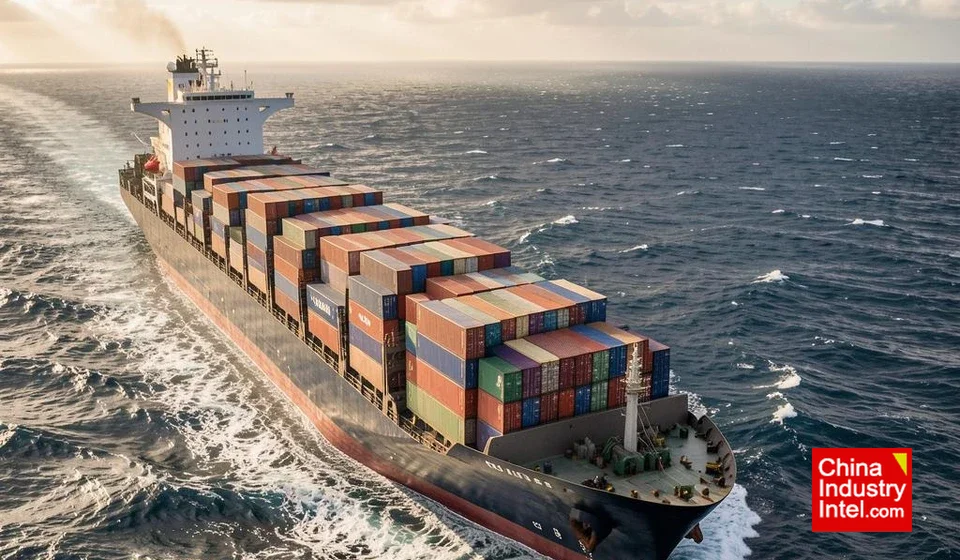
As of June 2026, approximately 65% of container vessels that previously transited the Suez Canal continue to route around the Cape of Good Hope, adding 10-14 days to the journey between Asia and Northern Europe. The diversion has effectively absorbed 8-12% of global container ship capacity, creating persistent tightness in vessel availability.
Container shipping rates from Shanghai to Rotterdam have stabilized at approximately $4,800-$5,500 per forty-foot equivalent unit (FEU), compared to pre-crisis levels of around $1,500. While rates have come down from their January 2024 peak of over $8,000, they remain roughly triple the historical average, according to the Shanghai Containerized Freight Index (SCFI).
Impact on China-Europe Trade Routes

The disruption has hit China-Europe trade particularly hard. The Suez Canal was the primary artery for Chinese exports to Europe, handling roughly 60% of containerized trade between the two regions. With the Cape route adding significant transit time and fuel costs, Chinese exporters face higher landed costs and longer cash conversion cycles.
| Route | Pre-Crisis Transit | Current Transit | Cost Increase |
|---|---|---|---|
| Shanghai–Rotterdam (Suez) | 28-32 days | 28-32 days (limited) | +200-250% rate premium |
| Shanghai–Rotterdam (Cape) | N/A | 38-45 days | +180-220% vs pre-crisis |
| Shanghai–Hamburg (Rail) | 16-18 days | 16-18 days | +15-20% demand surge |
| Shenzhen–Felixstowe (Cape) | 30-34 days | 40-48 days | +190-240% vs pre-crisis |
China-Europe Rail: The Beneficiary

One of the most significant structural shifts has been the surge in China-Europe rail freight. The China-Europe Railway Express, which connects dozens of Chinese cities to European destinations via Central Asia, has seen volumes increase by 35% year-on-year in the first five months of 2026. Key routes from Chongqing, Chengdu, and Xi’an to Duisburg, Hamburg, and Warsaw are now operating at near-full capacity.
The rail option offers a compelling middle ground: transit times of 16-18 days (faster than the Cape route, slower than pre-crisis Suez) at costs approximately 40% below air freight but 60% above pre-crisis sea freight. For high-value electronics, automotive parts, and e-commerce goods, the rail corridor has become the preferred option.
Shipping Company Responses
Major shipping lines have adapted their networks significantly. Maersk, MSC, and CMA CGM have deployed additional vessels on Asia-Europe routes to compensate for longer transit times, but this has tightened capacity on other trade lanes. Several carriers have introduced “premium” services guaranteeing Suez Canal transit with armed escort, charging a $2,000-$3,000 per FEU surcharge.
COSCO Shipping, China’s state-owned carrier, has been the most aggressive in expanding China-Europe rail services, investing in new rolling stock and terminal capacity. The company has also expanded its fleet of mega-container vessels (24,000+ TEU) to achieve better economies of scale on the longer Cape route.
Nearshoring and Supply Chain Restructuring
The prolonged disruption has accelerated nearshoring trends that were already underway. European manufacturers are increasingly sourcing from Turkey, Morocco, and Eastern Europe to reduce dependence on long-haul Asian supply chains. Chinese companies have responded by establishing production facilities in these regions — BYD’s factory in Hungary, CATL’s plant in Germany, and numerous Chinese textile manufacturers opening facilities in Vietnam and Bangladesh.
However, the nearshoring trend has limits. China’s manufacturing ecosystem — the depth of supplier networks, infrastructure quality, and labor cost advantages — remains unmatched for many product categories. Electronics, machinery, and consumer goods continue to flow primarily from Chinese factories, albeit at higher logistics costs.
Implications for 2026 and Beyond
Analysts at Drewry Shipping Consultants project that Red Sea disruptions will persist through at least mid-2027, as the geopolitical conditions driving Houthi attacks show no sign of resolution. The firm forecasts container rates on Asia-Europe routes will remain 80-120% above pre-crisis levels for the foreseeable future.
For Chinese exporters, the new normal means building higher logistics costs into pricing, diversifying export routes, and in some cases relocating production closer to end markets. The crisis has underscored the fragility of global supply chains and the strategic importance of route diversification — lessons that will shape logistics planning for years to come.
Sources
- Thomson Reuters — 2026’s Supply Chain Challenge
- Freightos Baltic Index — Container shipping rates
- Drewry Shipping Consultants — Container market outlook
- Reuters — Red Sea shipping disruptions continue into second year