




































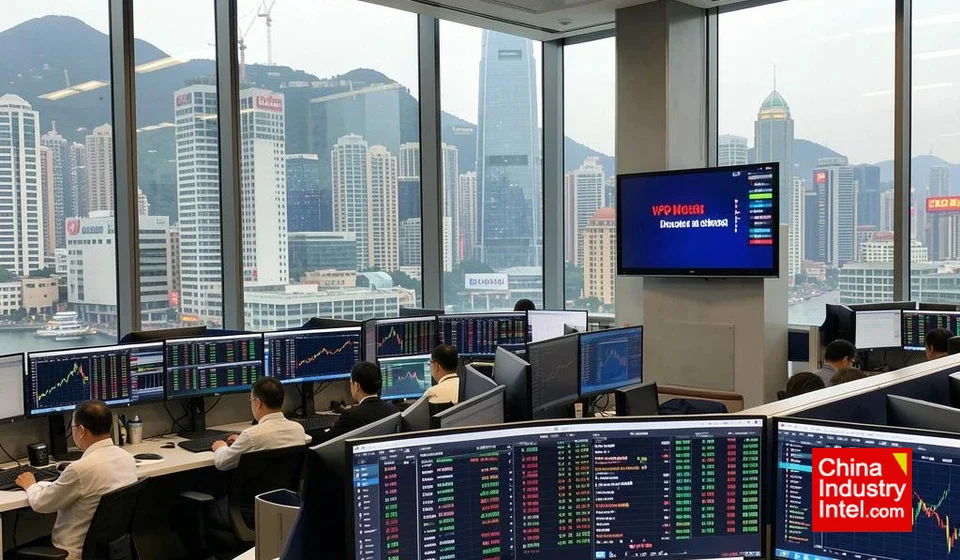
Hong Kong IPO Boom Masks Growing Performance Problem for New Listings
By China Industry Intel | June 21, 2026
Hong Kong’s stock market is experiencing its strongest IPO pipeline since 2021, with over 80 new listings in the first five months of 2026 raising a combined HK$120 billion ($15.4 billion). But beneath the headline numbers, a troubling pattern is emerging: new listings are consistently underperforming on their first day of trading, raising questions about pricing quality, investor sentiment, and the long-term health of the city’s capital markets.
Record Volume, Disappointing Returns
The number of IPOs in Hong Kong in 2026 has surged compared to the same period in 2025, when the city was still recovering from a two-year drought in listings. The revival has been driven by a wave of Chinese technology companies, new energy firms, and biotech startups seeking to tap international capital markets.
However, the average first-day return for Hong Kong IPOs in 2026 has been negative 4.2%, according to data from Dealogic. This compares with positive first-day returns of 12-15% on the Shanghai Stock Exchange and 8-10% on Shenzhen’s ChiNext board over the same period. Of the 80+ listings in Hong Kong this year, only 28% have traded above their IPO price on day one.
| Exchange | IPOs (Jan-May 2026) | Avg. First-Day Return | Total Raised |
|---|---|---|---|
| Hong Kong (Main Board) | 82 | -4.2% | HK$120B |
| Shanghai (SSE) | 45 | +14.8% | RMB 285B |
| Shenzhen (ChiNext) | 63 | +9.3% | RMB 142B |
| Shanghai (STAR Market) | 38 | +22.1% | RMB 98B |
| Beijing (BSE) | 31 | +6.7% | RMB 28B |
Why the Disconnect?

Several factors explain the gap between Hong Kong’s high IPO volume and poor first-day performance:
Aggressive Pricing: Many issuers and their underwriters have been pricing IPOs at the top of their indicative ranges, leaving little on the table for new investors. In a market where institutional investors have become more selective, this has led to frequent first-day sell-offs.
Global Macro Uncertainty: Persistent geopolitical tensions, elevated interest rates in Western markets, and concerns about China’s economic recovery have dampened risk appetite among international investors who form a critical part of Hong Kong’s investor base.
Supply Saturation: The sheer volume of new listings has overwhelmed demand. With dozens of IPOs competing for investor attention and capital, dilution of investor interest has become a structural problem.
Lock-up Expiry Concerns: Many pre-IPO investors are looking to exit positions after extended holding periods during the 2023-2024 IPO drought, creating selling pressure on newly listed stocks.
Tech Company Listings: A Mixed Bag

Chinese technology companies have been among the most high-profile — and most disappointing — Hong Kong listings in 2026. Several AI and semiconductor firms that generated significant pre-IPO buzz have seen their shares drop 15-30% within weeks of listing. This has created a negative feedback loop, with retail investors becoming increasingly cautious about subscribing to new tech IPOs.
The contrast with mainland exchanges is stark. On Shanghai’s STAR Market, which caters to technology companies, average first-day returns have exceeded 20% in 2026, driven by strong retail investor participation and a regulatory framework that caps IPO pricing at 23x forward earnings — a constraint that Hong Kong does not impose.
Implications for Chinese Capital Markets
The performance gap raises important questions about Hong Kong’s role as a fundraising venue for Chinese companies. While the city offers advantages in terms of international investor access, foreign currency denomination, and regulatory flexibility, the poor post-IPO performance may drive some issuers to reconsider mainland listings.
The Hong Kong Stock Exchange (HKEX) has acknowledged the issue and is reportedly considering reforms to improve IPO pricing transparency and encourage broader retail participation. Proposals include extending the retail subscription period, improving allocation mechanisms, and potentially introducing price stabilization requirements for underwriters.
For now, the IPO pipeline remains robust, with several mega-listings planned for the second half of 2026, including a rumored $5 billion offering from a major Chinese EV battery maker. Whether these deals can reverse the performance trend will be a critical test for Hong Kong’s capital markets.
Sources
- CNBC — Hong Kong’s IPO boom is developing a performance problem
- Hong Kong Exchanges and Clearing (HKEX)
- Dealogic — Global IPO data
- Reuters — Hong Kong IPO market analysis