The 10th South Asia Expo: China’s Clean Energy Export Machine Targets the Global South
Chinese solar, wind, and storage equipment flows to developing nations at unprecedented scale
The 10th China-South Asia Expo in Kunming, which opened on June 13, 2026, is showcasing China’s growing role as the world’s clean energy equipment supplier. The 257 billion yuan in energy deals signed on the first day span wind, solar, pumped hydro, and cross-border grid connections with Pakistan, Bangladesh, Myanmar, and Sri Lanka.
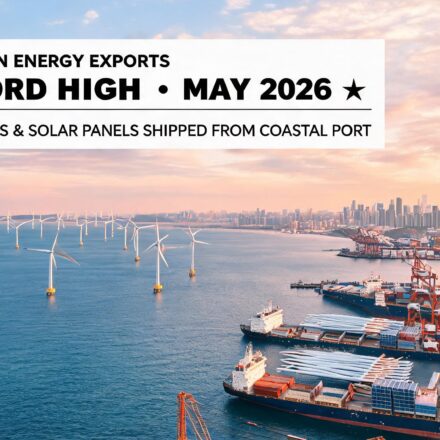
China’s clean energy exports to developing countries reached $48 billion in 2025, up 55% from 2024, according to data from the China Chamber of Commerce for Import and Export of Machinery and Electronic Products. Solar panels accounted for $28 billion, wind turbines for $8 billion, and batteries and storage systems for $12 billion.
The Belt and Road energy pivot
Belt and Road Initiative (BRI) energy investments have shifted dramatically toward renewables. In 2025, 78% of China’s outbound energy investment went to clean energy projects, up from 40% in 2020. Coal project financing, once a major BRI activity, has virtually stopped.
The shift reflects both Chinese policy (Xi Jinping’s 2021 pledge to stop building coal plants abroad) and market demand. Developing countries want cheap, modular energy systems that don’t require the massive infrastructure of coal plants. Chinese solar and wind equipment, delivered in containers and installed in months, fits that requirement perfectly.
Case study: Pakistan’s solar revolution
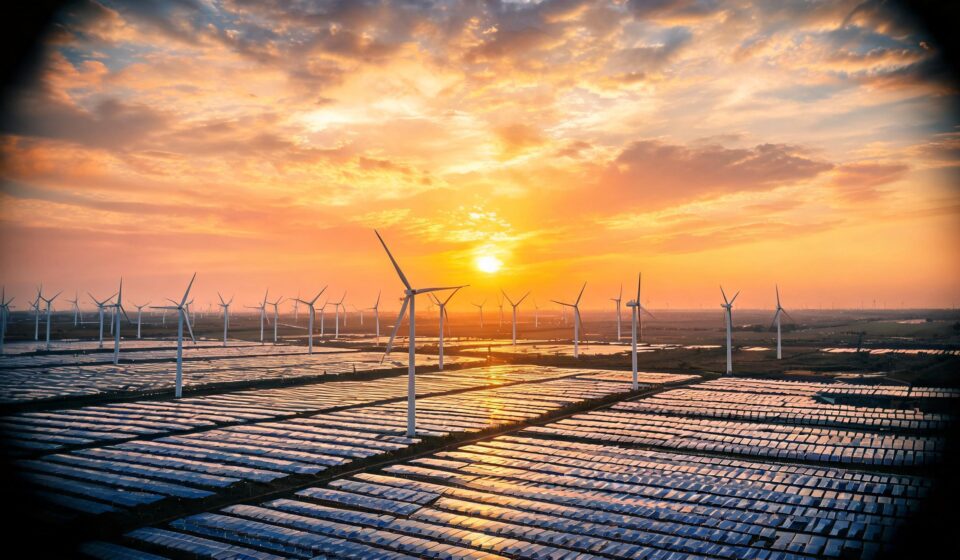
Pakistan imported 17 GW of Chinese solar panels in 2025 — more than the entire installed solar capacity of most countries. The panels, priced at under $0.10 per watt, are being installed on rooftops, in agricultural fields, and in utility-scale projects across the country.
“Pakistan’s grid can’t handle centralized power plants, but it can handle distributed solar,” said Dr. Asif Qureshi, energy advisor to the Pakistani government. “Chinese panels have made solar cheaper than grid electricity in most of the country.”
Quality and sustainability concerns
Not all the equipment is top quality. Some developing country buyers have reported higher-than-expected failure rates with low-cost Chinese solar inverters and batteries. The China Quality Certification Center has responded by tightening export standards, but enforcement remains uneven.
There are also sustainability concerns about the manufacturing process. Chinese solar panel production relies heavily on coal-powered electricity, particularly in Xinjiang and Inner Mongolia. The carbon footprint of a Chinese-made solar panel is roughly 2-3x that of a panel manufactured using renewable electricity.
Sources
- 36kr, “第10届南博会现场签约超257亿元能源项目,” June 14, 2026
- China Chamber of Commerce for Machinery and Electronic Products, 2025 export data
- Boston University Global Development Policy Center, BRI energy investment tracking