Instant Commerce, KOL Premiums, AI Personalization: The 8 Trends Reshaping China’s Digital Marketplace
Content-driven discovery, AI-powered personalization, and the rise of lower-tier cities define China’s e-commerce in 2026
China’s digital consumption exceeded 23.8 trillion yuan ($3.39 trillion) in 2025, making it the world’s largest online retail market for the 13th consecutive year. But the size matters less than the speed at which the rules are changing. Eight structural shifts are reshaping how Chinese consumers discover, evaluate, and buy products.
1. Content replaces search as the discovery engine
The “search-and-buy” model that built Tmall and JD.com is being overtaken by “discover-and-buy” on content platforms like Douyin and Xiaohongshu. Recommendation algorithms on these platforms now drive over 60% of product discovery — consumers rarely search for anything.
2. Instant commerce eats traditional e-commerce
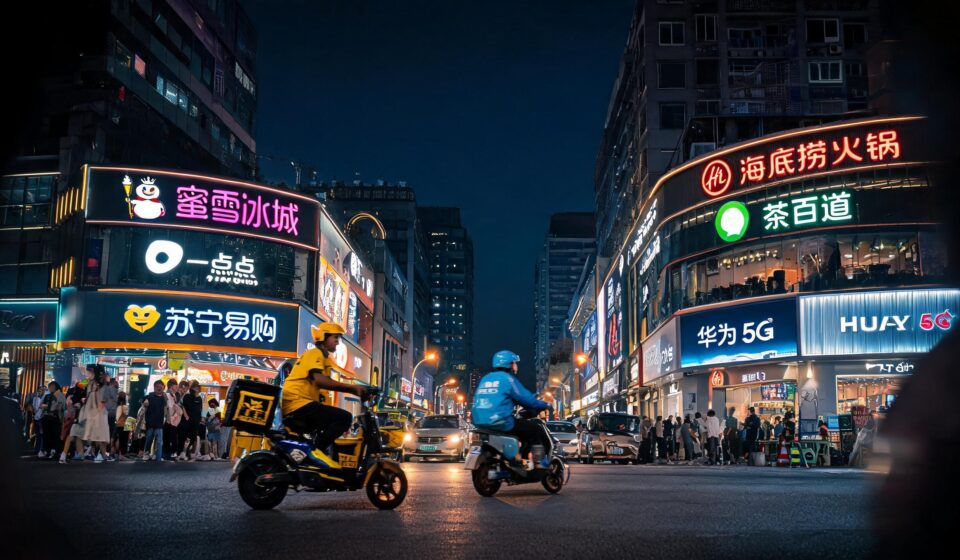
Meituan processes over 2 billion instant delivery orders annually. High-frequency purchases like skincare, supplements, and household essentials are migrating to platforms built for 30-minute fulfillment.
3. The real human premium
As AI-generated content floods social platforms, authentic human voices become exponentially more valuable. KOL and KOC rates are rising 30-50% in 2026.
4. AI-generated creative at scale
Pilot campaigns now run 50+ AI-generated creative variants per budget. Prompt engineering replaces budget size as the deciding factor in campaign performance.
5. Platform margins hit structural ceilings
Tmall and JD.com net merchant margins sit at 3-8%. Media costs have hit a structural ceiling, not because of platform restraint but because merchants can’t afford to pay more.
6. Xiaohongshu discovers, Tmall closes
The handoff between discovery (Xiaohongshu) and transaction (Tmall) replaces the Tmall-flagship-only playbook. Brands that optimize for this two-platform journey outperform those that don’t.
7. Shopping festivals lose their edge
Singles’ Day, 618, and other shopping festivals are losing their strategic importance except as product launch windows. Brands treat them as stress tests, not growth engines.
8. Lower-tier cities drive growth
Tier 3-5 cities are growing faster than Tier 1, with digital purchasing power approaching first-tier levels. Foreign brands that built their China strategy around Tier 1 cities are missing the growth.
Sources
- Beyond Border Group, “China 2026: 8 eCommerce & Marketing Predictions”
- Shanghai Jungle, “The trends reshaping China e-commerce from 2026 to 2030”
- Daxue Consulting, “2026 China consumer market trend”