The AI Race in 2026: Where China and the US Actually Stand
Beyond the hype, a more nuanced picture of competition and complementarity
The AI competition between China and the US is often framed as a simple race with a single winner. The reality in 2026 is more complex: the two countries lead in different aspects of AI, depend on each other in ways that neither admits publicly, and face different sets of challenges.
The US leads in frontier model capabilities (GPT-5, Claude 4, Gemini Ultra), AI chip design (NVIDIA, AMD, Google TPU), and cloud infrastructure (AWS, Azure, GCP). China leads in AI application deployment, open-source model development, and AI-powered manufacturing integration.
The compute gap — and how China compensates
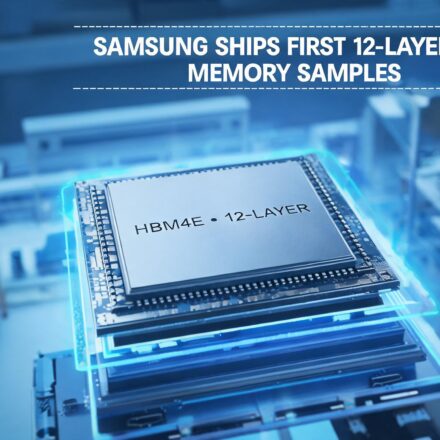
US export controls restrict China’s access to cutting-edge AI chips. NVIDIA’s H100 and Blackwell series are banned from sale to China, forcing Chinese companies to rely on less powerful alternatives — NVIDIA’s H20 (a restricted chip designed specifically for the China market), Huawei’s Ascend 910C, and domestically designed chips from Biren and Cambricon.
China compensates through scale and engineering efficiency. The $295 billion AI data center plan aims to build massive compute capacity using domestic chips. DeepSeek’s ability to train competitive models at a fraction of the cost demonstrates that algorithmic efficiency can partially offset hardware limitations.
Where China leads
In several areas, China is ahead:
- Open-source models: DeepSeek, Qwen, and GLM are competitive with or superior to Western open-source alternatives
- AI deployment: 67% of large Chinese enterprises have deployed generative AI in production, vs. an estimated 45% in the US
- AI in manufacturing: China deploys more industrial robots and AI-powered factory systems than any other country
- AI regulation: China has the most comprehensive AI regulatory framework, giving companies clearer rules to operate within
The interdependence neither side acknowledges
Despite the rhetoric of decoupling, US and Chinese AI ecosystems remain deeply intertwined. Chinese AI researchers publish in American journals and attend American conferences. American AI companies rely on Chinese-manufactured hardware components. Open-source models trained in China are used by developers worldwide.
Complete decoupling would hurt both sides. The question is whether political pressures will override economic rationality.
Sources
- Bloomberg, China AI data center plan, June 9, 2026
- CAICT, enterprise AI deployment survey, May 2026
- RadarAI, “China AI Industry Developments 2026”
- SemiAnalysis, China AI compute assessment, March 2026