China’s Industrial Supplier Ecosystem: From Low-Cost to High-Tech in a Decade
Chinese suppliers have quietly become indispensable to global manufacturing
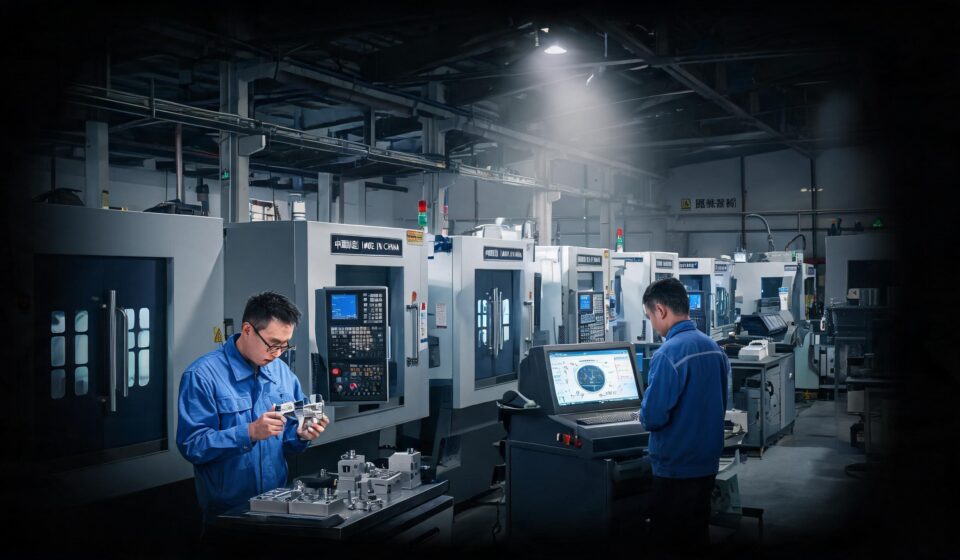
A decade ago, “Made in China” meant cheap assembly with components sourced from Japan, Germany, and the US. Today, Chinese suppliers dominate not just in volume but in technology across multiple industrial categories — from precision gears and bearings to advanced sensors and power electronics.
The transformation is measurable. China’s share of global value-added manufacturing (not just assembly) rose from 25% in 2018 to 31% in 2025, according to McKinsey Global Institute. In specific supply chain segments, Chinese dominance is even more pronounced:
- Battery materials: 85%+ of global cathode and anode production
- Solar manufacturing equipment: 70%+ of global production line equipment
- Industrial robot components: 45% of global harmonic drive production
- Electric motor components: growing rapidly, with Inovance and Estun challenging Siemens and ABB
The quality revolution
Chinese suppliers have invested heavily in quality management. ISO 9001 certifications in China exceeded 800,000 in 2025. More importantly, companies are pursuing sector-specific standards — IATF 16949 for automotive, AS9100 for aerospace, ISO 13485 for medical devices — at rates that would have been unimaginable a decade ago.
The quality improvement is driven by customer requirements. As Chinese OEMs like BYD, CATL, and Huawei compete globally, they demand world-class quality from their suppliers. This creates upward pressure throughout the supply chain.
The ecosystem advantage
China’s supplier ecosystem has a self-reinforcing advantage: density. In the Yangtze River Delta, a factory can source 95% of its components within a 200 km radius. This density reduces logistics costs, shortens lead times, and enables rapid iteration.
“In Germany, if I need a custom gear, it takes 6 weeks,” said a procurement manager at a Munich-based industrial equipment company. “In Ningbo, it takes 6 days. The quality is comparable. The cost is half.”
Implications for global sourcing
The evolution of Chinese suppliers means that sourcing decisions are no longer simply about cost. Chinese suppliers now offer competitive quality, faster lead times, and greater willingness to customize. Companies that reduce China exposure may find alternatives more expensive and less capable.
Sources
- McKinsey Global Institute, manufacturing analysis, 2026
- Zignify, “China Manufacturing & Sourcing Trends 2026”
- China Machinery Industry Federation, 2025 data