Guangdong AI Toy Industry Boom: Three Manufacturing Clusters Drive Billion-Dollar Companion Economy
By CII (China Industry Intel) – Contributing Analyst | June 24, 2026
Guangdong Province, long known as the world’s toy factory, is undergoing a dramatic transformation as artificial intelligence reshapes the industry from simple plastic playthings into intelligent companions. Three distinct manufacturing clusters — Shantou’s Chenghai district, Shenzhen’s tech corridors, and Dongguan’s advanced manufacturing hub — are leading a surge in AI-powered toys that is propelling China’s “companion economy” toward a projected market value exceeding ¥100 billion. The convergence of Guangdong’s unmatched toy manufacturing infrastructure with China’s rapidly advancing AI capabilities has created a new category of products — smart toys that can hold conversations, recognize emotions, learn from interactions, and serve as genuine companions for children and adults alike.
The transformation has drawn attention from China’s highest levels of government and media. Xinhua News Agency’s recent feature “玩物’智’造” (Smart Toy Manufacturing) documented how AI is opening new markets in the companion economy, while CCTV (China Central Television) has identified AI-powered toys as a major new industry trend. Behind the headlines, the numbers tell a compelling story: Guangdong accounts for over 60% of China’s toy exports by value, and the province’s AI toy segment is growing at an annual rate exceeding 35%, far outpacing the 8-10% growth of traditional toys. The shift from “Made in China” to “Intelligently Made in China” is nowhere more visible than in Guangdong’s toy factories.
Guangdong’s Three AI Toy Manufacturing Clusters
Each of Guangdong’s three primary AI toy clusters has developed a distinct specialization within the AI toy value chain, creating a complementary ecosystem that spans from low-cost mass production to cutting-edge R&D. Together, these clusters form a complete supply chain capable of taking an AI toy from concept to global retail shelves in under six months — a speed that no other region in the world can match.
| Cluster | Location | Specialization | Key Advantages | Estimated AI Toy Output (2025) | Growth Rate (YoY) |
|---|---|---|---|---|---|
| Chenghai (澄海) | Shantou, East Guangdong | Mass-market AI plush toys, interactive story-tellers, smart dolls | Largest toy manufacturing base in China; 15,000+ toy enterprises; ultra-competitive costs; established export channels to 140+ countries | ¥18-22 billion | +42% |
| Shenzhen (深圳) | Pearl River Delta, South Guangdong | High-end AI companions: NLP modules, emotion-recognition sensors, educational robots | China’s AI and hardware capital; access to voice recognition, LLM integration, and sensor technology; strong startup ecosystem; proximity to Huaqiangbei electronics market | ¥28-35 billion | +38% |
| Dongguan (东莞) | Pearl River Delta, Central Guangdong | Mid-to-high-end smart toys with advanced manufacturing: motors, actuators, precision molding | Advanced contract manufacturing heritage (former Apple supply chain); precision engineering; robotics integration; strong OEM/ODM capabilities for global brands | ¥12-16 billion | +31% |
Sources: Xinhua News Agency (2026); CCTV Economic News (2026); Guangdong Toy Association 2025 Annual Report; Fortune Business Insights — Smart Toys Market Analysis 2025; IMARC Group — AI in Toys Market Report 2025. Output values are estimates based on industry association data, customs export statistics, and enterprise surveys. Growth rates reflect year-over-year comparison of AI-enabled toy segment only.
Chenghai: From Plastic Toys to AI Plush Companions

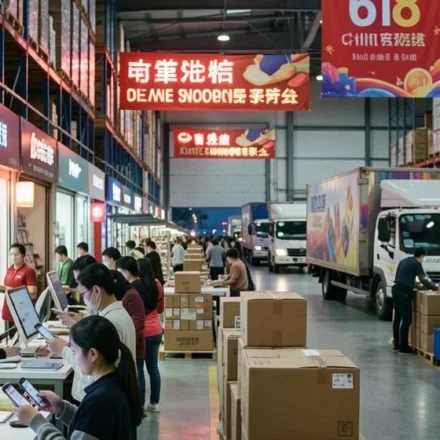
Shantou’s Chenghai district has been the beating heart of China’s toy industry for over three decades. Home to more than 15,000 toy-related enterprises and responsible for roughly one-third of the world’s toy production by volume, Chenghai’s transformation into an AI toy powerhouse represents one of the most significant industrial upgrades in China’s manufacturing landscape. The district’s traditional strength in plush toys, remote-control vehicles, and plastic models has provided the perfect substrate for AI integration — adding voice modules, microprocessors, and connectivity chips to products that Chenghai’s factories already produce at world-beating scale and cost.
The AI upgrade began in earnest around 2023-2024, when declining margins in traditional toys — squeezed by rising labor costs and competition from Southeast Asian manufacturers — pushed Chenghai’s entrepreneurs to seek higher-value product categories. The availability of low-cost Chinese AI chips, combined with mature voice recognition modules from companies like iFlytek and cloud AI APIs from Baidu, Alibaba, and ByteDance, made it economically feasible to embed sophisticated AI capabilities into toys retailing for as little as ¥99-199 ($14-28).
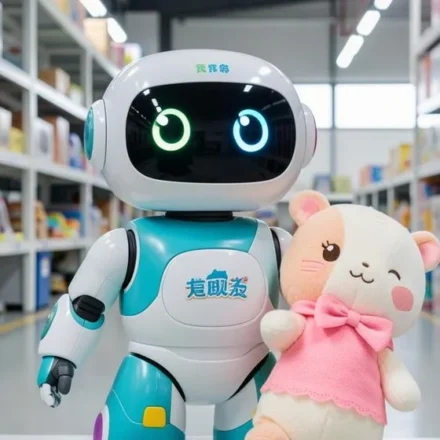
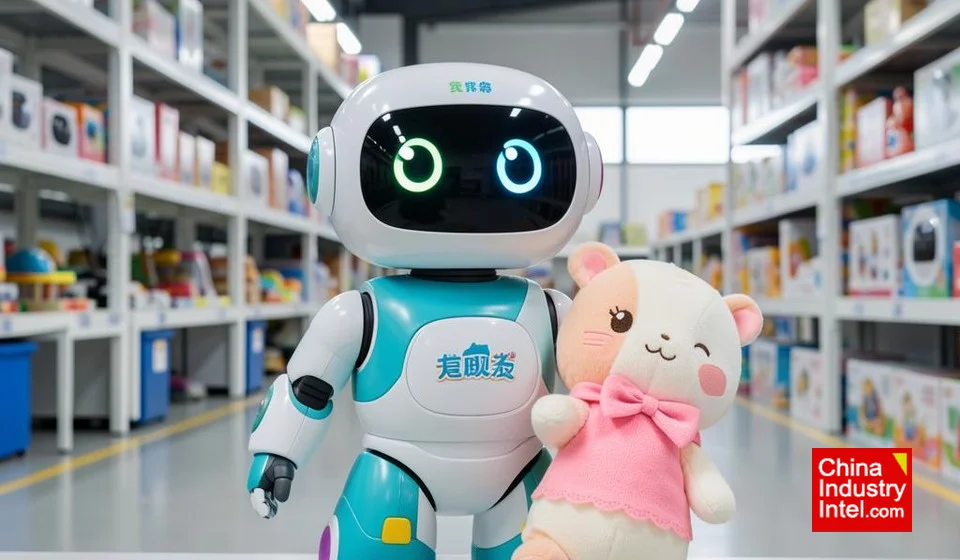
Chenghai’s AI toy product range now includes: interactive plush animals that can tell stories, sing songs, and respond to children’s questions using cloud-connected AI; smart dolls that recognize individual family members and adapt their behavior based on interaction history; AI-powered building blocks that teach coding and logic through voice-guided play; and educational tablets designed specifically for early childhood AI-assisted learning. Several Chenghai manufacturers have reported that AI-enabled products now account for 25-35% of their revenue, up from near-zero just three years ago, with gross margins 15-20 percentage points higher than traditional toys.
Shenzhen: The AI Brain of China’s Toy Industry

While Chenghai provides manufacturing scale, Shenzhen supplies the intelligence. The city’s unparalleled concentration of AI talent, hardware startups, and electronics supply chains — anchored by the legendary Huaqiangbei electronics markets — has made it the natural hub for the high-end AI toy segment. Shenzhen-based companies are developing the core technologies that power the companion economy: natural language processing modules optimized for children’s speech patterns, emotion recognition systems that use cameras and microphones to detect mood, adaptive learning algorithms that personalize content to individual children’s developmental stages, and edge AI chips that enable sophisticated on-device processing without requiring constant cloud connectivity.
Several Shenzhen startups have emerged as leaders in the AI toy space. Companies like ROOBO, UBTECH (which began with humanoid robots and has moved into educational AI companions), and Mobvoi (which applies voice AI to children’s products) have raised significant venture funding and attracted partnerships with global toy brands seeking AI capabilities. Shenzhen’s AI toy ecosystem benefits from the city’s broader AI infrastructure — including access to the latest large language models, computer vision APIs, and speech synthesis technologies — which can be integrated into toy products through component modules that Shenzhen’s electronics supply chain produces at competitive prices.
The Shenzhen cluster is also driving the “AI plush toy 2.0” concept — toys that serve as interfaces to cloud AI services, capable of telling personalized bedtime stories generated in real-time, answering children’s endless “why” questions with age-appropriate explanations, and even detecting signs of emotional distress or developmental delays through analysis of interaction patterns. These products blur the line between toy and childcare tool, positioning AI companions as supplements to — rather than replacements for — human interaction.
Dongguan: Precision Manufacturing Meets AI
Dongguan’s role in the AI toy ecosystem reflects its heritage as one of the world’s most sophisticated contract manufacturing centers. Having served as a key production base for Apple, Samsung, and other global electronics brands for decades, Dongguan possesses precision engineering capabilities — micro-motors, miniature actuators, precision injection molding, advanced surface finishing — that are essential for higher-end AI toys involving movement, haptic feedback, and premium build quality.
Dongguan-based manufacturers are particularly strong in the OEM and ODM segments, producing AI toys on contract for both domestic Chinese brands and international toy companies. This positions Dongguan as the bridge between China’s AI toy innovation and global consumer markets. A typical Dongguan factory might produce AI-enabled robotic pets for a Japanese brand, emotion-sensing companion dolls for a European toy company, and interactive educational robots for a U.S. edtech firm — all from the same production campus. The cluster’s ability to maintain quality standards acceptable to global brands while integrating cutting-edge AI components has made it an indispensable node in the global AI toy supply chain.
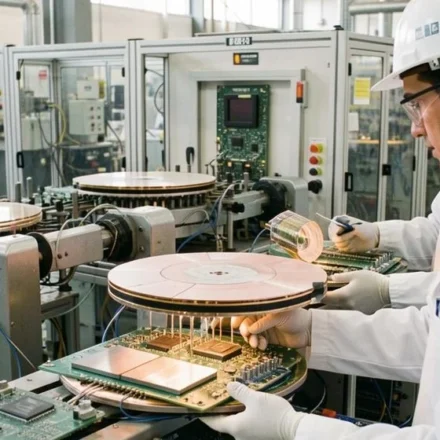
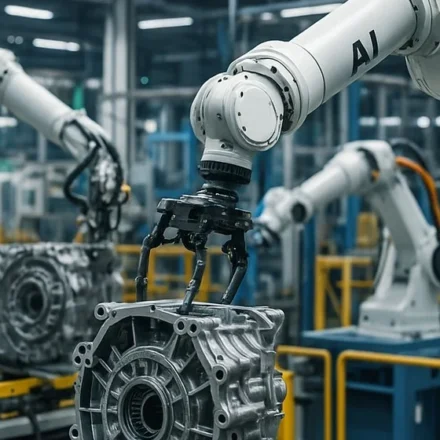
Dongguan is also emerging as a center for toy industry automation. Several of the city’s largest toy manufacturers have deployed industrial robots and AI-powered quality inspection systems on their production lines, creating a virtuous cycle where AI both goes into the products and makes their production more efficient. This dual AI application — product and process — reinforces Dongguan’s competitive position against lower-cost manufacturing locations that cannot match its technological sophistication.
The Companion Economy: Market Size and Growth Drivers
The rise of AI toys sits within the broader context of China’s “companion economy” (陪伴经济) — a term that encompasses products and services addressing the emotional and social needs of an increasingly urbanized, digitally-native population. China’s demographic trends — rising single-person households (projected to reach 150 million by 2030), dual-income families with limited parent-child interaction time, an aging population seeking companionship, and the psychological impacts of intensive academic pressure on children — all create demand for products that provide interaction, emotional support, and engagement.
Global market research firms have sized the opportunity in increasingly bullish terms. Fortune Business Insights valued the global smart toys market at approximately $16.5 billion in 2024 and projects it to grow at a compound annual rate of 15.8% through 2032, reaching roughly $52 billion. IMARC Group’s analysis of AI in the toy market specifically points to even faster growth in the AI-enabled subset, with the segment potentially quadrupling in value between 2024 and 2030. China, given its manufacturing dominance and large domestic market, is expected to capture a disproportionate share of this growth.
Within China, the companion economy spans several overlapping categories. AI toys for children represent the largest and fastest-growing segment, driven by parents’ willingness to invest in educational and developmental products. Companion robots for the elderly — capable of health monitoring, medication reminders, emergency alerts, and simple conversation — form a smaller but rapidly growing segment as China’s population ages. AI pets and virtual companions for young adults living alone address the emotional needs of China’s growing singles demographic. Across all categories, the common thread is AI’s ability to deliver personalized, adaptive interaction that traditional products cannot provide.
Technology Enablers: The AI Stack Powering Smart Toys
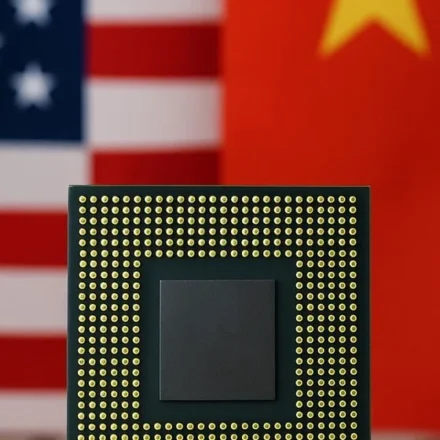
Several technology trends have converged to make AI-powered toys commercially viable at mass-market prices. China’s domestic AI chip industry, driven by both commercial innovation and semiconductor self-sufficiency policies, has produced a range of low-cost AI processors suitable for toy applications. Chips from companies like Rockchip, Allwinner, and Amlogic deliver sufficient processing power for on-device voice recognition and basic NLP at price points under $3 per unit in volume — a level that enables AI integration even in sub-$20 retail products.
Voice AI has reached a maturity level where children’s speech — with its unique pronunciation patterns, limited vocabulary, and high-pitched frequencies — can be reliably recognized and interpreted. iFlytek, China’s dominant voice AI company, has developed children’s voice models optimized for ages 3-12 that achieve recognition accuracy above 95% in quiet environments. Cloud APIs from Baidu, Alibaba, Tencent, and ByteDance provide the LLM backend for sophisticated conversation, with latency optimized to under one second for conversational responsiveness — a critical requirement for maintaining children’s engagement.
Edge-cloud hybrid architectures have solved the connectivity problem that previously limited AI toys to Wi-Fi-only use. Modern AI toys use on-device processing for wake-word detection, basic command recognition, and privacy-sensitive functions, while offloading complex conversational AI and content generation to the cloud. Cellular IoT modules — available for under ¥5 per unit — provide always-on connectivity independent of home Wi-Fi, enabling AI toys to function as standalone companions rather than tethered peripherals.
Export Dynamics: Guangdong’s Global AI Toy Reach
Guangdong’s AI toy industry is as export-oriented as its traditional toy sector. The province exported approximately $28 billion worth of toys and games in 2024, representing over 60% of China’s total toy exports and roughly 40% of global toy trade by value. AI toys, while still a minority of export volume, command significantly higher unit prices — typically 3-8 times the FOB price of non-AI equivalents — and are growing their export share rapidly.
Key export markets for Guangdong AI toys include the United States (approximately 25% of AI toy exports), the European Union (20%), Southeast Asia (18%), Japan and South Korea (12%), and the Middle East (10%). The U.S. market is particularly attractive given American consumers’ high willingness to pay for educational and STEM-oriented toys, though trade policy uncertainty — including the possibility of expanded tariffs on Chinese consumer goods — represents a risk factor. Southeast Asian markets, with their young demographics and rapidly growing middle classes, are the fastest-growing export destination.
Cross-border e-commerce platforms have accelerated AI toy exports by enabling Guangdong manufacturers to reach foreign consumers directly. Platforms like Temu, SHEIN (which has expanded into toys), and Alibaba’s AliExpress have reduced the barriers to international distribution, allowing even small and medium-sized Chenghai factories to test foreign markets with AI toy products. Amazon’s China-based seller ecosystem remains a major channel, though increasing platform fees and compliance requirements have pushed some manufacturers toward alternative channels.
Challenges and Risks
The AI toy industry’s explosive growth is not without significant challenges. Data privacy and child safety regulations represent the most immediate concern. China’s Personal Information Protection Law (PIPL) and Minor Protection regulations impose strict requirements on data collection from children, including mandatory parental consent, data minimization, and restrictions on profiling. AI toys that collect voice recordings, images, or interaction data — as nearly all do — must navigate a complex and evolving regulatory landscape. International markets add further complexity, with the U.S. COPPA (Children’s Online Privacy Protection Act), EU GDPR, and similar frameworks in other jurisdictions each imposing distinct compliance requirements.
Content safety is another critical concern. AI toys that generate conversational responses using cloud LLMs can potentially produce inappropriate, inaccurate, or harmful content. Chinese regulators have been particularly vigilant about AI-generated content aimed at minors, and several AI toy products have been temporarily suspended from sale pending content safety reviews. Manufacturers must implement robust content filtering, age-appropriate response guardrails, and human-in-the-loop monitoring systems — all of which add cost and complexity.
Technology reliability presents a more fundamental challenge. AI toys that fail to understand children’s speech, provide irrelevant responses, or suffer from connectivity issues rapidly lose user engagement. Children are unforgiving critics — a doll that stops talking or a robot that ignores commands will be abandoned within days. Maintaining the high reliability and low latency that AI toys require, at consumer price points, demands continuous engineering investment that not all manufacturers can sustain.
Finally, the traditional toy industry’s seasonal demand patterns — concentrated heavily in the months leading up to Christmas and Chinese New Year — create production and inventory management challenges for AI toys, which have longer component lead times and more complex assembly processes than traditional toys. Managing these supply-demand dynamics while integrating rapidly evolving AI technology requires a level of supply chain sophistication that represents a barrier to entry for smaller players.
Outlook: The Next Phase of Growth
The trajectory of Guangdong’s AI toy industry points toward continued rapid growth, with several developments likely to shape the next phase. First, the integration of more sophisticated AI models — including small language models that can run entirely on-device — will expand the capabilities of AI toys while reducing reliance on cloud connectivity and addressing privacy concerns. Chinese AI companies are increasingly focused on developing compact, efficient models suitable for edge deployment, and toys represent an ideal application.
Second, the boundary between AI toys, educational products, and healthcare devices will continue to blur. AI companions that serve dual purposes — entertaining a child while also monitoring developmental milestones, or providing conversation for an elderly user while tracking health indicators — will command premium pricing and attract interest from healthcare providers and insurers. Regulatory frameworks for these hybrid products are still evolving, creating both opportunity and uncertainty.
Third, brand consolidation and vertical integration are likely to accelerate. While the current landscape is fragmented among thousands of manufacturers, the winners will likely be those that combine manufacturing scale, AI technology capability, brand recognition, and distribution reach. Companies that can build recognizable consumer brands around AI toy products — rather than remaining anonymous OEM suppliers — will capture a larger share of the value chain. Shenzhen-based tech companies with AI expertise may acquire or partner with Chenghai and Dongguan manufacturers to create integrated AI toy platforms.
Guangdong’s three AI toy clusters — Chenghai’s manufacturing muscle, Shenzhen’s technological brain, and Dongguan’s precision engineering — collectively position the province to dominate the global AI companion market. The “Made in Guangdong” label, once associated with low-cost plastic toys, is rapidly becoming synonymous with the future of intelligent play.
Sources
- 新华网 (Xinhua News Agency) — 玩物”智”造——AI赋能玩具产业打开”陪伴经济”新市场 (2026)
- 央视网 (CCTV) — 人工智能玩具站上新风口 (2026)
- Fortune Business Insights — Smart Toys Market Size, Share & Industry Analysis 2024-2032
- IMARC Group — AI in Toys Market Report: Global Industry Trends, Share, Size, Growth 2024-2030
- Guangdong Toy Association (广东省玩具协会) — 2025 Annual Industry Report
- China Customs — Toy Export Statistics 2024-2025 (General Administration of Customs)
- National Medical Products Administration — AI Medical Device Classification Guidelines (for AI health monitoring toys)