China Makes AI-Powered Robots Core of National Strategy as Humanoid Deployment Accelerates
By CII (China Industry Intel) – Contributing Analyst | June 23, 2026
China has formally elevated AI-powered robotics to the core of its national industrial strategy, signaling an ambitious push to dominate the next generation of intelligent automation. According to a June 2026 press release from the International Federation of Robotics (IFR), Chinese policymakers have embedded robotics targets into the country’s latest Five-Year Plan implementation guidelines, setting explicit deployment goals for both industrial and humanoid robot categories. The strategy positions robotics as a pillar of China’s technological self-reliance agenda and a critical enabler for addressing the country’s well-documented demographic challenges — a shrinking workforce and rapidly aging population.
The IFR report highlights that China’s approach differs fundamentally from Western robotics strategies in its scale and centralized coordination. While the United States, Japan, and Germany have robust robotics sectors driven primarily by private enterprise, China’s government-led model combines massive state funding, preferential procurement policies, and coordinated R&D programs across universities, research institutes, and private companies. The national robotics strategy identifies three priority domains: advanced industrial robotics for manufacturing, AI-powered humanoid robots for service and healthcare applications, and collaborative robots (cobots) for small and medium-sized enterprises that have traditionally lagged in automation adoption.
China’s robotics push comes at a pivotal moment for global automation. The IFR’s most recent World Robotics report showed that global industrial robot installations reached approximately 590,000 units in 2025, with China alone accounting for 310,000 — more than 52% of the global total. This represents a dramatic acceleration from even five years ago, when China’s share was below 40%. The country’s operational stock of industrial robots now exceeds 1.8 million units, by far the largest installed base in the world and more than triple that of second-place Japan. This density advantage is now being extended from traditional industrial robots into the emerging humanoid category, where Chinese companies are moving from prototype to deployment at an unprecedented pace.
China’s Humanoid Robot Champions: Unitree, UBTECH, and AgiBot
Three Chinese companies have emerged as the standard-bearers of the country’s humanoid robotics ambitions, each pursuing distinct strategies that collectively span the full spectrum of potential applications. Their deployment numbers, while still modest compared to industrial robot volumes, are accelerating rapidly as manufacturing costs decline and AI capabilities improve.
Unitree Robotics has become the most internationally recognized Chinese humanoid robot maker, driven by viral videos of its H1 humanoid performing backflips, navigating rough terrain, and demonstrating remarkable dynamic balance. Founded in 2016 and based in Hangzhou, Unitree initially focused on quadrupedal robots (the Go1, B2, and B2-W series) before unveiling the H1 humanoid in 2023. The company has since shipped an estimated 500-800 H1 and G1 humanoid units to research institutions and early commercial adopters, with a reported order backlog exceeding 3,000 units as of mid-2026. Unitree’s strategy emphasizes affordability — the G1 humanoid is priced at approximately $16,000, dramatically undercutting comparable Western humanoids — and AI-powered general-purpose capability that allows the robots to learn new tasks through demonstration rather than explicit programming.
UBTECH Robotics, a Shenzhen-based company founded in 2012, has taken a more enterprise-focused approach. The company’s Walker S humanoid has been deployed in automotive manufacturing environments, working alongside human operators on assembly lines at partner facilities including BYD and Geely. UBTECH reported deploying approximately 200-300 Walker S units in commercial settings during 2025-2026, with plans to scale to 1,000+ units by end of 2026. The company’s strategy leverages China’s manufacturing ecosystem — by demonstrating successful deployment in real factory environments, UBTECH aims to build the case for humanoid robots as a viable solution to labor shortages in China’s industrial heartland. UBTECH went public on the Hong Kong Stock Exchange in December 2023, raising approximately HK$1.3 billion, and its market capitalization has more than doubled since then as investor enthusiasm for humanoid robotics has surged.
AgiBot (智元机器人), a Shanghai-based startup founded by former Huawei engineer Peng Zhihui in 2023, represents the newest and most aggressively scaled entrant. Despite its youth, AgiBot has attracted over $500 million in venture funding and has reportedly deployed over 1,000 humanoid robots in logistics and warehousing applications, primarily with Chinese e-commerce and express delivery companies. AgiBot’s “Yuanzheng” series humanoids are designed specifically for structured commercial environments — warehouses, sorting centers, and last-mile delivery hubs — where the controlled environment reduces the technical challenges of perception and navigation. The company’s rapid scaling has been enabled by China’s deep manufacturing ecosystem, which allows AgiBot to source precision actuators, sensors, and AI chips domestically at costs far below what Western competitors face.
| Company | Founded | Key Humanoid Model | Est. Units Deployed (2026) | Primary Application | Unit Price (USD) |
|---|---|---|---|---|---|
| Unitree Robotics | 2016 | H1 / G1 | 500-800 (3,000+ backlog) | Research, education, general-purpose | ~$16,000 (G1) |
| UBTECH Robotics | 2012 | Walker S | 200-300 (targeting 1,000+) | Automotive manufacturing, enterprise | ~$50,000-80,000 |
| AgiBot | 2023 | Yuanzheng A1/A2 | 1,000+ | Logistics, warehousing, delivery | ~$20,000-30,000 |
| Xiaomi (CyberOne) | 2010 | CyberOne | Limited prototype (lab stage) | Consumer/companion (future) | Not commercialized |
| Tesla (Optimus) | 2003 | Optimus Gen 3 | ~100 (internal factory use) | Internal manufacturing, future external | ~$20,000 (target) |
| Boston Dynamics | 1992 | Atlas (electric) | Prototype/small batch | Research, industrial inspection | Not publicly priced |
| Figure AI | 2022 | Figure 02 | ~50-100 | Warehouse logistics, BMW partnership | Not publicly priced |
Sources: IFR World Robotics 2026, company disclosures, CB Insights, PitchBook. Deployment figures are estimates based on company announcements, press reports, and analyst tracking; official audited deployment numbers are not publicly available for most humanoid robot companies. “Deployed” includes units shipped to customers, internal deployment, and pilot programs.
Industrial vs. Humanoid Robots: Divergent Trajectories, Converging Technology

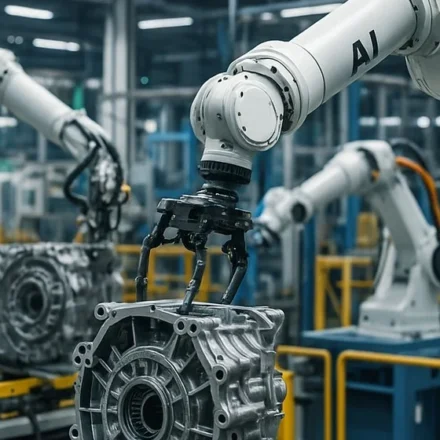
China’s robotics strategy encompasses two distinct but increasingly converging categories: traditional industrial robots and the new generation of AI-powered humanoid robots. The industrial robot sector is mature, with well-established supply chains, standardized form factors (articulated arms, SCARA robots, Cartesian robots), and clear ROI calculations for manufacturing applications. The humanoid sector, by contrast, is nascent but advancing rapidly, powered by breakthroughs in AI foundation models, improved actuator technology, and dramatically declining component costs.
China’s dominance in industrial robots is undisputed. According to IFR data, China installed 310,000 industrial robots in 2025, more than the combined total of Japan (55,000), the United States (40,000), South Korea (35,000), and Germany (28,000). The installed base of 1.8 million units in China is concentrated in automotive manufacturing (35%), electronics and electrical equipment (28%), and metal products and machinery (18%). Importantly, Chinese domestic robot manufacturers have been steadily gaining market share from international incumbents: domestic brands now account for approximately 40% of new installations in China, up from under 25% in 2019. Companies like Estun, Siasun, and Efort have built competitive portfolios of industrial robots that match or exceed the performance of established players like Fanuc, Kuka, ABB, and Yaskawa in many applications.
The humanoid robot segment, while tiny in comparison to industrial robots in terms of current deployment (a few thousand units globally versus hundreds of thousands of industrial units), is growing at an explosive rate. The IFR identifies China as the world leader in humanoid robot deployment, with Chinese companies accounting for over 60% of all humanoid units shipped globally in 2025-2026. This leadership position stems from several structural advantages: China’s massive manufacturing ecosystem provides a ready market for automation solutions; government subsidies lower the effective cost of adoption; and the availability of low-cost precision components from China’s electronics supply chain reduces the bill of materials for humanoid robots by an estimated 40-60% compared to competitors in the US and Europe.
The technology convergence between industrial and humanoid robots is accelerating. The AI models that enable humanoid robots to perceive their environment, plan movements, and adapt to new tasks are increasingly being applied to traditional industrial robots, making them more flexible and easier to deploy. Conversely, the precision actuators, motor controllers, and safety systems developed for industrial robots over decades are being adapted for humanoid platforms, improving their reliability and durability. This convergence suggests that the distinction between industrial and humanoid robots may blur over time, with form factors selected based on the specific task rather than belonging to rigidly separate categories.
Global Market Share and International Comparison

China’s robotics ascendancy must be understood in the context of global market dynamics. The table below presents a comparative overview of the world’s leading robotics markets as of 2026, highlighting both China’s dominance in scale and areas where other nations retain advantages.
| Metric | China | Japan | United States | Germany | South Korea |
|---|---|---|---|---|---|
| Industrial Robot Installations (2025) | 310,000 | 55,000 | 40,000 | 28,000 | 35,000 |
| % of Global Installations | 52.5% | 9.3% | 6.8% | 4.7% | 5.9% |
| Operational Stock (Installed Base) | 1,820,000 | 480,000 | 410,000 | 270,000 | 390,000 |
| Robot Density (per 10,000 workers) | 392 | 399 | 285 | 415 | 1,012 |
| Humanoid Robot Deployments (est.) | 2,000+ | ~200 | ~300 | ~100 | ~150 |
| Domestic Manufacturer Share | ~40% | ~65% | ~35% | ~45% | ~30% |
| AI Robotics Patents (2023-2026) | ~18,500 | ~5,200 | ~7,800 | ~2,400 | ~3,100 |
| Government Robotics Funding (annual) | $8-10B* | $1.5-2B | $3-4B | $1-1.5B | $0.8-1.2B |
*China figure includes national, provincial, and municipal government funding programs; precise totals are difficult to verify due to the complexity of China’s multilevel funding system. Sources: IFR World Robotics 2026, national robotics associations (JARA, A3, VDMA), WIPO patent database, government budget documents. All figures are best estimates as of mid-2026; robot density reflects 2025 data.
Several patterns emerge from this comparative analysis. First, China’s dominance is primarily a function of scale — its massive manufacturing sector creates enormous demand for automation that no other country can match. However, on the more nuanced metric of robot density (robots per 10,000 manufacturing workers), China at 392 still trails South Korea (1,012), Germany (415), and Japan (399). This gap actually represents upside potential: if China were to reach South Korea’s robot density, it would require an additional 2.8 million industrial robots, more than the entire current global installed base. This enormous growth runway explains why both domestic and international robot manufacturers continue to invest heavily in the Chinese market despite geopolitical headwinds.
Second, the domestic manufacturer share metric reveals that China has made substantial progress in building indigenous robotics capability but still relies significantly on foreign technology. Japan’s 65% domestic share reflects the strength of Fanuc, Yaskawa, Kawasaki, and other legacy manufacturers built over decades. China’s 40% share, while lower, has been growing faster than any other country’s — an increase of roughly 15 percentage points in six years. If current trends continue, Chinese domestic brands could capture over 60% of their home market by 2030, with significant implications for the global competitive landscape.
Third, China’s lead in AI robotics patents is striking. The country filed approximately 18,500 AI-robotics-related patents between 2023 and 2026, more than the next three countries combined. While patent quantity does not directly equate to technological leadership, the sheer volume of Chinese AI robotics research output — coupled with the country’s advantages in real-world deployment data — suggests that the gap between Chinese and Western AI robotics capabilities may be widening rather than narrowing. This is particularly evident in the area of robot foundation models, where Chinese researchers have published several influential architectures for general-purpose robot learning.
Strategic Implications and Future Outlook
China’s elevation of robotics to a core national strategy has profound implications for global technology competition, manufacturing economics, and labor markets. The strategic logic driving Beijing’s robotics push is multifaceted: robots address China’s demographic challenges by compensating for a shrinking workforce; they enhance manufacturing productivity and quality, supporting China’s ambition to move up the value chain; and they create a new high-tech industry that can generate exports, intellectual property, and geopolitical influence. The robotics strategy is, in essence, an attempt to solve several of China’s most pressing economic challenges with a single technological thrust.
For the global robotics industry, China’s emergence as both the largest market and an increasingly capable competitor is reshaping competitive dynamics. Traditional leaders like Fanuc (Japan), Kuka (Germany/China — acquired by Midea in 2017), ABB (Switzerland/Sweden), and Yaskawa (Japan) face intensifying competition from Chinese challengers in their home market while simultaneously benefiting from the enormous demand growth China generates. US robotics companies, including Boston Dynamics (owned by Hyundai), Figure AI, and Agility Robotics, operate in a different market segment — high-end humanoids and specialized robots — but face the prospect of Chinese competition expanding into their niches over time.
The humanoid robot race is particularly consequential. While the current deployment numbers are small, the trajectory is unmistakable: Chinese companies are moving faster from prototype to production than competitors in any other country, driven by lower costs, government support, and a domestic market hungry for automation solutions. If Chinese humanoid robots achieve technical parity with Western counterparts while maintaining a significant cost advantage, they could dominate the emerging global market for general-purpose humanoid robots in the same way Chinese manufacturers came to dominate the markets for smartphones, solar panels, and electric vehicles. Goldman Sachs estimates the global humanoid robot market could reach $38 billion by 2035, with cumulative shipments of 1.5-2.5 million units. If current trends hold, Chinese manufacturers could capture 50-70% of that market.
However, significant challenges remain. Humanoid robots are far more technically demanding than industrial robots, requiring advances in perception, manipulation, and generalizable AI that remain unsolved. Safety certification, public acceptance, and regulatory frameworks for humanoid robots are still in their infancy globally. And the geopolitical environment — particularly export controls on advanced AI chips that are essential for robot intelligence — could constrain Chinese humanoid robot development despite progress in domestic chip design. The outcome of the robotics race, like the semiconductor competition unfolding in parallel, will depend on which country can sustain the most effective innovation ecosystem over the coming decade.
The IFR’s recognition of China’s robotics strategy as a formal national priority signals that the competition has entered a new, more intense phase. For policymakers, business leaders, and investors worldwide, understanding China’s robotics trajectory is no longer optional — it is essential for navigating a future in which intelligent machines, built and deployed at Chinese scale, reshape the global economic landscape.
Sources
- International Federation of Robotics (IFR) — China makes AI-powered robots core of national strategy (June 2026)
- IFR — World Robotics 2026: Industrial Robots Report (2026)
- Unitree Robotics — H1 and G1 Humanoid Robot Specifications and Deployment Updates
- UBTECH Robotics — Walker S Commercial Deployment and Corporate Information
- Reuters — China’s humanoid robot makers gear up for mass production (2026)
- CB Insights — The Humanoid Robot Market: 2026 Landscape and Forecast
- Goldman Sachs — Humanoid Robots: The Next Frontier of Automation (2035 Market Forecast)
- Nikkei Asia — China robot density surges as automation reshapes manufacturing (2026)
- WIPO — Global Patent Landscape: AI and Robotics (2023-2026)
- Ministry of Industry and Information Technology (MIIT) — China Robotics Industry Development Plan (2025-2030)