Goldman Sachs China Transformer Export Tracker: US Sales Surge as Grid Modernization Drives Demand
Goldman Sachs has launched a dedicated China Transformer Export Tracker, and the headline finding is unambiguous: U.S. imports of Chinese-made transformers are surging as grid modernization investments ramp up across North America. The data points to a structural shift in America’s power infrastructure supply chain — one that has quietly turned Chinese manufacturers into indispensable partners.
The tracker identifies three leading Chinese transformer exporters — Huapeng, TBEA, and Baoding Tianwei — that collectively account for over 40% of China’s transformer export volume by value. Combined exports exceeded $12 billion in the trailing twelve months, with the U.S. representing the fastest-growing destination market.
Why U.S. utilities are buying Chinese
The surge is driven by three converging factors. First, U.S. grid infrastructure is aging rapidly — the average power transformer in America is over 40 years old, and replacement cycles that were deferred for a decade are now unavoidable. Second, the Inflation Reduction Act and CHIPS Act have unleashed hundreds of billions in manufacturing and clean energy investment, all of which requires upgraded grid capacity. Third, Chinese manufacturers offer 20-30% cost advantages over domestic alternatives, with lead times that are one-third to one-half of U.S. and European competitors.
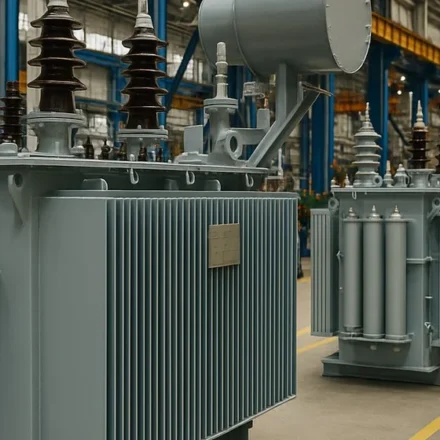
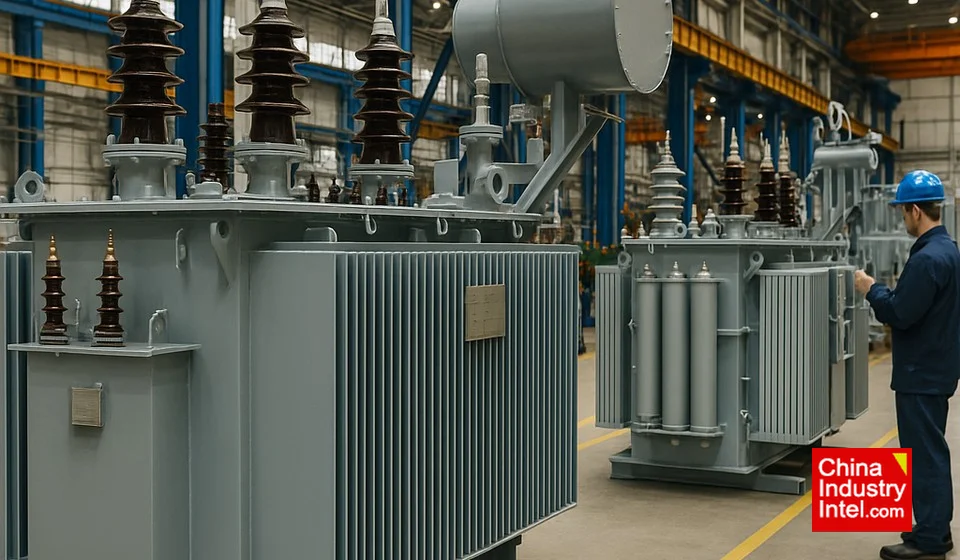
TBEA Co., Ltd. (特变电工), one of China’s Big Three transformer makers, has seen its transformer export business surge 38% year-over-year in 2025-2026. The company’s ultra-high voltage (UHV) transformers — capable of handling 800kV and above — are increasingly specified for major grid interconnection projects in Texas, the Midwest, and the Southwest.
The trade policy tangle
The rise of Chinese transformer exports creates an awkward tension for U.S. policymakers. On one hand, the Biden-era Section 301 tariffs already impose 25% duties on Chinese transformers. Additional tariffs on Chinese electrical equipment are reportedly under consideration. On the other hand, U.S. utilities — including major investor-owned entities like Duke Energy and Southern Company — have warned that restricting Chinese transformer imports would delay grid modernization projects by years and add billions in costs.
“There is no domestic alternative at the scale and speed we need,” one utility procurement executive told Goldman Sachs. “The U.S. transformer manufacturing base atrophied over two decades. Rebuilding it will take a decade.”
TBEA’s global footprint expands
TBEA’s transformer division, headquartered in Changji, Xinjiang, now operates manufacturing facilities in India and Brazil, and has announced plans for a $200 million assembly plant in Mexico — a move widely seen as positioning to serve the North American market while sidestepping direct U.S.-China tariff exposure. The company holds over 1,200 patents related to transformer technology and employs more than 30,000 workers globally.
TBEA’s competitive advantage rests on vertical integration: the company produces its own silicon steel, copper winding, and insulation materials, giving it cost control that fragmented Western supply chains cannot match. Its R&D spending on UHV technology has grown at a 15% CAGR since 2020.
Market data
According to the Goldman Sachs tracker:
- China exported $18.2 billion in transformers and electrical equipment in the 12 months ending Q1 2026
- U.S. imports of Chinese transformers grew 42% year-over-year
- TBEA, Huapeng, and Baoding Tianwei collectively hold approximately 45% market share of China’s transformer exports
- Average selling price per MVA for Chinese large power transformers is $28,000 vs. $42,000 for European equivalents
- Chinese manufacturers now supply 35% of all new U.S. utility transformer installations above 100 MVA
CII Analysis
The Goldman Sachs tracker confirms what we have observed in supply chain data: the U.S. grid modernization boom is structurally dependent on Chinese electrical equipment. While the Trump administration and its successors have repeatedly targeted Chinese imports with tariffs, the power transformer market illustrates the limits of decoupling. Twenty years of underinvestment in U.S. transformer manufacturing capacity — driven by low margins, environmental regulations, and skilled labor shortages — has created a dependency that cannot be unwound quickly.
For investors, the tracker data points to continued strong revenue growth for TBEA and its peers. The key risk is not demand but policy: an outright ban on Chinese transformer imports, while unlikely given utility pushback, would force a painful and costly supply chain reconfiguration. More likely is a gradual tightening of procurement rules — Buy America provisions, cybersecurity requirements, and domestic content mandates — that pushes Chinese manufacturers toward Mexico-based assembly and local partnerships.
Sources: Goldman Sachs China Transformer Export Tracker, U.S. Department of Energy Grid Modernization reports, China Customs export data, TBEA annual reports, Duke Energy and Southern Company regulatory filings.