China Chip Ambitions Reshape Global Semiconductor Industry as Memory Prices Surge
By CII (China Industry Intel) – Contributing Analyst | June 24, 2026
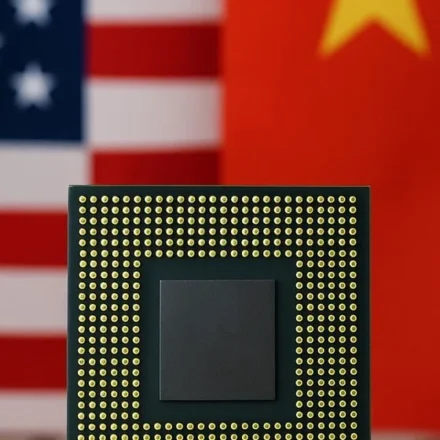
China’s relentless push to build a self-sufficient semiconductor industry is reshaping the global chip landscape, triggering a surge in memory chip prices while simultaneously intensifying the technology rivalry with the United States and its allies. According to a comprehensive analysis by Deutsche Welle, China’s semiconductor ambitions have entered a new phase characterized by tangible manufacturing breakthroughs, aggressive capacity expansion in memory chips, and increasingly sophisticated workarounds to US-led export controls. The convergence of these developments is creating both opportunities and risks for the global semiconductor industry, which finds itself caught between the immense demand of the Chinese market and the geopolitical imperatives driving supply chain decoupling.
China’s semiconductor imports totaled approximately $350 billion in 2025, making chips the country’s single largest import category ahead of crude oil. This extraordinary dependence on foreign semiconductor technology has been a source of vulnerability that Beijing has identified as a top strategic priority. Through its “Big Fund” — the National Integrated Circuit Industry Investment Fund — and related initiatives, China has committed well over $150 billion to domestic semiconductor development, targeting everything from chip design and manufacturing equipment to advanced packaging and materials science. The third phase of the Big Fund, launched in 2024 with an initial capitalization of $47 billion, has focused specifically on addressing the bottlenecks created by US export controls, including lithography equipment, electronic design automation (EDA) software, and advanced manufacturing processes.
The results of this investment are becoming increasingly visible. SMIC, China’s largest contract chipmaker, has made significant progress in manufacturing advanced logic chips despite being cut off from ASML’s extreme ultraviolet (EUV) lithography systems. The company has developed proprietary techniques using deep ultraviolet (DUV) lithography combined with multi-patterning to produce chips at what analysts estimate to be the equivalent of a 7nm-class process node, and there are increasing indications that 5nm-class capabilities may be achievable using similar approaches. While these techniques are more expensive and yield lower than EUV-based manufacturing, they have enabled SMIC to produce advanced processors for Huawei’s smartphones, servers, and telecommunications equipment — a development that shocked industry observers when the Mate 60 Pro launched in 2023 with a SMIC-manufactured Kirin 9000S processor.
Memory Chip Boom: Prices Surge as China Expands Capacity
One of the most significant dimensions of China’s semiconductor push is its impact on the global memory chip market. Chinese memory manufacturers, led by Yangtze Memory Technologies Company (YMTC) in NAND flash and ChangXin Memory Technologies (CXMT) in DRAM, have been expanding production capacity at a pace that is beginning to affect global supply-demand dynamics. At the same time, a broader memory chip upcycle driven by AI-related demand for high-bandwidth memory (HBM), data center expansion, and a recovery in smartphone and PC markets has pushed prices significantly higher across both DRAM and NAND categories.
The memory chip market has historically been characterized by extreme cyclicality, with periods of oversupply and price collapse followed by shortages and price spikes. The current cycle is unusual in that it combines strong demand growth — particularly from AI applications that consume enormous quantities of HBM and NAND storage — with supply constraints that are partly structural rather than purely cyclical. The complexity of manufacturing HBM, which requires stacking multiple DRAM dies using advanced through-silicon via (TSV) technology, has created bottlenecks that even established leaders like SK Hynix and Samsung have struggled to overcome. SK Hynix, which currently dominates the HBM market with an estimated 50% share, has reported that its HBM production capacity is sold out through 2027.
DRAM contract prices rose approximately 25-30% in the first half of 2026 compared to the same period in 2025, while NAND flash prices increased 15-20%. The price increases have been particularly pronounced in enterprise-grade products, where demand from cloud computing providers and AI infrastructure builders has been most intense. For memory chip manufacturers, the price recovery has been a welcome relief after the brutal downturn of 2023, when DRAM prices fell by more than 40% and NAND prices declined by a similar magnitude. Samsung, SK Hynix, and Micron all returned to strong profitability in 2025 and have continued to report improving financial results through the first half of 2026.
China’s memory chip makers are capitalizing on this favorable pricing environment to accelerate their market penetration. YMTC, despite being added to the US Entity List in 2022 and facing restrictions on equipment procurement, has continued to advance its proprietary Xtacking 3D NAND architecture and has reportedly achieved mass production of 232-layer NAND flash, putting it within striking distance of the technology leaders. CXMT, which focuses on DRAM, has been ramping production of DDR4 and LPDDR4X memory and is reportedly developing DDR5 capabilities, though it remains several years behind Samsung and SK Hynix in both technology and scale. The combined output of YMTC and CXMT, while still small relative to the global market (estimated at roughly 6-8% of global NAND supply and 3-4% of DRAM), is growing rapidly and has begun to influence pricing dynamics, particularly in the Chinese domestic market where these companies enjoy home-field advantages in customer relationships and logistics.
| Company | Country | Memory Type | 2025 Market Share | Technology Node (Latest) | Capacity (Wafer Starts/Month) | Entity List Status |
|---|---|---|---|---|---|---|
| Samsung | South Korea | DRAM + NAND | 38% DRAM / 32% NAND | 1b nm DRAM / 300L NAND | ~550K (DRAM) + ~450K (NAND) | No |
| SK Hynix | South Korea | DRAM + NAND | 28% DRAM / 18% NAND | 1b nm DRAM / 238L NAND | ~400K (DRAM) + ~250K (NAND) | No |
| Micron | United States | DRAM + NAND | 23% DRAM / 12% NAND | 1β nm DRAM / 232L NAND | ~380K (DRAM) + ~180K (NAND) | No |
| Kioxia/Western Digital | Japan/US | NAND | 19% NAND (combined) | 218L NAND | ~280K (NAND) | No |
| YMTC | China | NAND | ~6% NAND | 232L NAND (Xtacking 4.0) | ~120K (NAND, estimated) | Yes (2022) |
| CXMT | China | DRAM | ~3% DRAM | DDR4/LPDDR4X (DDR5 in dev.) | ~80K (DRAM, estimated) | Yes (2023) |
Sources: TrendForce Memory Market Analysis Q1 2026, SEMI World Fab Forecast, company disclosures and earnings reports, industry analyst estimates. YMTC and CXMT figures are estimates based on supply chain intelligence; official production data is not publicly disclosed by these companies. Entity List status as of June 2026.
US Export Controls: The Tightening Noose and China’s Workarounds

The US-led export control regime remains the single most significant constraint on China’s semiconductor ambitions. Since October 2022, when the Biden administration unveiled its comprehensive semiconductor export controls, the United States has progressively tightened the restrictions in coordination with allies in the Netherlands, Japan, and South Korea. The controls have evolved from targeting specific companies (Huawei, SMIC) to imposing broad restrictions on the export of advanced chips, manufacturing equipment, electronic design automation software, and even the US-person support services that Chinese chipmakers had relied upon for technical expertise.
The 2025-2026 tightening has been particularly consequential. New rules issued by the Bureau of Industry and Security (BIS) have expanded the definition of “advanced computing” chips subject to export controls, closed loopholes that allowed Chinese entities to access restricted technology through subsidiaries in third countries, and imposed new due diligence requirements on equipment manufacturers to prevent their products from reaching restricted end users through intermediaries. The Dutch government, which controls ASML’s export licenses, has progressively expanded the scope of restricted equipment to include additional DUV lithography systems, while Japan has imposed similar restrictions on Tokyo Electron’s advanced etching and deposition equipment.
Despite these constraints, China’s semiconductor industry has proven more resilient than many analysts initially expected. SMIC’s ability to manufacture advanced chips using DUV multi-patterning — while more expensive and lower-yielding than EUV-based manufacturing — has demonstrated that the US export controls have slowed but not stopped China’s technological progress. Chinese equipment manufacturers, including Naura Technology Group (formerly NAURA), Advanced Micro-Fabrication Equipment Inc. China (AMEC), and ACM Research, have made significant strides in developing domestic alternatives to restricted equipment, particularly in etching, deposition, cleaning, and inspection tools. While Chinese equipment remains several generations behind the leading edge in many categories, the gap is narrowing faster than Western policymakers anticipated.
Huawei has emerged as the central figure in China’s semiconductor self-sufficiency drive. The company, which has been the primary target of US restrictions since its addition to the Entity List in 2019, has fundamentally restructured its technology strategy around vertically integrated chip development. Huawei’s HiSilicon chip design unit has developed a comprehensive portfolio of processors for smartphones (Kirin series), servers (Kunpeng series), AI acceleration (Ascend series), and base station equipment, all manufactured primarily by SMIC. The company has also invested heavily in electronic design automation software development, partnering with Chinese EDA startups like Empyrean Technology to build a domestic chip design ecosystem that can operate independently of US-origin tools from Synopsys and Cadence. Huawei’s 2025 annual report showed R&D spending of approximately $23 billion, roughly 22% of revenue, with semiconductor-related development representing one of the largest single categories of investment.
The ASML/EUV Gap: China’s Biggest Semiconductor Challenge

While China has made impressive progress across many dimensions of semiconductor manufacturing, the gap in lithography technology — particularly ASML’s extreme ultraviolet systems — remains the most significant barrier to catching up with the cutting edge. ASML’s EUV lithography systems, which use 13.5nm wavelength light to pattern features smaller than 7nm, represent the culmination of decades of research and an extraordinarily complex global supply chain. No other company in the world has successfully commercialized EUV lithography, and China’s efforts to develop domestic alternatives face immense technical and engineering challenges.
China’s domestic lithography program, centered at Shanghai Micro Electronics Equipment Group (SMEE) and supported by research at the Chinese Academy of Sciences and multiple universities, has made incremental progress but remains far from EUV capabilities. SMEE’s most advanced production system is reportedly capable of 90nm resolution with potential extension to 28nm using multi-patterning, placing it roughly 15-20 years behind ASML’s leading edge. There are reports that Chinese researchers are working on alternative approaches to advanced lithography, including directed self-assembly (DSA) techniques, nanoimprint lithography, and even novel particle-based lithography concepts, but none of these have demonstrated commercial viability for high-volume manufacturing at leading-edge nodes.
The EUV gap creates a structural ceiling on China’s semiconductor ambitions. While SMIC has demonstrated that DUV multi-patterning can produce chips at roughly the 7nm node, this approach becomes exponentially more difficult and expensive at smaller geometries. The transition from 7nm to 5nm and eventually 3nm requires EUV for economic viability at scale; attempting to achieve equivalent results with DUV would require so many patterning steps that yields would collapse and costs would become prohibitive. This means that even if China succeeds in developing competitive chips at the 7nm level, it will struggle to keep pace as the industry advances to 3nm, 2nm, and beyond — nodes that TSMC and Samsung are already commercializing or developing.
This dynamic has created a bifurcated global semiconductor industry, in which leading-edge logic chips (below 7nm) are produced almost exclusively in Taiwan and South Korea, while China focuses on building competitive capabilities in the “mature node” space (28nm and above) and in specialized areas like memory, power semiconductors, and image sensors. This division of labor may prove stable for several years, but it carries significant risks for both sides. For China, dependence on imported advanced chips leaves its technology sector vulnerable to supply disruptions. For the West and its allies, China’s growing dominance in mature-node chip production — which accounts for the vast majority of semiconductors by volume — creates its own dependencies and vulnerabilities, particularly in industries like automotive, industrial equipment, and defense systems that rely heavily on mature-node chips.
Global Industry Reconfiguration: The New Semiconductor Map
China’s semiconductor push, combined with the US-led effort to build resilient chip supply chains, is driving the most significant reconfiguration of the global semiconductor industry since its inception. The industry that emerged over the past four decades was built on the principle of global efficiency: design in the United States, manufacture in Taiwan and South Korea, assemble in Malaysia and Vietnam, and consume everywhere. That model is now being replaced by one centered on regional self-sufficiency and geopolitical alignment, with profound implications for costs, innovation, and the structure of the global technology industry.
The most visible manifestation of this restructuring is the wave of new semiconductor fabrication facilities being built worldwide. The United States, through the CHIPS and Science Act, has catalyzed over $200 billion in private semiconductor investments, with major projects from TSMC (Arizona), Samsung (Texas), Intel (Ohio and Arizona), and Micron (New York). Europe has attracted similar investments, including TSMC’s joint venture fab in Dresden, Intel’s planned facility in Magdeburg (now delayed), and STMicroelectronics’ expanded operations in Italy and France. Japan has seen a renaissance in its semiconductor industry, with TSMC’s Kumamoto fab, Rapidus’s advanced logic venture in Hokkaido, and major investments from Kioxia and Micron.
China, meanwhile, is building its own parallel semiconductor ecosystem. The country now has over 50 active wafer fabrication facilities, more than any other country, with at least 20 additional fabs under construction or in planning. The majority of this capacity is focused on mature nodes (28nm and above) and memory chips, but SIA (Semiconductor Industry Association) data shows that China’s share of global semiconductor manufacturing capacity has risen from approximately 15% in 2020 to over 22% in 2025, with projections suggesting it could reach 28-30% by 2030. This capacity expansion, combined with the country’s growing capabilities in chip design and equipment manufacturing, is transforming China from a semiconductor consumer into an increasingly self-sufficient semiconductor producer — even if it remains dependent on foreign technology for the most advanced chips.
The duplication of semiconductor supply chains across multiple regions comes at an enormous cost. Building a single advanced logic fab costs $20-30 billion, and the industry is now building redundant capacity in the United States, Europe, Japan, and China that would not be economically justified in a purely efficiency-driven market. The Semiconductor Industry Association estimates that a full bifurcation of the global chip industry into separate US-aligned and China-aligned ecosystems would increase chip costs by 35-65% and reduce global semiconductor revenue by $150-200 billion annually — costs that would ultimately be borne by consumers and businesses worldwide in the form of more expensive electronics, slower innovation, and reduced availability of advanced technology.
For memory chips, the implications of this restructuring are particularly acute. The memory market has historically been a commodity business where scale, efficiency, and capital access determine competitive success. The emergence of YMTC and CXMT as credible competitors, combined with the broader US-China technology decoupling, threatens to fragment this market in ways that could increase price volatility and reduce the industry’s historical ability to manage supply-demand cycles through coordinated capacity adjustments. The current price surge in memory chips, while driven primarily by AI demand, may be a preview of a more structurally volatile future in which geopolitical considerations increasingly override pure market economics.
Sources
- Deutsche Welle — China chip ambitions reshape global semiconductor industry (2026)
- TrendForce — DRAM and NAND Flash Market Analysis Q1 2026
- SEMI — World Fab Forecast Report 2026: Global Semiconductor Capacity Expansion
- Semiconductor Industry Association (SIA) — The Cost of Semiconductor Decoupling: 2026 Impact Assessment
- Reuters — SMIC advances toward 5nm chip production despite US curbs (2026)
- Huawei — 2025 Annual Report: Investment in Semiconductor R&D and HiSilicon Progress
- ASML — EUV Lithography Technology Overview and Export Control Compliance
- Nikkei Asia — China’s YMTC and CXMT gain ground in global memory chip market (2026)
- US Bureau of Industry and Security — Advanced Computing and Semiconductor Export Controls (October 2022, updated 2025-2026)
- Center for Strategic and International Studies (CSIS) — China’s Semiconductor Advances Despite Export Controls (2026)