China Rare Earth Dominance Exposed by Export Restrictions
China’s rare earth export restrictions, imposed in April as retaliation against U.S. tariffs, have exposed a vulnerability that Western governments have talked about for a decade but done almost nothing to fix. The controls disrupted production at automakers, defense contractors, and electronics manufacturers worldwide, and even with the new U.S.-China trade framework calling for expedited export licenses, the underlying dependency remains.
The numbers tell the story
China produces about 70% of the world’s rare earth minerals — a group of 17 elements used in everything from smartphone screens to missile guidance systems. More critically, China controls roughly 90% of the processing capacity needed to turn those minerals into usable magnets, phosphors, and catalysts.
When Beijing imposed export licensing requirements on seven rare earth elements in April, the effects were immediate. Ford temporarily halted production at a plant in Michigan due to magnet shortages. Suzuki paused a motorcycle assembly line in Japan. Defense contractors in the U.S. and Europe scrambled to secure alternative supplies, only to find that alternatives barely exist at scale.
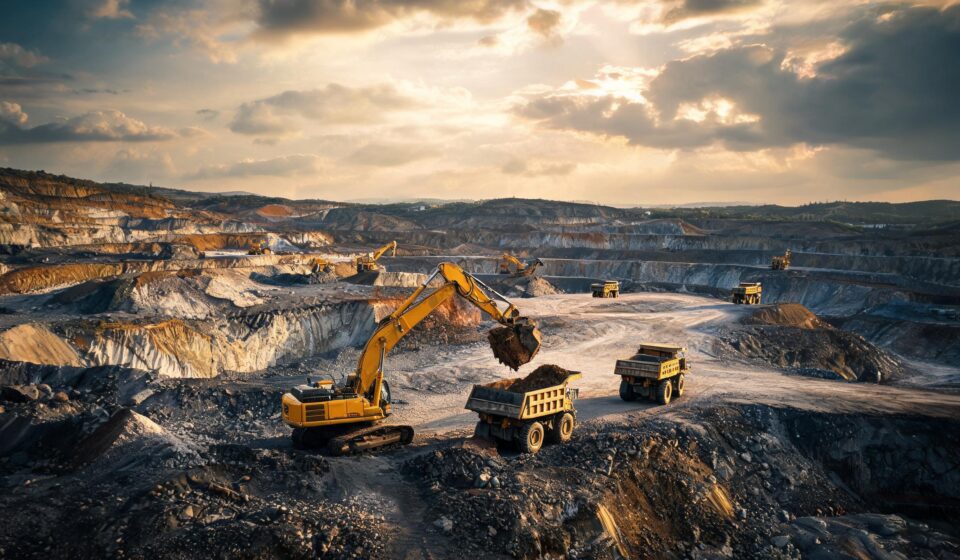
The U.S. has one active rare earth mine — MP Materials’ Mountain Pass facility in California — which produces raw ore but ships most of it to China for processing. Lynas Rare Earths in Australia is the largest non-Chinese processor, but its capacity covers only a fraction of global demand.
The trade deal doesn’t solve this
The U.S.-China trade framework announced on June 12 includes a commitment from China to “expedite” rare earth export license applications. That’s better than nothing, but it doesn’t change the structural problem: China can turn the taps on or off at will.
“An export license is still an export license,” said a commodities analyst at Wood Mackenzie. “Beijing retains the ability to slow-walk approvals, impose quotas, or revoke licenses entirely. The dependency doesn’t go away because there’s a framework.”
China’s Ministry of Commerce has emphasized that rare earth exports remain subject to national security review, a standard that Beijing can interpret broadly. During previous trade disputes, China has used similar mechanisms to restrict exports of graphite, gallium, and germanium — all critical materials for technology manufacturing.
The West is trying to catch up
Several projects are underway to reduce the dependency, but they take years to develop. The U.S. Department of Defense has invested over $400 million in domestic rare earth processing since 2022, including grants to MP Materials and a new facility being built by Lynas in Texas.
The European Union launched its Critical Raw Materials Act in 2023, setting targets for domestic mining and processing. But progress has been slow — permitting a new mine in Europe typically takes 10-15 years, and environmental opposition is fierce.
Japan has been the most aggressive in diversifying. The country invested heavily in rare earth recycling after China briefly cut off exports during a 2010 dispute over the Senkaku Islands. Japanese companies now recover significant quantities of rare earths from electronics waste, though recycling alone can’t meet industrial demand.
What businesses are doing
Companies caught in the middle are hedging their bets. Some automakers are redesigning motors to use fewer rare earths — Tesla has shifted to motors that don’t require rare earth magnets in some models. Others are signing long-term supply agreements with non-Chinese producers, even at higher prices.
“We’ve been talking about rare earth dependency for 15 years,” said an executive at a U.S. defense contractor who requested anonymity. “Every time China restricts exports, there’s a panic, some investments get made, and then prices stabilize and everyone forgets. Maybe this time is different, but I’m not holding my breath.”
The bigger picture
The rare earth issue is part of a broader pattern in U.S.-China economic relations: Washington wants to decouple from Beijing in strategic sectors, but the depth of existing supply chains makes decoupling slow, expensive, and politically difficult.
China’s dominance in rare earths didn’t happen by accident. Beijing invested heavily in the sector for decades, often absorbing losses on mining and processing operations that Western companies couldn’t justify economically. The result is a supply chain advantage that will take years — and billions of dollars — to erode.
For now, the trade framework offers temporary relief. But until Western nations build their own processing capacity, China retains a powerful lever in any future trade dispute.