Iran Conflict Disrupts China’s Short-Term Supply Chain as Industrial Data Weakens
Geopolitical tensions in the Middle East hit China’s economy through energy and shipping channels
China’s industrial output data for April 2026 showed unexpected weakness, with value-added industrial production growing 4.8% year-on-year — below the 5.3% consensus and down from 5.9% in March. The slowdown, according to analysis published by the US-China Economic and Security Review Commission on June 9, is partly attributable to the Iran conflict’s impact on energy costs and shipping routes.
China imports roughly 5.5 million barrels of oil per day from the Middle East, with Iran, Saudi Arabia, Iraq, and the UAE as the primary sources. The conflict has increased shipping insurance premiums by 300-400% for tankers transiting the Strait of Hormuz, adding roughly $8-12 per barrel to China’s crude import costs.
Manufacturing investment slows
Manufacturing fixed asset investment growth decelerated to 6.1% in April from 8.7% in March, suggesting that some companies are pausing expansion plans amid geopolitical uncertainty. The decline was most pronounced in export-oriented sectors: electronics manufacturing investment fell 3.2% month-on-month, while chemical industry investment dropped 4.1%.
“The Iran situation is a short-term supply shock layered on top of long-term structural weakness,” wrote the USCC analysts. “China’s economy was already dealing with deflationary pressures, a property market downturn, and weak consumer confidence. The energy cost spike makes things worse.”
Shipping route disruptions
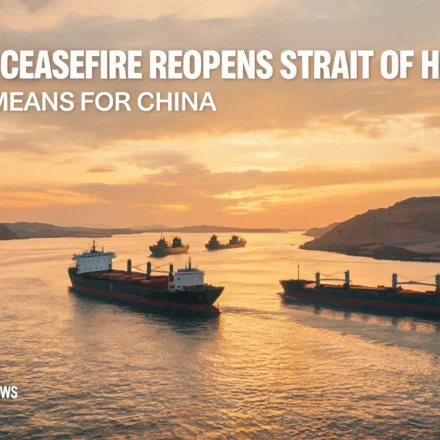
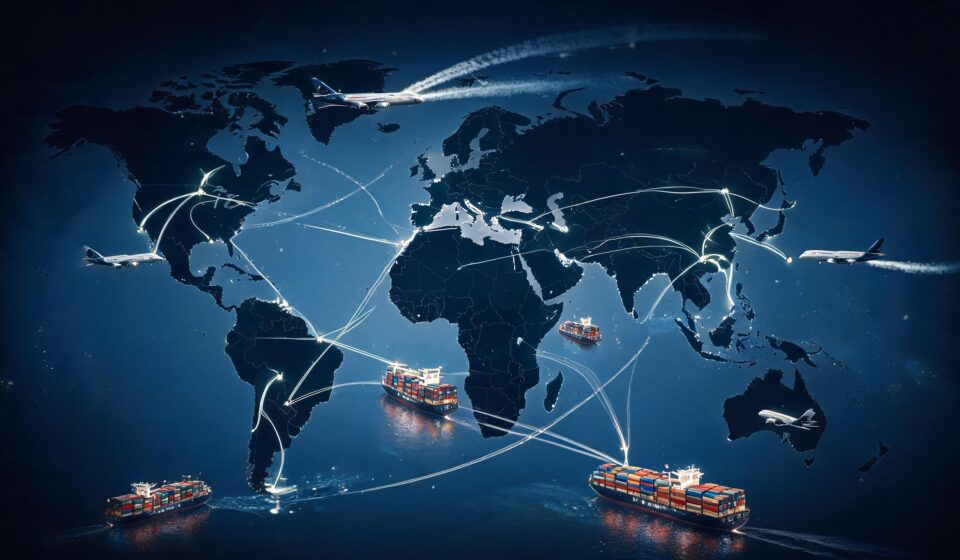
The Red Sea shipping disruptions, which began in late 2023 with Houthi attacks on commercial vessels, have now persisted for over two years. Container shipping rates from Shanghai to Rotterdam remain 2-3x above pre-disruption levels. The Iran conflict adds a new dimension: some shipping lines are avoiding the Strait of Hormuz entirely, rerouting through longer and more expensive paths.
COSCO Shipping, China’s largest container line, has deployed 15 additional vessels on alternative routes and increased its Asia-Europe capacity by 12% to compensate. But the adjustments add 7-10 days to transit times and increase fuel costs.
Government response
China’s State Council held an emergency economic meeting on May 28 to address the supply chain disruptions. Measures announced include:
- Strategic petroleum reserve releases to stabilize domestic fuel prices
- Subsidies for shipping companies rerouting around conflict zones
- Accelerated infrastructure spending to support domestic demand
- Diplomatic engagement with Iran and Gulf states to protect shipping lanes
The People’s Bank of China also cut the reserve requirement ratio by 50 basis points on June 1, releasing approximately 1 trillion yuan in liquidity — a move widely interpreted as insurance against the economic impact of the geopolitical situation.
Sources
- US-China Economic and Security Review Commission, China Bulletin, June 9, 2026
- National Bureau of Statistics, Industrial Production data, May 2026
- People’s Bank of China, RRR announcement, June 1, 2026