How China’s Supplier Ecosystem Is Evolving Beyond Low-Cost Manufacturing
Chinese suppliers are moving up the value chain — and taking market share from Western competitors
The image of Chinese suppliers as low-cost, low-quality manufacturers is increasingly outdated. In 2026, Chinese companies dominate not just in volume but in technology and innovation across multiple supply chain segments — from precision components to advanced materials to industrial software.
A study by McKinsey Global Institute, published in April 2026, found that China’s share of global value-added manufacturing (as opposed to gross output) rose from 25% in 2018 to 31% in 2025. The increase reflects a shift from assembly and packaging toward higher-value activities like design, R&D, and precision manufacturing.
Where Chinese suppliers lead
In several categories, Chinese suppliers have moved from “alternative source” to “primary source” for global manufacturers:
- EV battery materials: Chinese companies control 85%+ of global cathode and anode production
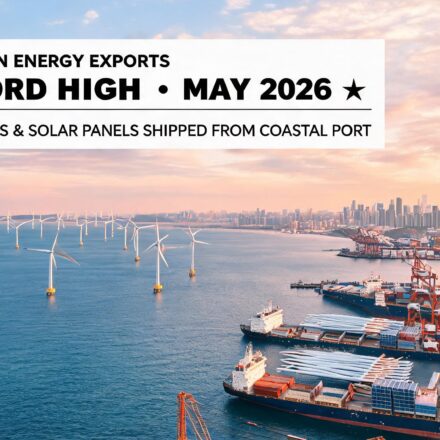
- Solar manufacturing equipment: Chinese tool makers supply 70%+ of global production lines
- Industrial robots: Chinese brands captured 52% of the domestic market in 2025, up from 35% in 2020
- Electric motors and drives: Companies like Inovance Technology and Estun are displacing Siemens and ABB in Asian markets
The quality revolution
Chinese suppliers have invested heavily in quality management. ISO 9001 certifications in China exceeded 800,000 in 2025 — more than any other country. More importantly, Chinese companies are increasingly pursuing IATF 16949 (automotive), AS9100 (aerospace), and other sector-specific quality standards.
“Five years ago, we wouldn’t consider Chinese suppliers for safety-critical components,” said a sourcing director at a European aerospace company. “Now we’re qualifying multiple Chinese firms for non-structural parts. The quality has improved dramatically.”
Supplier financing and ecosystem building
Large Chinese manufacturers are building supplier ecosystems that provide financing, technology transfer, and quality support to their upstream partners. CATL, BYD, and Huawei all operate supplier development programs that help smaller Chinese firms meet global quality standards.
This ecosystem approach creates a virtuous cycle: as anchor companies grow, they pull their suppliers up the value chain, which in turn makes the anchor companies more competitive.
Implications for global sourcing
For Western companies, the evolution of Chinese suppliers means that sourcing decisions are no longer simply about cost. Chinese suppliers now offer competitive quality, faster lead times, and greater willingness to customize — often at prices still 20-40% below Western alternatives.
The risk is dependency. As Chinese suppliers become more capable, the switching cost to non-Chinese alternatives increases. Companies that reduce their China exposure may find that the alternatives are more expensive, less capable, or both.
Sources
- McKinsey Global Institute, “China’s Manufacturing Value Chain Evolution,” April 2026
- Zignify, “China Manufacturing & Sourcing Trends 2026”
- China Machinery Industry Federation, 2025 Annual Report