
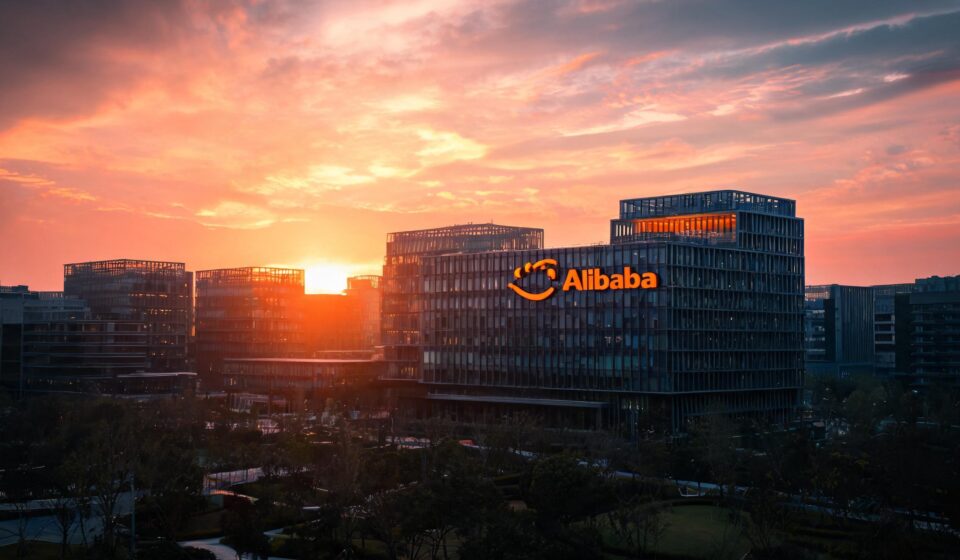
Pentagon Adds Alibaba, Baidu, BYD and Nio to Chinese Military-Linked List
Pentagon Adds Alibaba, Baidu, BYD and Nio to Chinese Military-Linked List
📍 Washington, D.C.
By China Industry Intel Staff
What Happened
On June 8, 2026, the Pentagon released its updated Section 1260H Chinese Military Companies (CMC) List, expanding the roster from roughly 130 entities to 188. The most consequential additions are Alibaba Group Holding Ltd., Baidu Inc., BYD Co. Ltd., and Nio Inc. — companies with significant U.S. operations, publicly traded American Depositary Receipts, and deep integration into global supply chains.
The update, issued by the Office of the Deputy Secretary of Defense under the authority of Section 1260H of the National Defense Authorization Act for Fiscal Year 2021 (Public Law 116-283), took the defense and technology industries by surprise — though not entirely. The Pentagon had attempted to publish this same expansion twice before, on February 13 and February 15, 2026, only to retract the document from the Federal Register within hours each time without public explanation. The June 8 release is the finalized version.
Other notable additions include Unitree Robotics, a Hangzhou-based humanoid robot maker; WuXi AppTec, a pharmaceutical contract research firm; TP-Link, the world’s largest Wi-Fi router manufacturer by unit volume; lidar companies Hesai Group and RoboSense; display panel maker BOE Technology; battery manufacturers CALB and EVE Energy; and solar producers JA Solar and Trina Solar. Memory chipmakers ChangXin Memory Technologies (CXMT) and Yangtze Memory Technologies (YMTC) — briefly removed during the February draft — were reinstated.
The Pentagon cited “military-civil fusion” as the basis for each designation. Under the statute, a Chinese military company is any entity that is owned, controlled by, or affiliated with the People’s Liberation Army or China’s Central Military Commission, or that contributes to the PRC’s defense-industrial base through dual-use technology development, government industrial subsidies, or affiliation with the Ministry of Industry and Information Technology (MIIT) or the State-owned Assets Supervision and Administration Commission (SASAC).
“Washington is no longer targeting discrete defense contractors but systematically reclassifying China’s civilian technology stack — from cloud computing and electric vehicles to biotech and memory chips — as components of a military-industrial infrastructure.”
— China Business Insider analysis, June 9, 2026
Why It Matters
The Section 1260H designation is not a sanction. It does not freeze assets, prohibit commercial transactions, or impose export controls on its own. But its consequences cascade through two statutory enforcement timelines that make the label far more than symbolic.
Phase 1 — June 30, 2026: Under Section 805 of the FY 2024 NDAA, the Department of Defense is barred from entering into new contracts, or renewing or extending existing contracts, with any entity on the 1260H list and its controlled subsidiaries. This prohibition takes effect at the end of this month.
Phase 2 — June 30, 2027: The ban extends to indirect procurement. The Pentagon will be prohibited from purchasing end products or services produced or developed by listed entities through third-party contractors. Prime defense contractors will be required to conduct expanded supply-chain diligence to certify compliance.
There is a further downstream risk. Treasury’s Office of Foreign Assets Control (OFAC) uses the 1260H list as an input for its Non-SDN Chinese Military-Industrial Complex Companies (NS-CMIC) list. Once an entity moves from 1260H to CMIC, U.S. persons are prohibited from purchasing or selling that company’s publicly traded securities. Historically, the lag between 1260H listing and CMIC designation has been six to eighteen months.
“BABA, BIDU, and BYDDY are now on the upstream list. Whether they move downstream to CMIC determines the harder restriction. Forced-selling from U.S. pension funds and endowments is estimated at $4–7 billion over six to twelve months.”
— Drillr terminal research note, June 9, 2026
Within hours of the June 8 release, Alibaba, Baidu, Nio, and WuXi AppTec each issued statements disputing the designations and pledging to pursue all available remedies, including litigation. Xiaomi’s 2021 case provides precedent: the smartphone maker sued the Pentagon, won a reversal in U.S. District Court for the District of Columbia, and was removed from the list within three months.
Key Players
| Company | Sector | U.S. Ticker | Why Designated | Response |
|---|---|---|---|---|
| Alibaba Group | Cloud / E-commerce | BABA (NYSE) | MIIT affiliation; cloud infrastructure for government entities | Disputed; pledged legal action |
| Baidu Inc. | Search / AI | BIDU (NASDAQ) | AI and autonomous driving R&D in military-civil fusion zones | Disputed; pledged legal action |
| BYD Co. | Electric Vehicles / Batteries | BYDDY (OTC) | Government subsidies; dual-use battery technology | No public comment |
| Nio Inc. | Electric Vehicles | NIO (NYSE) | Autonomous driving and battery systems deemed dual-use | Disputed designation |
| Unitree Robotics | Humanoid Robots | Private | Robotics R&D with potential military applications | No public comment |
| WuXi AppTec | Biotech / CRO | WXH (NYSE) | Biotech dual-use; MIIT-affiliated enterprise status | Disputed; pledged legal action |
| CXMT / YMTC | Memory Chips | Private | Semiconductor self-sufficiency; defense supply chain | Reinstated after brief Feb. removal |
| CATL | Batteries | Private | State subsidies; dual-use energy storage | Already listed |
Supply Chain Impact
The timing matters. With the Phase 1 contracting ban taking effect on June 30, 2026, defense primes including Lockheed Martin, Raytheon, Northrop Grumman, and General Dynamics face immediate compliance obligations. Any existing subcontract that involves a listed entity — or a subsidiary controlled by one — must be reviewed and, where necessary, unwound or replaced.
The sectors most exposed are those where Chinese manufacturers dominate global production:
Batteries and Energy Storage: BYD and CATL together command roughly 55% of the global EV battery market. Defense applications for lithium iron phosphate (LFP) batteries — including unmanned ground vehicles, portable power systems, and naval auxiliary units — now face sourcing restrictions. Alternative suppliers (Samsung SDI, LG Energy Solution, Panasonic) operate at near-capacity and cannot absorb displaced demand within 12 months.
Lidar and Sensors: Hesai and RoboSense are the two largest lidar suppliers globally by shipment volume. Their inclusion disrupts autonomous vehicle programs and perimeter-surveillance systems where DoD has active evaluation contracts. U.S.-based alternatives such as Luminar and Velodyne remain more expensive and lower-volume.
Networking Equipment: TP-Link holds approximately 38% of the U.S. consumer Wi-Fi router market by units sold. While the Phase 1 ban targets DoD procurement only, the reputational signal will accelerate corporate and government agency migration to alternatives from Cisco, Netgear, and Ubiquiti.
Display Panels: BOE Technology is the world’s largest LCD and OLED panel maker. Its designation adds friction to defense supply chains for ruggedized displays, cockpit instrumentation, and medical imaging equipment sourced through intermediary manufacturers.
Pharmaceutical Outsourcing: WuXi AppTec is the largest contract research organization serving U.S. biopharma companies from China. The designation will prompt accelerated reshoring of preclinical and chemistry services to Catalent, Charles River Laboratories, and Samsung Biologics — at higher cost.
Procurement officers at tier-one defense contractors contacted by Caixin Global on June 9 described the compliance burden as “significant but manageable” for direct contracts, noting that most prime contracts already exclude Chinese-origin components under prior NDAA restrictions. The Phase 2 indirect procurement ban, however, was characterized as “a much heavier lift” because it requires tracing components through multi-tier subcontractor networks.
Market Signal
🐂 Bull Case
Xiaomi precedent holds. Alibaba, Baidu, and WuXi AppTec file suit in D.C. district court within 60 days. At least two of the four major additions are removed by Q4 2026. OFAC does not advance any of the four to the CMIC list. ADR selling pressure is limited to $2–3B, and shares recover to pre-announcement levels by year-end. U.S.-China trade talks in the fall produce a partial delisting framework.
🐻 Bear Case
OFAC moves BABA, BIDU, and BYDDY to the CMIC list within 12 months. U.S. institutional holders — state pension funds in California, Texas, and Florida; university endowments at Harvard, Yale, and Stanford — are forced to liquidate an estimated $4–7B in positions. BABA ADR falls below $90. Allies (EU, UK, Japan) adopt parallel restrictions. BYD’s planned U.S. market entry is blocked indefinitely. Supply-chain reshoring costs add 15–25% to defense procurement budgets for affected components.
📊 Base Case
Legal challenges produce mixed results — one or two removals, but the core list holds. OFAC designates Alibaba but not BYD or Baidu over the next 12 months. BABA trades in a $95–$115 range through Q1 2027. Defense primes complete Phase 1 compliance by June 30 without major disruptions. Phase 2 compliance requires 18-month supply chain audits and partial vendor substitution. Market impact is absorbed gradually as investors price in the new regulatory baseline.
What to Watch
Three near-term catalysts will determine whether this designation hardens into lasting financial restriction or fades into regulatory noise.
First, litigation. If Alibaba or Baidu files for injunctive relief in the U.S. District Court for the District of Columbia — as Xiaomi did successfully in January 2021 — the pace and outcome of that case will set the template for the entire cohort. Watch for filings by mid-August 2026.
Second, OFAC’s next CMIC update. The Treasury list is updated on its own schedule, but OFAC has historically moved within 6–18 months of a 1260H designation. A rapid CMIC addition of any of the four major names would signal a hardening posture and trigger the securities-purchase prohibition that hits ADR holders directly.
Third, allied coordination. The EU, UK, and Japan have no statutory equivalent to the 1260H list, but each has been under U.S. pressure to adopt parallel screening mechanisms since 2024. If the European Commission or the UK’s Investment Security Unit moves to mirror the June 8 designations, the commercial isolation of listed firms accelerates sharply.
China’s Ministry of Foreign Affairs condemned the updated list on June 9, calling it “an abuse of state power to suppress Chinese enterprises under the pretext of national security” and warning that Beijing would “take necessary measures to safeguard the legitimate rights and interests of Chinese companies.” The statement did not specify what retaliatory actions, if any, are under consideration.
The expanded 1260H list represents the broadest single assertion to date that China’s civilian technology sector is inseparable from its military apparatus. Whether that assertion survives judicial scrutiny — and whether it triggers the financial cascade that CMIC designation would bring — is the defining question for U.S.-China technology policy through 2027.
Disclaimer: This article is for informational purposes only and does not constitute investment advice. Market scenarios presented are analytical frameworks, not predictions. China Industry Intel has no position in any securities mentioned.


Leave a Reply
You must be logged in to post a comment.









[…] Pentagon Adds Alibaba, Baidu, BYD and Nio to Chinese Military-Linked List […]
[…] numbers are substantial. The Pentagon’s addition of Alibaba, Baidu, BYD, and Nio to the military-linked list affects companies with a combined market capitalization exceeding $500 billion. US institutional […]