
Alibaba Bids $1.5 Billion for Pupu Supermarket in China’s Instant Retail Power Play
Alibaba Bids $1.5 Billion for Pupu Supermarket in China’s Instant Retail Power Play
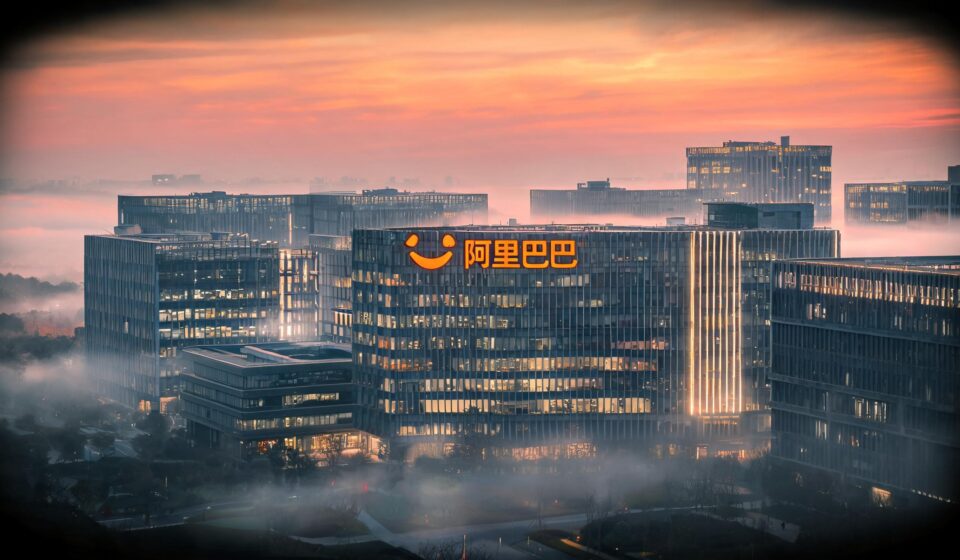
On June 12, 2026, Bloomberg reported that Alibaba Group (NYSE: BABA) is bidding approximately $1.5 billion to acquire Pupu Supermarket (朴朴超市), a Fujian-based instant grocery delivery platform. The offer more than doubles the $600 million proposal from Gaoshang Retail, backed by private equity firm DCP Capital, signaling that China’s instant retail war has entered a decisive new phase.
Neither Alibaba nor Pupu has publicly confirmed the bid. However, according to people familiar with the matter cited by Bloomberg, Alibaba’s core management team views instant retail as a “must-win” strategic priority for 2026. The deal, if completed, would be the second major consolidation in China’s front-end warehouse sector this year, following Meituan’s (HKEX: 3690) $717 million acquisition of Dingdong Maicai’s China operations in February 2026.
What Happened — The Bid and the Bidding War
Alibaba’s $1.5 billion bid emerged just weeks after multiple Chinese tech giants were reported to be courting Pupu. In late May 2026, market rumors circulated that Alibaba, Meituan, and JD.com (NASDAQ: JD) were all in talks to acquire the platform, with Pupu’s valuation estimated between $2 billion and $5 billion, according to Chinese media outlet LatePost.
Both JD.com and Meituan subsequently denied active acquisition discussions, according to statements reported by 36Kr on June 12, 2026. Pupu itself issued only a brief response stating it had “no additional information to share at this time,” according to Sohu Finance.
The $1.5 billion price tag represents a significant premium. Gaoshang Retail’s earlier $600 million offer — backed by DCP Capital, a firm founded by former KKR Asia head David Liu — set the floor. But Alibaba’s bid more than doubles that figure, reflecting both the strategic value of Pupu’s infrastructure and the competitive pressure among China’s three largest e-commerce platforms.
According to Huxiu’s analysis published on June 12, the premium is driven by scarcity: Pupu is the last remaining independent, profitable front-end warehouse operator in China’s instant retail sector. Daily Fresh collapsed in 2022, Dingdong Maicai sold to Meituan in February 2026, and Pupu stands alone as the final high-quality independent asset.
Why It Matters — The Last Independent Front-End Warehouse
Pupu’s value lies not in its brand recognition — the company operates in only 9 cities and is virtually unknown outside its core markets — but in its operational model, which has achieved what most of its competitors could not: sustained profitability.
In 2024, Pupu generated approximately 30 billion yuan ($4.2 billion) in revenue with a gross margin of 22.5% and a fulfillment cost ratio of just 17.5%, according to data cited by Huxiu. This makes it the only independently profitable front-end warehouse operator in China — a remarkable distinction in a sector that destroyed billions in capital during the subsidy wars of 2020-2023.
The company’s secret is its “large warehouse” model. While most front-end warehouse operators use facilities of 300-500 square meters with 3,000 SKUs, Pupu operates warehouses of 800-1,000 square meters stocking 6,000-8,000 SKUs. This allows higher average order values and better unit economics, according to the company’s operational data.
In its core markets of Fuzhou and Xiamen, Pupu has achieved over 70% household penetration. Fuzhou alone generates more than 10 billion yuan in annual sales — a density that creates formidable competitive moats through logistics efficiency and customer habit formation, as noted by Ling Shou Media in its June 12 analysis.
Key Players — The Companies Reshaping China’s Instant Retail
| Company | Role | Latest Move | Market Position |
|---|---|---|---|
| Alibaba (NYSE: BABA) | Bidder | $1.5B bid for Pupu (June 2026) | Strong in East China via Hema, weak in South China |
| Pupu Supermarket | Target | Last profitable independent player | Dominant in Fujian, 9 cities, 30B yuan revenue |
| Meituan (HKEX: 3690) | Competitor | Acquired Dingdong for $717M (Feb 2026) | Market leader in instant retail nationwide |
| JD.com (NASDAQ: JD) | Observer | Denied acquisition talks (June 2026) | Strong in electronics, weaker in fresh grocery |
| Gaoshang Retail | Counter-bidder | $600M offer backed by DCP Capital | Traditional retail seeking digital transformation |
| Dingdong Maicai | Acquired | Sold to Meituan for $717M | Was #2, now part of Meituan ecosystem |
Alibaba Group Holding Limited
Alibaba (NYSE: BABA), headquartered in Hangzhou, Zhejiang, is China’s largest e-commerce company with a market capitalization of approximately $280 billion as of June 2026. The company’s core commerce segment generated revenue of 941 billion yuan ($131 billion) in fiscal year 2025. Under CEO Eddie Wu’s leadership since September 2023, Alibaba has restructured into six business groups and intensified its focus on AI integration and instant retail. The company operates Hema (盒马) fresh grocery stores and the Taobao Flash Purchase (淘宝闪购) instant delivery service. In Q1 2026, Alibaba’s local services segment — which includes instant retail — grew 12% year-over-year, though it still trails Meituan in overall market share.
Pupu Supermarket (朴朴超市)
Founded in 2016 and headquartered in Fuzhou, Fujian Province, Pupu Supermarket operates a front-end warehouse model for instant grocery delivery. The company serves 9 cities across Fujian, Guangdong, and other southern Chinese provinces, with over 70% household penetration in its core Fuzhou and Xiamen markets. Pupu achieved full-year profitability in 2024 — the only independent player in the sector to do so — with approximately 30 billion yuan in revenue, a 22.5% gross margin, and a 17.5% fulfillment cost ratio. The company has not raised external funding since its Series C round, relying on operational cash flow for growth. Pupu’s founder and CEO is Song Bingji (宋冰基), who has maintained a disciplined expansion strategy focused on regional density rather than national coverage.
Supply Chain Impact — Upstream and Downstream
Upstream: Pupu’s large-warehouse model requires deep supplier relationships. The company works directly with over 2,000 suppliers across fresh produce, packaged goods, and household essentials. If acquired by Alibaba, these suppliers would gain access to Alibaba’s broader distribution network, potentially reducing procurement costs by 5-8% through economies of scale, according to industry estimates cited by Huxiu.
Midstream: Pupu operates approximately 400 front-end warehouses across its 9 cities. Each warehouse serves a 3-kilometer radius with delivery times under 30 minutes. Integrating these into Alibaba’s logistics network — particularly Cainiao’s infrastructure — could create significant operational synergies, though the large-warehouse model differs structurally from Alibaba’s existing Hema format.
Downstream: For consumers, consolidation could mean faster delivery and broader product selection. However, reduced competition may also lead to higher prices over time. In Fuzhou, where Pupu holds near-monopoly market share, consumers currently benefit from intense subsidy competition — a dynamic that would likely diminish post-acquisition.
Key bottleneck: The critical constraint is South China market access. Alibaba’s Hema chain is concentrated in the Yangtze River Delta (Shanghai, Jiangsu, Zhejiang), while its presence in Fujian and Guangdong remains weak. Pupu’s infrastructure would instantly fill this gap, giving Alibaba a dominant position in one of China’s wealthiest consumer regions.
Market Signal — Three Scenarios
Bull case (30% probability): Alibaba completes the acquisition at $1.5 billion or higher. Pupu’s model is integrated with Taobao Flash Purchase, creating a powerful South China instant retail platform. Alibaba’s market share in instant retail jumps from approximately 15% to 25%, directly challenging Meituan’s leadership. Alibaba’s stock rises 5-8% on the news.
Base case (50% probability): The deal closes at $1.2-1.5 billion after regulatory review. Integration takes 12-18 months. Pupu maintains operational independence while gradually connecting to Alibaba’s ecosystem. South China market share shifts modestly in Alibaba’s favor. Neutral impact on Alibaba’s stock.
Bear case (20% probability): China’s anti-monopoly regulators block or impose conditions on the deal, given that Meituan’s Dingdong acquisition is still pending regulatory approval. Alternatively, a competing bid from JD.com or another player emerges, driving the price above $2 billion and reducing the deal’s financial attractiveness for Alibaba.
Key indicators to watch:
- China’s State Administration for Market Regulation (SAMR) response to the Meituan-Dingdong deal (expected Q3 2026) — a precedent for Pupu
- Pupu’s Q2 2026 financial performance — profitability sustainability under competitive pressure
- Alibaba’s local services segment earnings in August 2026 — management commentary on instant retail strategy
- Any formal bid announcement or exclusivity agreement between Alibaba and Pupu
The Broader Context — Instant Retail Enters Its Efficiency Phase
The Alibaba-Pupu saga reflects a fundamental shift in China’s instant retail industry. As we reported in our analysis of China’s 30-Minute Delivery Wars, the sector is transitioning from “burning cash for growth” to “efficiency for profit.”
In 2025, platforms competed primarily on subsidies and delivery speed. By 2026, the competition has shifted to supply chain depth, operational efficiency, and AI-powered inventory management. Pupu’s profitability — achieved without subsidies — validates this model and makes it the template that larger players want to acquire rather than build from scratch.
As Ling Shou Media noted in its June 12 analysis: “Pupu has proven that front-end warehouses can be profitable, but only with sufficient regional density and operational efficiency. As the last independent sample in the sector, it is the most scarce ticket in this round of instant retail warfare.”
The outcome of this bidding war will shape the competitive landscape of China’s $500 billion instant retail market for years to come. Whether Alibaba secures Pupu or not, the message is clear: the era of indiscriminate capital deployment in Chinese e-commerce is over, and only operationally efficient, profitable models will survive.
Sources
- Bloomberg, “Alibaba Bids $1.5 Billion for China’s Pupu Supermarket,” June 12, 2026
- Huxiu/Ling Shou Media, “Why Pupu’s Front-End Warehouse Ticket Is Suddenly Worth So Much,” June 12, 2026
- Lianhe Zaobao (Singapore), “Alibaba Bids $1.5B for Fresh Grocery Platform Pupu,” June 12, 2026
- 36Kr, “Alibaba Plans $1.5B Acquisition of Pupu Supermarket,” June 12, 2026
- Sina Finance, “Alibaba Reportedly Bids for Fresh E-Commerce Platform Pupu,” June 12, 2026
- China Industry Intel, “China’s 30-Minute Delivery Wars,” June 14, 2026

Leave a Reply
You must be logged in to post a comment.







[…] infrastructure. The company recently made a significant move into physical retail through its $1.5 billion bid for Pupu Supermarket, which integrates AI-driven demand forecasting and logistics optimization into instant commerce — […]