
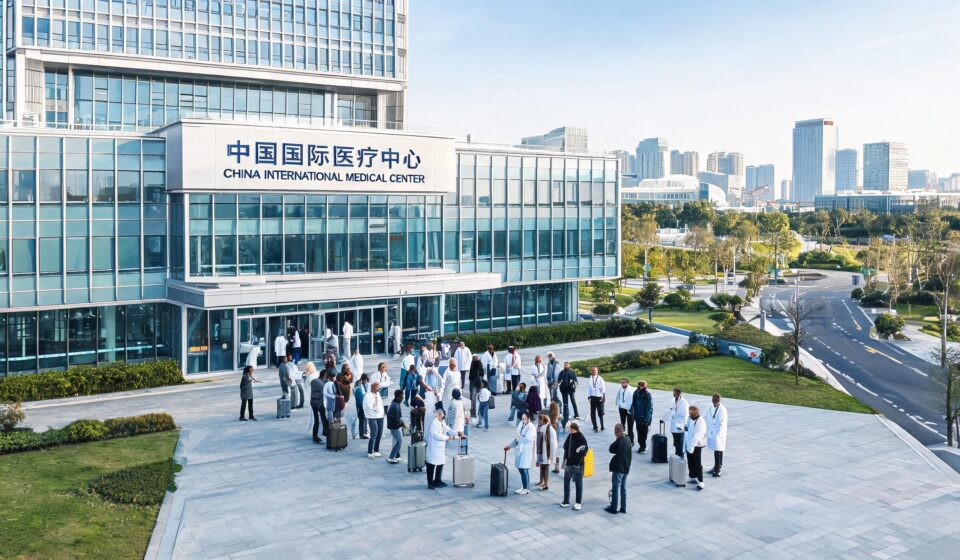
China Lures Foreign Patients With Cutting-Edge Cheap Medical Care
China Lures Foreign Patients With Cheap Medical Care
Hook: China’s medical tourism sector is surging as foreign patients — from Southeast Asia, the Middle East, Russia, and increasingly from Western nations — flock to Chinese hospitals for procedures that cost a fraction of what they would in the United States, Europe, or even established medical tourism hubs like Thailand and India. Fueled by massive hospital infrastructure investment, AI-driven diagnostics, and a government push to internationalize its healthcare system, China is rapidly emerging as the world’s next major medical tourism destination — raising both commercial opportunities and complex questions about quality, regulation, and geopolitical influence.
The Scale of the Surge
China’s National Health Commission reported in April 2026 that inbound medical tourism visits reached 1.8 million in 2025, a 42 percent increase from 2023 and nearly triple the pre-pandemic figure of 640,000 in 2019. The Ministry of Commerce estimates that medical tourism revenue exceeded $12 billion in 2025, up from $4.3 billion in 2019, making it one of the fastest-growing segments of China’s services economy. The government’s Healthy China 2030 plan, originally focused on domestic healthcare reform, now explicitly includes provisions for attracting foreign patients as a strategic export sector.
The numbers tell a compelling story of price-driven demand. A coronary artery bypass graft (CABG) that costs $123,000 on average in the United States can be performed at a Joint Commission International (JCI)-accredited hospital in Shanghai or Beijing for $12,000 to $18,000 — a savings of 85 to 90 percent. A hip replacement that averages $40,000 in the U.S. runs $8,000 to $12,000 in China. Dental implants, a procedure that drives significant medical tourism globally, cost $1,500 to $2,500 per unit in China compared to $5,000 to $6,000 in the United States. Even relative to established medical tourism destinations, China’s pricing is competitive: the same CABG procedure costs $10,000 to $15,000 in Thailand and $7,000 to $10,000 in India, but China’s hospital infrastructure and technology adoption increasingly rival those of Western nations.
The patient demographics are shifting. Historically, China’s inbound medical patients came primarily from neighboring countries — Mongolia, Myanmar, Laos, Vietnam, and Central Asian nations — seeking basic procedures unavailable or unaffordable at home. By 2025, the patient mix had diversified sharply. Russian nationals accounted for 22 percent of medical tourism visits, driven by Western sanctions that cut off access to European healthcare systems. Patients from the Gulf states — Saudi Arabia, the UAE, and Qatar — represented 14 percent, drawn by China’s advanced organ transplant capabilities and cancer treatment centers. Southeast Asian patients from Indonesia, the Philippines, and Cambodia made up 28 percent. And a growing cohort of patients from the United States, Canada, Australia, and Western Europe — estimated at 8 to 12 percent of the total — are choosing China for elective procedures, dental work, cosmetic surgery, and fertility treatments.
The Infrastructure Behind the Boom
China’s medical tourism push is built on a decade of aggressive hospital construction and technology deployment. The country added approximately 2.1 million hospital beds between 2015 and 2025, bringing the total to 10.2 million — more than any other nation. The number of JCI-accredited hospitals in China grew from 72 in 2019 to 143 in 2025, second only to the United States. Beijing, Shanghai, Guangzhou, Shenzhen, and Chengdu have each developed dedicated medical tourism zones that cluster internationally accredited hospitals, translation services, and patient accommodation within integrated complexes.
The PLA General Hospital (301 Hospital) in Beijing, Peking Union Medical College Hospital, and Huashan Hospital in Shanghai have established dedicated international patient departments staffed with multilingual coordinators. Private hospital chains — United Family Healthcare, Parkway Health (now IHH-owned), and the newer Guangzhou-based Evercare Medical — have built entire business models around serving foreign patients, with pricing that is 40 to 60 percent below comparable facilities in Singapore or South Korea while maintaining JCI accreditation standards.
Technology is a key differentiator. China’s aggressive deployment of artificial intelligence in healthcare — from diagnostic imaging analysis to robotic surgery assistance — gives its hospitals a technological edge that many medical tourism competitors lack. AI-assisted diagnosis systems developed by companies like Infervision, Shukun Technology, and Yitu Healthcare are now standard in China’s tier-one hospitals, enabling faster and more accurate screening for conditions including lung cancer, cardiovascular disease, and retinal disorders. Robotic surgery systems, including domestically produced alternatives to Intuitive Surgical’s da Vinci platform, have reduced procedure times and improved outcomes for minimally invasive surgeries.
The government has actively facilitated the sector’s growth. In January 2026, the State Council issued guidelines establishing a national medical tourism licensing framework, creating standardized accreditation for hospitals serving international patients. The guidelines streamlined visa processing for medical tourists, introduced a dedicated medical visa category (M-visa) with expedited processing, and allowed foreign patients to access China’s national health data platform for continuity of care. Provincial governments in Hainan, Yunnan, and Guangdong have offered tax incentives and land grants to hospitals that develop international patient capacity.
Hainan: China’s Medical Tourism Laboratory
Hainan Island has emerged as the centerpiece of China’s medical tourism strategy. The Hainan Free Trade Port, established in 2020, includes a dedicated Boao Lecheng International Medical Tourism Pilot Zone that operates under special regulatory provisions. The pilot zone allows hospitals to import and use drugs and medical devices that have been approved in the United States, Europe, or Japan but have not yet received China’s NMPA (National Medical Products Administration) approval — a significant advantage for patients seeking cutting-edge treatments.
By early 2026, the Boao Lecheng zone housed 28 hospitals and clinics, including branches of major Chinese hospital groups and joint ventures with international operators. The zone treated approximately 420,000 patients in 2025, of whom 35,000 were foreign nationals — a fivefold increase from 2022. The zone’s flagship facilities offer CAR-T cell therapy for cancer treatment at approximately $50,000 per course, compared to $400,000 to $500,000 in the United States. Stem cell therapies, gene therapy protocols, and advanced immunotherapy treatments that face regulatory barriers in many Western countries are available through the zone’s accelerated approval pathway.
The Hainan model is now being replicated. In May 2026, the State Council approved the creation of three additional medical tourism pilot zones in the Greater Bay Area (spanning Shenzhen, Guangzhou, and Zhuhai), Shanghai’s Lingang New Area, and Chengdu’s Tianfu New District. Each zone will operate under similar regulatory flexibility, with the explicit goal of attracting $50 billion in medical tourism revenue by 2030.
The Competitive Threat to Established Medical Tourism Hubs
China’s rise as a medical tourism destination is sending shockwaves through the established players. Thailand, which has long dominated medical tourism in Asia with facilities like Bumrungrad International Hospital in Bangkok and a sector valued at $6.4 billion in 2025, is facing its most serious competitive challenge in decades. The Thai Medical Tourism Association reported in March 2026 that growth in Chinese-origin medical tourists — previously a significant source of inbound patients to Thailand — had reversed, with net flows now favoring China as a destination.
South Korea, which built a medical tourism industry around cosmetic surgery and dermatology valued at $2.1 billion in 2025, is similarly affected. The Korea Health Industry Development Institute reported a 12 percent decline in medical tourist arrivals in Q1 2026, with patients citing lower costs in China for comparable cosmetic procedures as a primary factor. A double-eyelid surgery that costs $3,000 to $5,000 in Seoul’s Gangnam district can be performed at an accredited clinic in Shanghai for $1,200 to $2,000.
India, which has positioned itself as a high-value medical tourism destination through facilities like Apollo Hospitals and Medanta, faces a different kind of challenge. India’s cost advantage remains — its procedures are generally 20 to 30 percent cheaper than China’s — but China’s superior hospital infrastructure, AI-driven diagnostics, and government-backed regulatory framework give it an edge in attracting higher-income patients from the Middle East and Russia who prioritize technology and accreditation alongside cost.
Singapore, which targets the premium segment of medical tourism, is less directly threatened by China’s cost advantage but faces growing competition from Chinese hospitals that are increasingly able to match its quality standards while offering significantly lower prices. The Mount Elizabeth Hospital and Gleneagles Hospital in Singapore — long the preferred destinations for wealthy Indonesian and Malaysian patients — are watching as Chinese facilities poach their patient base with 50 to 70 percent lower pricing for cardiac, orthopedic, and oncology procedures.
Risks, Concerns, and the Quality Question
The rapid growth of China’s medical tourism sector raises significant concerns. Quality control remains uneven. While JCI-accredited hospitals in Beijing and Shanghai meet international standards, the long tail of smaller hospitals and clinics marketing to foreign patients operate with minimal oversight. The National Health Commission’s 2025 audit of medical tourism facilities found that 18 percent of licensed medical tourism providers did not meet the published standards for international patient care, including deficiencies in informed consent procedures, adverse event reporting, and medical record management in languages other than Mandarin.
Medical malpractice and dispute resolution present particular challenges for foreign patients. China’s medical liability framework is substantially different from Western systems, and foreign patients have limited legal recourse in cases of adverse outcomes. The U.S. State Department’s travel advisory for China, updated in March 2026, includes a specific warning that “medical malpractice litigation in China is difficult and rarely results in outcomes comparable to those available in the United States or other Western jurisdictions.”
Data privacy is another concern. Foreign patients receiving care in China are subject to China’s data localization requirements under the Personal Information Protection Law (PIPL) and the Data Security Law. Medical records, genomic data, and treatment histories of foreign patients stored on Chinese hospital servers are accessible to Chinese regulatory authorities and, under certain circumstances, to Chinese intelligence services. For patients from adversarial or competitive nations, this creates a potential security exposure that is not present in medical tourism to allied countries.
There is also a geopolitical dimension. China’s medical tourism push is not purely commercial — it is embedded within a broader soft power strategy. The government frames the sector as evidence of China’s technological advancement and its contribution to global health. State media coverage of medical tourism cases frequently emphasizes the gratitude of foreign patients and the superiority of Chinese medical care. Critics argue that this narrative serves a propaganda function, and that the selective availability of treatments — particularly in sensitive areas like organ transplantation — raises ethical questions that the Chinese government has not adequately addressed.
Forward-Looking: The Trajectory Through 2030
China’s medical tourism sector is on a trajectory to become a $30 to $50 billion industry by 2030, according to projections from the China National Tourism Administration and independent analysts at Frost & Sullivan. The combination of cost advantage, infrastructure scale, AI-driven technology differentiation, and active government support creates a growth engine that is difficult for competitors to match.
Several factors will shape the sector’s development. First, the expansion of regulatory pilot zones beyond Hainan will determine whether China can scale its medical tourism model nationally or whether it remains concentrated in a few showcase facilities. The approval of three new pilot zones in 2026 suggests the government is committed to national expansion. Second, the development of international insurance partnerships — Chinese hospitals currently accept limited international insurance plans — will be critical for attracting patients from developed nations where out-of-pocket medical spending is relatively low. Third, the resolution of data privacy and medical malpractice concerns will determine whether China can attract patients from Western democracies in significant numbers, or whether it remains primarily a destination for patients from nations with fewer alternatives.
The strategic implications extend beyond healthcare. Medical tourism generates foreign exchange, builds China’s reputation for technological capability, and creates people-to-people connections that strengthen economic and political ties with source countries. For Russia, the Gulf states, and Southeast Asian nations, China’s medical tourism infrastructure is becoming a dependency — patients who receive life-saving treatment in Chinese hospitals develop lasting positive associations with the country. This is soft power in its most tangible form, and it is a dimension of China’s global influence strategy that receives far less attention than its military or economic components.
For the global healthcare industry, China’s emergence as a medical tourism superpower represents both a threat and an opportunity. Established medical tourism destinations will face pricing pressure and patient diversion. Medical device and pharmaceutical companies will find a growing market but one that operates under Chinese regulatory rules and pricing expectations. And patients worldwide will increasingly face a choice: pay more for care at home or travel to a country that offers comparable or superior technology at a fraction of the cost — with all the attendant risks and benefits that choice entails.
Further Reading:
- China’s Biotech Sector Attracts Record Foreign Investment Despite Geopolitical Tensions
- China’s Healthcare AI Revolution: From Diagnosis to Drug Discovery
- China’s Wellness Economy: How Health-Conscious Consumers Are Reshaping Retail
Disclaimer: This article is for informational purposes only and does not constitute medical advice. Patients considering medical treatment abroad should consult with qualified healthcare professionals and research accreditation standards independently. China Industry Intel has no position in any securities or companies mentioned.