































EU Trade Deficit With China Hits €1 Billion a Day — Leaders Weigh New Measures
EU trade deficit with China hit a record €31.9 billion in April 2026, prompting leaders to discuss new defensive measures at the Brussels summit.
EU Trade Deficit with China Hits €1 Billion a Day — Leaders Weigh New Defensive Measures at Brussels Summit
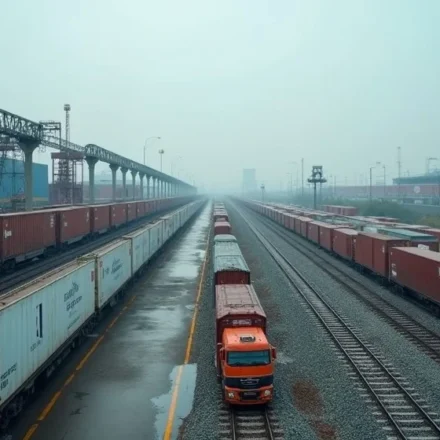
The European Union’s trade deficit with China reached a record €31.9 billion in April 2026, equivalent to roughly €1 billion per day, according to data published by The Guardian on June 15. The figures landed just days before EU leaders convened in Brussels on June 18 for a summit dinner dedicated to discussing trade defences against what European Commission President Ursula von der Leyen described as “China’s export dominance.” EU trade chief Maroš Šefčovič framed the moment bluntly: “Our trading relationship with China has reached a point that requires a reset — not confrontation but rebalancing.”
The summit marked a shift in tone from Brussels. For years, EU leaders sought to balance commercial interests with diplomatic caution toward Beijing. That balance is eroding as the deficit widens, Chinese electric vehicle exports flood European markets, and Beijing’s industrial subsidies undercut European manufacturers across multiple sectors.
The Deficit in Numbers

The €31.9 billion monthly deficit in April 2026 surpassed previous records set in 2022 and 2023, when the gap was driven largely by Chinese electronics and machinery exports. The current surge reflects additional pressure from Chinese EV exports, which have grown rapidly since 2024 despite EU tariffs of up to 35.3% imposed on Chinese-made electric vehicles in October 2025.
| Period | EU-China Monthly Trade Deficit | Key Drivers |
|---|---|---|
| April 2024 | ~€22 billion | Electronics, machinery, solar panels |
| April 2025 | ~€27 billion | EV exports surge, batteries |
| April 2026 | €31.9 billion (record) | EVs, batteries, machinery, steel |
The deficit is growing despite the EU’s existing tariff measures, suggesting that Chinese manufacturers are absorbing the duties or finding ways to route exports through third countries. The Peterson Institute for International Economics noted in a June 4 analysis that US reciprocal trade deals are specifically designed to push trade partners away from China, creating new incentives for rerouting through Southeast Asia and other intermediaries.
What the EU Summit Produced
The June 18 summit dinner was not a formal decision-making session but rather a strategic discussion about the range of tools available to the EU. European leaders considered a menu of options including anti-subsidy investigations, import quotas, safeguard measures, and tighter screening of Chinese investments in critical European industries.
The Economist characterized the situation on June 11 as heading toward a trade war that “seems inevitable.” The publication noted that at the June 18 summit, EU leaders would “discuss how to cope with the Chinese challenge, in an increasingly dire global economy.”
RFI reported on June 18 that EU leaders were “weighing new trade defences to counter China’s export dominance,” with particular focus on the steel, automotive, and clean energy sectors. The Washington Post, in a June 16 analysis, argued that “China controls trade choke points beyond rare earths” and is “squeezing them” — a reference to Beijing’s use of export controls on critical minerals as a counter-leverage tool.
The EV Tariff Question: Has It Worked?

The EU imposed tariffs ranging from 17.4% to 35.3% on Chinese-made electric vehicles in October 2025, following an anti-subsidy investigation that found Chinese EV makers benefited from state subsidies that undercut European competitors. The tariffs were meant to level the playing field for European automakers like Volkswagen, Stellantis, and BMW.
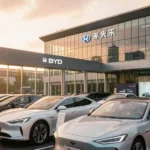
Eight months later, the results are mixed. Chinese EV exports to the EU have slowed in volume but the trade value has continued to climb as Chinese brands move upmarket. BYD, for example, has focused on its premium models in Europe, where even with a 35% tariff the vehicles remain price-competitive against European equivalents. Meanwhile, Chinese battery exports — which face no equivalent tariffs — have surged, with companies like CATL and EVE Energy supplying European automakers that are still building out their own battery manufacturing capacity.
The broader lesson is that tariffs alone cannot close a structural trade deficit when Chinese manufacturers dominate entire supply chains — from raw materials to finished goods — and when European industry remains dependent on Chinese inputs for its own production.
The Rare Earths Leverage
Beijing has its own tools for managing the trade relationship. China controls roughly 60% of global rare earth mining and 90% of processing capacity, materials essential for electric vehicles, wind turbines, defense equipment, and consumer electronics. In recent months, China has tightened export licensing requirements for gallium, germanium, and other critical minerals, creating supply anxiety among European manufacturers.
The Washington Post reported on June 16 that China’s trade choke points extend well beyond rare earths to include antimony, graphite, and processed lithium — all materials where China holds dominant market share. European Commission officials have acknowledged that any escalation in trade measures from Brussels could trigger retaliatory restrictions on these critical inputs.
CII Analysis
The EU-China trade imbalance is structural, not cyclical, and it will not be resolved by tariffs alone. China’s manufacturing cost advantage — driven by subsidies, lower labor costs, scale, and vertical integration — is too deep to offset with import duties of 20-35%. European leaders are slowly recognizing that the challenge is not just about individual product categories like EVs or steel, but about an entire industrial model that produces across the value chain at costs Europe cannot match. The summit discussions about “rebalancing” are the right framing, but the tools available — tariffs, quotas, investment screening — are defensive measures that address symptoms. The real question is whether Europe can build competitive alternatives in batteries, solar panels, and clean energy equipment fast enough to reduce import dependence before the political pressure for a full trade war becomes irresistible. That timeline is measured in years, not months, and the deficit will keep growing in the meantime.
Sources
- The Guardian — EU trade deficit with China reaches record €1bn a day (June 15, 2026)
- The Economist — A trade war between the EU and China seems inevitable (June 11, 2026)
- RFI — EU leaders weigh new trade defences to counter China’s export dominance (June 18, 2026)
- Washington Post — China controls trade choke points beyond rare earths (June 16, 2026)
- PIIE — US reciprocal trade deals built to push partners away from China (June 4, 2026)