
China’s Deflation Problem: Nine Months of Falling Prices and Counting
Consumer prices keep dropping despite stimulus efforts
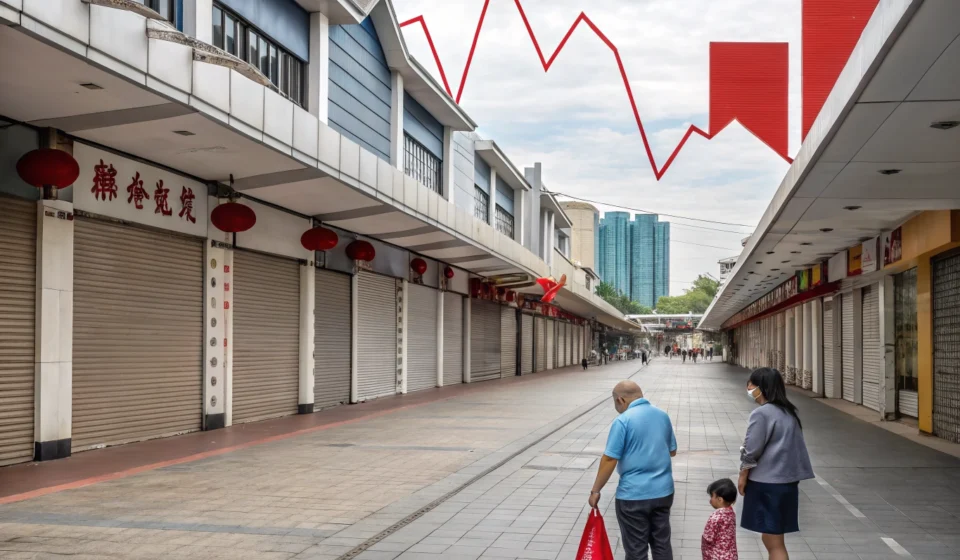
China’s consumer price index fell 0.3% year-on-year in May 2026, the National Bureau of Statistics reported on June 10. This marks the ninth consecutive month of deflation or near-zero inflation, the longest stretch since the global financial crisis of 2008-2009.
Producer prices tell a bleaker story. The PPI fell 2.1% year-on-year in May, reflecting chronic overcapacity in industrial goods. When producers can’t raise prices, they can’t increase profits, can’t invest, and can’t hire — creating a deflationary spiral that’s difficult to escape.
Why prices keep falling
The causes are structural, not cyclical:
- Property market collapse: Falling home prices destroy household wealth, making consumers cautious about spending. Property accounts for roughly 70% of Chinese household assets.
- Overcapacity: Factories built during the investment boom now produce more goods than the market can absorb. Price wars in EVs, solar panels, and consumer electronics push prices down.
- Weak wage growth: Average wages in urban areas grew just 3.2% in Q1 2026, below the pre-pandemic trend of 7-8%.
- Youth unemployment: The jobless rate for 16-24 year olds (excluding students) stood at 14.2% in April 2026, suppressing consumption among a key demographic.
The consumption conundrum
Chinese households are saving more and spending less. The household savings rate rose to 33% in Q1 2026, up from 30% in 2023 and well above the 25% rate of the pre-pandemic era. Government efforts to stimulate consumption — including nationwide subsidy programs for home appliances and automobiles — have had limited effect.
“Consumers are not irrational,” said Zhang Bin, a senior economist at the China Finance 40 Forum. “When home prices are falling and job security is uncertain, saving more is the rational response. The government needs to address the underlying insecurity, not just offer coupons.”
Policy responses
The government has deployed multiple tools:
- RRR cuts (June 1, 2026) to inject liquidity
- Mortgage rate reductions (three rounds since 2024)
- Consumer subsidy programs for appliances, electronics, and autos
- Tax cuts for small and medium enterprises
None of these address the fundamental problem: households don’t feel wealthy enough to spend. Until the property market stabilizes and employment improves, deflation is likely to persist.
Global implications
China exports deflation to the rest of the world. When Chinese manufacturers sell goods below cost to clear inventory, it depresses prices globally. This is good for consumers but bad for manufacturers in competing countries — and it’s a major source of trade tension.
Sources
- National Bureau of Statistics, CPI and PPI data, May 2026
- China Finance 40 Forum, consumption analysis, Q1 2026
- USCC, China Bulletin, June 9, 2026