SpaceX IPO Creates First Trillionaire — What It Means for China’s Tech Ambitions
Elon Musk’s milestone highlights the gap between US and Chinese tech valuations
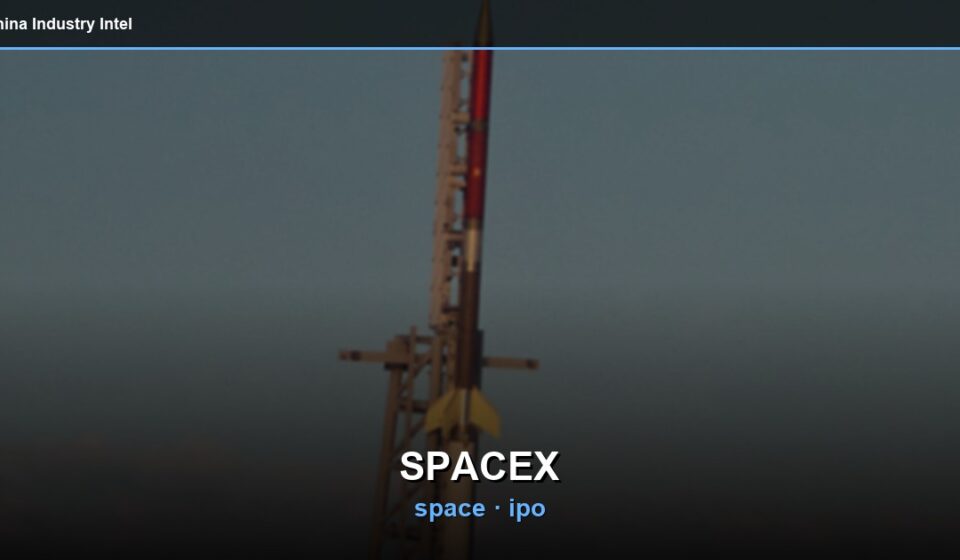
When SpaceX went public on June 12, 2026, at a valuation exceeding $2 trillion, Elon Musk became the first person in history to achieve a net worth above $1 trillion. The moment was celebrated in Silicon Valley as validation of the “hard tech” investment thesis — that building rockets, robots, and AI infrastructure creates more lasting value than software alone.
In China, the reaction was more complicated. Chinese tech executives and investors saw the IPO as both inspiration and reminder of the valuation gap between US and Chinese technology companies. Tencent, China’s most valuable tech firm, trades at roughly $500 billion — one-quarter of SpaceX’s market capitalization.
The valuation gap
The difference isn’t just about company quality. It reflects structural factors: US capital markets offer higher valuations for growth companies, the dollar’s reserve currency status attracts global capital, and American tech companies have unrestricted access to the world’s largest consumer market.
Chinese tech companies face multiple headwinds: regulatory crackdowns (though these have eased in 2026), US sanctions and entity lists, restricted access to advanced chips, and a domestic economy dealing with deflation and property market weakness.
China’s response: commercial space and deep tech
China is investing heavily in the same “hard tech” sectors that SpaceX represents. The country’s commercial space industry raised $5.8 billion in the first five months of 2026. AI infrastructure investment is planned at $295 billion over five years. Robotics, quantum computing, and biotech all receive substantial government and private investment.
The gap is closing in some areas. In commercial rockets, Chinese companies are 5-7 years behind SpaceX but closing fast. In humanoid robots, Chinese companies are ahead. In AI, the competition is neck-and-neck, with Chinese labs producing open-source models that rival the best American offerings.
What investors should watch
The SpaceX IPO may mark peak “hard tech” enthusiasm — or it may be the beginning of a new investment paradigm where physical technology companies command premium valuations. For Chinese investors, the key question is whether domestic capital markets can support similar valuations for Chinese deep-tech companies, or whether they’ll continue to list in the US or Hong Kong for access to higher multiples.
Sources
- 36kr, “SpaceX 2万亿美元市值这一夜,回望中国商业航天十年冷暖,” June 13, 2026
- Bloomberg, SpaceX IPO data, June 12, 2026
- China Venture Research, deep-tech funding data, H1 2026