US House Passes DOMINANCE Act to Counter China’s Rare Earth Grip
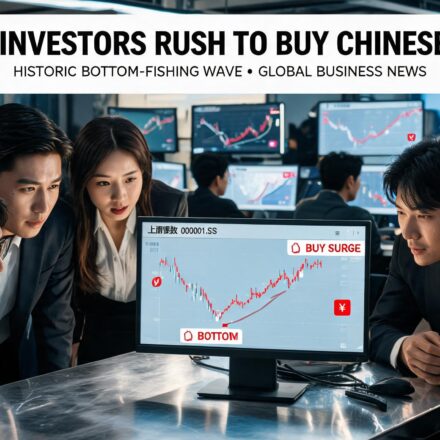
Chinese stocks rallied on Thursday as investors bet that easing trade tensions between Washington and Beijing would unlock a broader recovery in the country’s technology sector. Xiaomi shares jumped 5.7% to a record high of HK$72.85 in Hong Kong, leading a surge across Chinese tech names after the U.S. and China reached a preliminary trade framework in London.
Xiaomi hits record as EV sales momentum builds
Xiaomi’s rally was fueled by more than just trade optimism. The smartphone-turned-electric-vehicle maker reported that deliveries of its SU7 sedan exceeded 12,000 units in May, putting it on pace to surpass its annual target of 150,000 vehicles. The company’s market capitalization briefly crossed HK$1.8 trillion ($230 billion), making it more valuable than BMW.
The stock has gained 48% year-to-date, outperforming every major Chinese tech company except BYD. Analysts at Goldman Sachs upgraded Xiaomi to “buy” from “neutral” earlier this week, citing “strong execution in both consumer electronics and EVs.”
Broad tech rally follows trade framework
The gains extended beyond Xiaomi. The Hang Seng Tech Index rose 2.4%, with Alibaba up 2.1%, Tencent up 1.8%, and JD.com up 3.2%. On the mainland, the ChiNext Index — China’s Nasdaq equivalent — gained 1.6%.
CNBC reported that the rally was also driven by expectations that Washington would clear sales of Nvidia’s H200 AI chips to Chinese firms including Alibaba, Tencent, ByteDance, and JD.com. Such a move would mark a significant relaxation of the semiconductor export controls that have constrained China’s AI development since 2023.
“Having access to Nvidia’s latest chips is very, very critical for the Chinese players to compete on a global stage,” said Jiong Shao, China internet analyst at Barclays.
Foreign money is flowing back
After months of outflows, foreign investors are returning to Chinese equities. Data from the Hong Kong Stock Connect program showed net inflows of RMB 12.6 billion ($1.7 billion) on Thursday, the largest single-day purchase since March.
Dong Chen, chief investment officer at Bank J Safra Sarasin, said the Trump-Xi summit expected at the G7 could serve as a “near-term catalyst” for further gains. “The fact that they’re meeting at all sends a positive signal,” he said.
Still, some analysts cautioned that the rally may have gotten ahead of itself. “Markets are pricing in a lot of good news that hasn’t actually happened yet,” warned a strategist at Morgan Stanley who spoke on condition of anonymity. “The trade framework is a handshake, not a signed deal.”
The AI angle matters most
The semiconductor element of the trade talks may be more consequential than tariffs for Chinese tech stocks. U.S. export controls have cut Chinese companies off from the most advanced AI chips, forcing firms like Huawei and Baidu to develop domestic alternatives that lag behind Nvidia’s offerings.
If Nvidia H200 sales are cleared, it would give Chinese cloud providers and AI developers access to hardware that’s roughly 2-3x more capable than what they can currently source domestically. That could accelerate China’s AI development timeline and narrow the gap with U.S. competitors.
Alibaba’s cloud division reported 18% revenue growth in its latest quarter, driven partly by AI demand. Tencent said its AI-related cloud revenue grew 40% year-over-year. Access to better chips would likely amplify those trends.